Women and Terraces
Affiliations
- 1 Centre for Agroecology, Water and Resilience (CAWR), Coventry University, United Kingdom
- 2 Instituto de Oceanografía y Cambio Global (IOCAG), Universidad de Las Palmas de Gran Canaria, Spain
International Terraced Landscapes Alliance Journal volume 2, issue 1, pp. 1–5 (2021) · Cite this article
- 156 views
- 157 downloads
- DOI10.5281/zenodo.7705420
Abstract
The section “Experiences from the field” of this issue of the ITLA journal presents three articles focusing on Women and Terraces approaching the special relationship of women with nature in mountainous areas. A common trait in the articles is the use of innovative methodologies. Group conversations as the source for gathering information, the combination of historical sources with poetry and photography, as well as putting at the centre the personal testimony collected by phone calls. The three articles highlight the voices of women, who express their feelings, memories and reflections about the work and life in the vertical space of the terraces.
The section “Experiences from the field” of this issue of the ITLA journal presents three articles focusing on Women and Terraces approaching the special relationship of women with nature in mountainous areas. A common trait in the articles is the use of innovative methodologies. Group conversations as the source for gathering information, the combination of historical sources with poetry and photography, as well as putting at the centre the personal testimony collected by phone calls. The three articles highlight the voices of women, who express their feelings, memories and reflections about the work and life in the vertical space of the terraces.
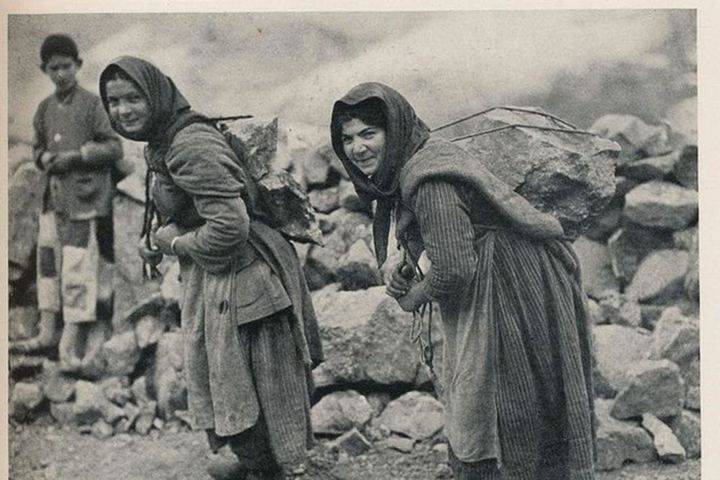
The first article is “Stone Breaking in Skirts. Women Building terraces in Pelendri Village, Pitsillia, Cyprus”, written by Dr. Artemis Yiordamli. She transports us to a Mediterranean Island with a long history of a strong agrarian economy, and terraced landscapes crafted with love and sense of beauty. The transformations of life and work are recalled by a group of six local women, between 85 and 60 years old, who narrated and shared their experiences in meaningful conversations from different perspectives. The elder women participated fully in all aspects of the productive work in the terraces with a degree of independence and gratification concerning food production. Although they experienced the harshness of life in their own bodies, they also enjoyed the benefits of living in community. The middleaged women helped in agricultural terracing without taking actively part in all tasks. The younger women just observed the agricultural work from the distance, concentrating their efforts in reproductive and domestic activities.
All of them remember that modernization of rural life brought some advantages in softening the home duties as well as new opportunities to work away from home on a salary base in the fruit plantations and in the construction of roads. Different than expected, the conditions were unbearable for their bodies, and they were obliged to hand over their wages earned to the family head or husband.
The comparison of the times, when women dedicated fully to agricultural terracing and their multiple roles as mothers, home carers, food providers for the family, generated the awareness that ecological and sociocultural values are the key for maintaining the terraces productive on the hillsides. Moreover, women who dedicate with self-confidence and selfesteem working on the terraces experience a rewarding relationship with nature.
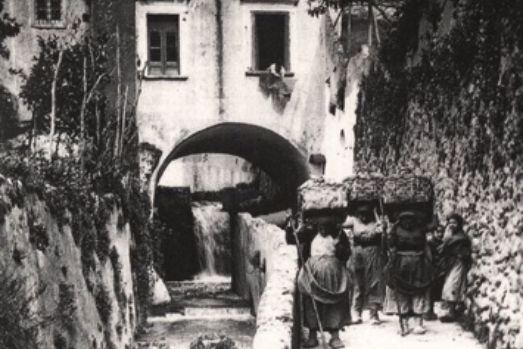
The second article “Femmene minute cu’ ‘a forza’ e’nu gigante” (little women with a giant’s power) in the terraced landscape of Amalfi Coast, Italy, by Dr. Giorgia De Pasquale. This contribution traces back the ancestral relationship between women and the steep Mediterranean coastal landscape. While men were dedicated to activities on the sea, women remained working at the terraces masterfully constructed overlooking the sea.
Using historical sources, combined with selected fragments of poetry as well as photos corresponding to the time frame, the author describes a vertical landscape, in which agricultural activities take place. Women walk up and down narrow paths, vertiginous stairs to accomplish the home care duties and the demanding agricultural work only possible due to a bodily confidence and a precise knowledge of the territory. Women’s connection to the vertical space reveals a symbiotic relationship between the female body and steep nature of the landscape, which is the key for the protection of the terraces and its paradisiac beauty.
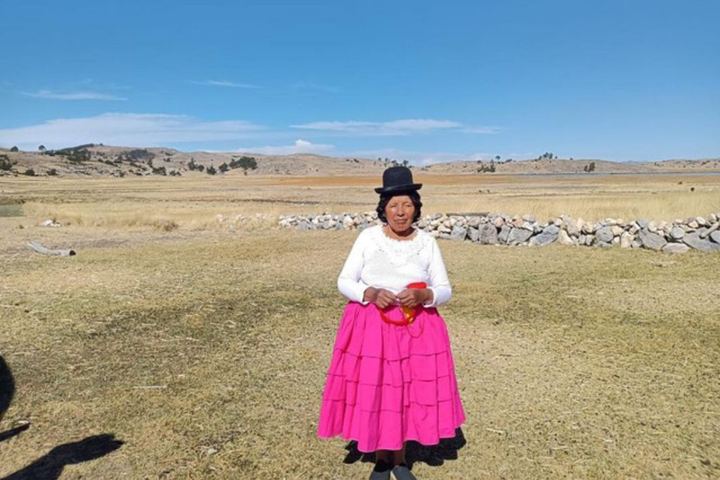
The third article “Between the countryside and the city: Female Rurality & Situated Knowledge” by the Peruvian sociologist Rocio Romero deals with an unprecedented event in Peru during the Emergency of the COVID pandemic. Between March and December 2020 city dwellers of rural origin returned to their original communities in order to escape from the horrors of minimal survival chances caused by the pandemic and the policy response of total lockdown. A significant percentage of the people returning to the fields were women. Due to long friendship bonds between the author and Griselda, a bilingual teacher in Puno, they communicated by phone during the lockdown period, conversations that depicted a process of rediscovery of the well-being for the family and the community in the countryside.
This article privileges the voice and the reflections of Griselda. She reconstructs her agricultural knowledge based on memories. Water management, weather forecast, medicinal plants, cultivating the soil and animal raising are explained within the complexities of the natural world, from the Andean cultural perspective that conceptualizes all is alive and humans are part of nature. This worldview is the key to protect and maintain agricultural terraces.
Rights and permissions
Open Access. This article is licensed under a Creative Commons CC BY 4.0 license, which permits use, sharing, adaptation, distribution and reproduction in any medium or format, as long as you give appropriate credit to the original author(s) and the source and indicate if changes were made.
About this article
Cite this article
Salas, M., & Romero Martín, L. E. (2021). Women and Terraces. International Terraced Landscapes Alliance Journal, 2(1), 1–5. https://doi.org/10.5281/zenodo.7705420
- Published
- October 2021
- Issue
- Volume 2, Number 1
- Journal
- International Terraced Landscapes Alliance Journal, ISSN 2754-7639 (Online)
- Archive
- Zenodo record 7705420