Between the countryside and the city: Female Rurality & Situated Knowledge
Affiliations
- 1 Independent researcher on gender and rural technologies based in Lima, Peru
International Terraced Landscapes Alliance Journal volume 2, issue 1, pp. 32–48 (2021) · Cite this article
- 153 views
- 150 downloads
- DOI10.5281/zenodo.7306821
Abstract
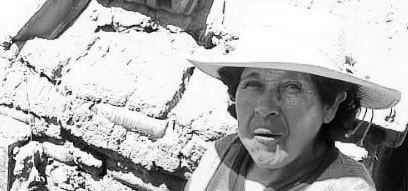
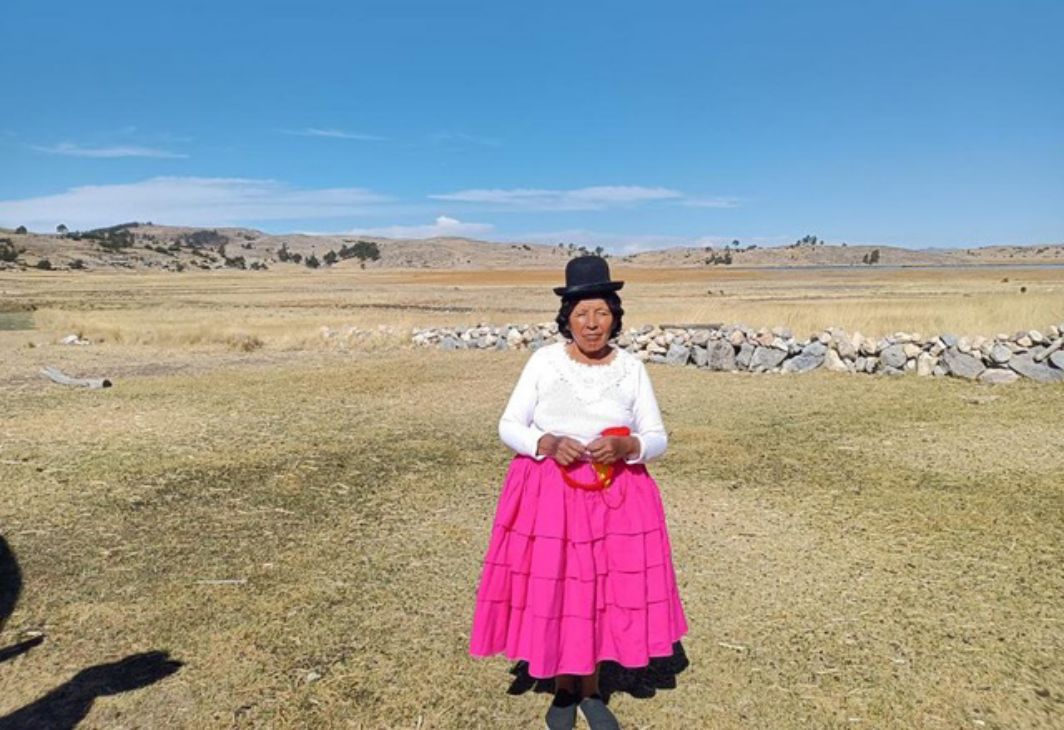
This text deals with the experience of Griselda Yanque Mamani, a 75-year-old farmer and retired bilingual teacher from a South Andean Aymara community in the Puno region of southern Peru. It focuses on Griselda’s reintegration into rural production, oriented towards her family’s wellbeing, taking up the knowledge and productive practices learned since childhood with her parents and grandparents. A process in which she brings together different kinds of knowledge and sustainable agricultural practices through the re-appropriation of different farming techniques.
Keywords
- Andean highland agriculture
- terraces
- women's perception
- situated knowledge
The experiences narrated by Griselda are set in the context of the Covid19 pandemic, in the time frame of the quarantine from April 2020 to November 2021. This caused the movement of rural migrants established in major cities to return to their rural areas of origin, an unprecedented event in the history of Peru. Griselda, like a large majority of women, returned from the city, Puno, to her rural community, Huancarani, located in the peninsula of Chucuito, in the high Andean region of southern Peru.
The focus on this specific case in the circumstances of the Covid pandemic, can be understood as a resurgence of women’s knowledge. It highlights a set of Andean traditional agricultural practices as well as new knowledge which emerged in the return from resilience actions related to appropriate choice of productive technologies pondering selectively the advance of the market in the high Andean zone. This text underlines the use of native natural healing resources, especially the role of women in food agriculture for self-consumption and in family health since before the crisis period.
Thanks to a close friendship with Griselda Yanque Mamani, widow of Arpasi, I was able to collect her testimony due to multiple telephone conversations during the most critical months of COVID. The body of her narrative in her own voice and rural expressions reveal the challenge of reconstructing a large repertoire of knowledge about natural and agricultural resources that rural women situate in the context to resettle in the Altiplano territory of the peninsula of origin.
The Well
Griselda’s physical return to the community where she spent her childhood is embedded with innumerable memories. Above all, the upbringing of water occupies a special place of emotions and meanings, which she tells us as follows:
“Grandfather Mateo was from the community of Huancarani, near the cattails, and my grandmother was born a short distance away, in the village of Platería. One day grandfather started digging under the ground near his house. He had noticed a trickle of water and bubbles in a small natural water well a few metres from the house. It was a Hachapujo! he said in our Aymara language, it was a spring well. Grandfather suddenly started to dig around the outlet, but it came from the bottom of the earth and the water kept gushing out and increasing day after day. That pampa where his house stood was a large pasture. There, like any other person in Huancarani, grandfather herded his sheep and walked from one place to another, crossing paths with his neighbours and their animals on the same road.
Over time, he began to share the Puquio, the spring, with other neighbours of the pampa, suitable areas for planting. We call the hole where the water comes out of the ground the Pujo or Puquio, because the natural water comes out every time and every day more and more. It must have been a very small well at the beginning, but more and more water came out and it got bigger and bigger.
The well was with small stones and the grandfather, Tata Mateo, started to put cement around it as protection because when it rained the water overflowed and people came to fetch water more and more often.
Then grandfather began to clean it better and to enlarge the waterhole that we call Hacchapujo, the Pozo Grande, others also called it Haccha Wawaja, or Wacha Chucuito in Aymara, changing names to the well became a cause of affection and joy and people came every 15th of August to celebrate it. They came loaded with piskiños (quinoa pancakes), which were boiled like biscuits mixed with nutritious Andean grains and lime”.
Griselda concludes... “If this well doesn’t dry up...and it doesn’t go down, whether it rains or not, then it can never dry up... Those who walk until late tell that at night a cockerel visits the water well, also a cow. As soon as it gets dark - say the neighbours - they keep coming from different places to collect water, especially those who pass in front of the well.
I’m going to put one more layer of cement around the well . Everyone in the community of Huancarani is fetching water from the Hacchapujo in front of my house, pulling water from the well. They come and go to fetch water to wash clothes, taking great care to throw the used water away so that it doesn’t contaminate the pure water of the Hacchapujo”.
She continues thinking... “the neighbouring community of Luquina has an irrigation canal that comes down from the hill, because the water from the lake in front of Luquina has decreased so much that the lake is further and further away... In Hacchapujo I might have to put a layer of cement around the well, so that visitors do not dirty it or throw stones into the water as if they were playing... they could damage the water”.
The story of Hacchapujo, the young lake of clear water born in Huancarani continues to sprout with the care of Griselda for the good of the land and the water. She is conscious of having become the caretaker of the water of the puquios to share with her neighbours while the highest lake in the world continues to sicken with mine tailings descending into the lake, in the current of the rivers.
Sowing and rain
When Griselda prepares her land for sowing, she digs the soil to check if there are rests of potatoes affected by worms. Around the family house she checks for weeds and removes them early to free up some more space for planting beans and potatoes. She plans to sow part of the area where her eight sheep graze. She will slaughter one of them with the help of a nephew and share with her daughter, son-in-law and three granddaughters what she has sown and the meat from the sheep he has tended.
A nephew helped her during this year’s harvest, she recalled that before, at the age of 5, 7 or 8, children already knew how to work in the fields because they had accompanied their grandparents without having forgotten what they should do to help them according to their age and energy. At the age of seven, all the girls and boys helped with small tasks. Griselda remembers this with pride. She also remembers the difficulties on rainy days when they had to walk home on the wet ground a few minutes after a storm as well as the relief she felt when the mud would dry sooner rather than later and everyone got a hot soup with potatoes, fish and all their favourite products would be waiting for them at home.
“The grass would not always be green, because everything eventually dries up,” she thought to herself. For Griselda the rain was the most unforgettable part of sowing. There was no worse worry in a well-sown field than drought.
Medicinal plants
The Highlands of Puno have always been a paradise of valuable curative herbs, nowadays recognised in Peru and the world. Many species useful for the pharmaceutical industry are cultivated in the Andean fields of the Puno highlands, well known by the local population and appreciated for their properties to maintain the health of the population of the entire high Andean region.
From the beginning, returning to the community, Griselda´s fear of contracting COVID awakened the desire to protect herself from the pandemic. She and other women of her community, Huancarani, began to share the medicinal plant-based preparations with which their grandparents used to cure their ailments. Griselda says that since her childhood:
“If we felt sick, we used to cure ourselves with herbal teas boiled with the curative herbs of our area, roasted flaxseed, roasted airampu, flowering nettle. All previously roasted and put to rest to reduce fevers. Then we used to put beaten egg with a little sugar on the heel of the foot, on the palm of the hand and on the stomach to reduce the fever. To bathe we used to boil herbs with thorns such as Anuchapi (dog’s thorn) and ayrampu or ayrampitu. Our grandparents used the thorns of Anuchapi against measles and other diseases. They bathed with it and drank it against pain. The Sancayo thorn was also taken and is still used in herbal teas, as it has a small fruit and its thorn”.
Griselda associates these plants with many other traditional treatments that are not forgotten and could be used to alleviate the symptoms of COVID. For example, the natural remedy, with the wild herb called Kalla Pura, full of sharp thorns that is extracted from the ground with a pickaxe and then boiled, drinking its juice cures any illness. Also, Jiruch Api, another healing herb, is mixed with Kalla Pura. Both cure ailments by taking them in an infusion or using them in the personal bath.
Griselda reveals a very particular perception about the application of natural remedies: “In this COVID pandemic, in the countryside we relied on wild remedies using black chicken broth and guinea pig broth. Women are the ones who handle this health knowledge; men don’t care and don’t handle this knowledge. They heal in other ways, they move away from this form of healing, that is why we women have cured ourselves more. In Puno, women are stronger than men. More men have died of COVID 19 only a few women passed away. It was also noticeable that in this pandemic women had more work and men not so much.”
So concludes Griselda with the good reasoning of a concerned teacher open to new learnings.
Signs - Forecasts
When it comes to sowing, Griselda introduces us to a complex world of knowledge with categories of time and space closely related to the observation of the behaviour of the natural world where everything is a network of probabilities.
“We start thinking about sowing in June so that we can have food harvested by April and May at the latest. In other words, we plan as we have learnt from our grandfathers and grandmothers in the past: watching the movement of the birds as they fly from far away to our lake at certain times of the year after lay eggs and wait for the birth of their young among the cattail reeds of Lake Titicaca on the Chucuito peninsula.
The birds make their nests in the totora reeds every year. Since our grandparents we have learned to foresee when the rains will come, because the birds have also known how to foresee the rains in order to lay their eggs in a safe place. To do this we look at the reed beds to see how high the water will rise in the lake when the rains start to fall and where they can safely lay their eggs until their young are born. To do this, the birds have observed the water level and the height of the cattails from their high flights, until they decide where they will place their nests, skilfully attached to the cattails at the edge of the lake.
Since we were children, we have watched the birds waiting for the birth of their young. Our grandmothers taught us long ago the importance of sharing the birds’ calculations in making our decisions in many aspects of life. Primarily in the planning of planting, we must observe the altitude chosen by the birds to lay their eggs. We must observe where they have laid their eggs between cattails until they hatch, and the chicks come out. We call all this forecasting and those who read the signs well are respected and called “señaleros” or “señaleras”. Almost all of us who live on the peninsula of Chucuito are used to reading these signs from the birds or know someone who does it with care for the plants and animals.
In order to think and predict results, we see and listen to the signs of nature. We know for example that the fox is in the habit of howling. The time to plant potatoes coincides with the time when the fox cries. Usually, it is October or November. But if the fox cries at the beginning, in the middle or at the end of these months, only then should we plant. There are good days to choose. We must know which day is good. For example, we choose by significant dates, in relation to rain, not just Catholic saints. The year that is well marked gives good yields.
When this has not been done, we must look in the almanac. For example, the almanac will tell us that sowing should be on Tuesday, and we will say, no, Tuesday is a bad day. In the doubt we will then see if it is a full moon or not... We will keep looking for one more sign to make the decision without delay.”
Planting in ridges
Observing the natural world goes hand in hand with understanding different agricultural systems and the characteristics of crops. Griselda explains to us in which climatic conditions she grows which crops and whether she does it on terraces or in ridges, and distinguishes the roles and knowledge between men and women:
“... If it is going to rain, we will raise our ridges which we name Waru Waru , higher furrows prevent our crops from rotting. If we read that it will not rain, then we make the furrow less high without risk. We read each year, comparing the height at which the birds lay their eggs, from one time to another, achieving their reproduction. If we read that the altitude rises, we know that it will rain more than in the previous year or vice versa.
The sowing of Waru Waru is like that of the terraces, but in a humid and flat area, enabling precisely raised furrows. The high level of the furrow carrying soil prevents the rotting of the stems of the potato plants and the fruit.
Between September and October, we start planting for harvesting between February and April. When it is going to rain, we raise the furrow higher so that the potato or what we have planted is not rotting. And when we read that it is not going to rain, then we make the furrow lower, but in general it is higher, because it often rains.
It all depends on the root, if it is longer, then the furrow will be wider. And if it is narrower, then the potato will come out on top. And if it comes out green, it will be bitter. The furrow is close to the other one only if it is wider, as it is in the ridges that we call Waru Waru. It also depends on the length of the root. For example, the imilla potato, a small, white potato, does not grow many roots. Another potato needs a lot of space, something more, like a metre and a half. From a distance, it can be planted high up with water at the base between each one, this is how we make the Waru Waru furrows.
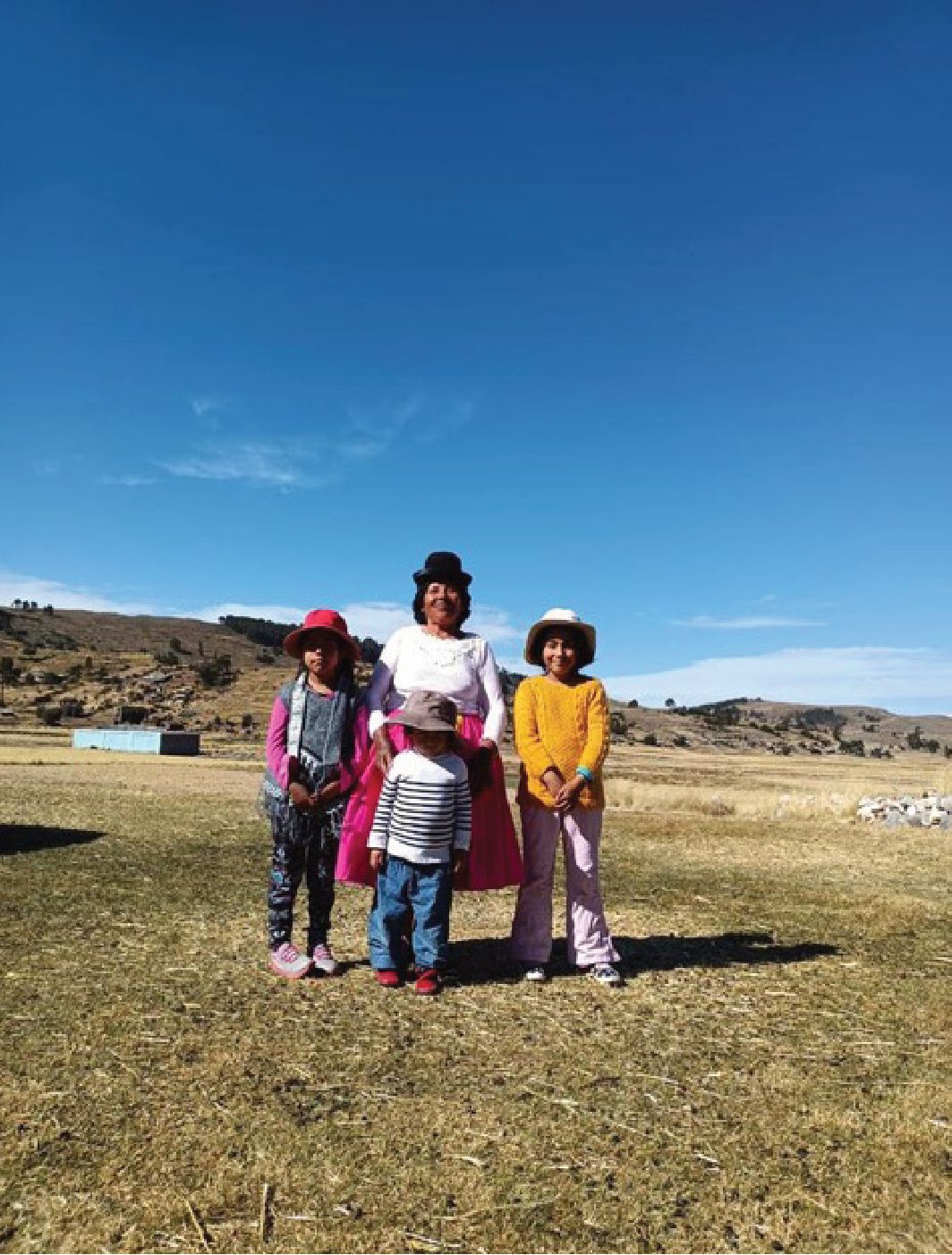
We women have been able to cooperate by working in Waru Waru and sowing terraces with the pickaxe: we have been able to do it alone. The Waru Waru that is made by two men raises the ground high to place the seed on top. The woman is the one who places the seeds and the guano. It is a shared work, but when there is no man, we work between two women.”
Griselda proudly acknowledges that the largest well-preserved Waru Waru are in the village of Acora and have been declared an archaeological heritage site, due to the historical importance of an ancestral technology.
Farming on terraces
Griselda remembers clearly that in her childhood the hillsides were cultivated on terraces, flat surfaces built on stone walls. During her childhood, Griselda helped to build cultivation terraces with her grandparents. As she grew up, she saw how they had stopped farming on terraces because of their advanced age. Several neighbours in the community began to alternate their time cultivating for family food with other activities in the town or in the capital of Puno to earn additional income. They returned to the fields to sow and harvest; the rest of the time they dedicated themselves to small commerce or various jobs in the capital of Puno.
In recent years, donkey or mule power began to be used to prepare the furrows for the annual sowing of crops on the terraces. These animals have always been highly valued for their energy and for requiring less food than bulls.
Griselda remembers her grandparents’ terraces during her childhood in the village of Platería. Her grandparents had built terraces in a field adjacent to the place called Ccota. These terraces have been planted for as long as anyone can remember. Around 1990 they were abandoned by the community. Despite this, they are still majestic and very much visited by locals and tourists from different countries. In the following decades, tractors began to be used for mowing and sowing in cultivated areas.
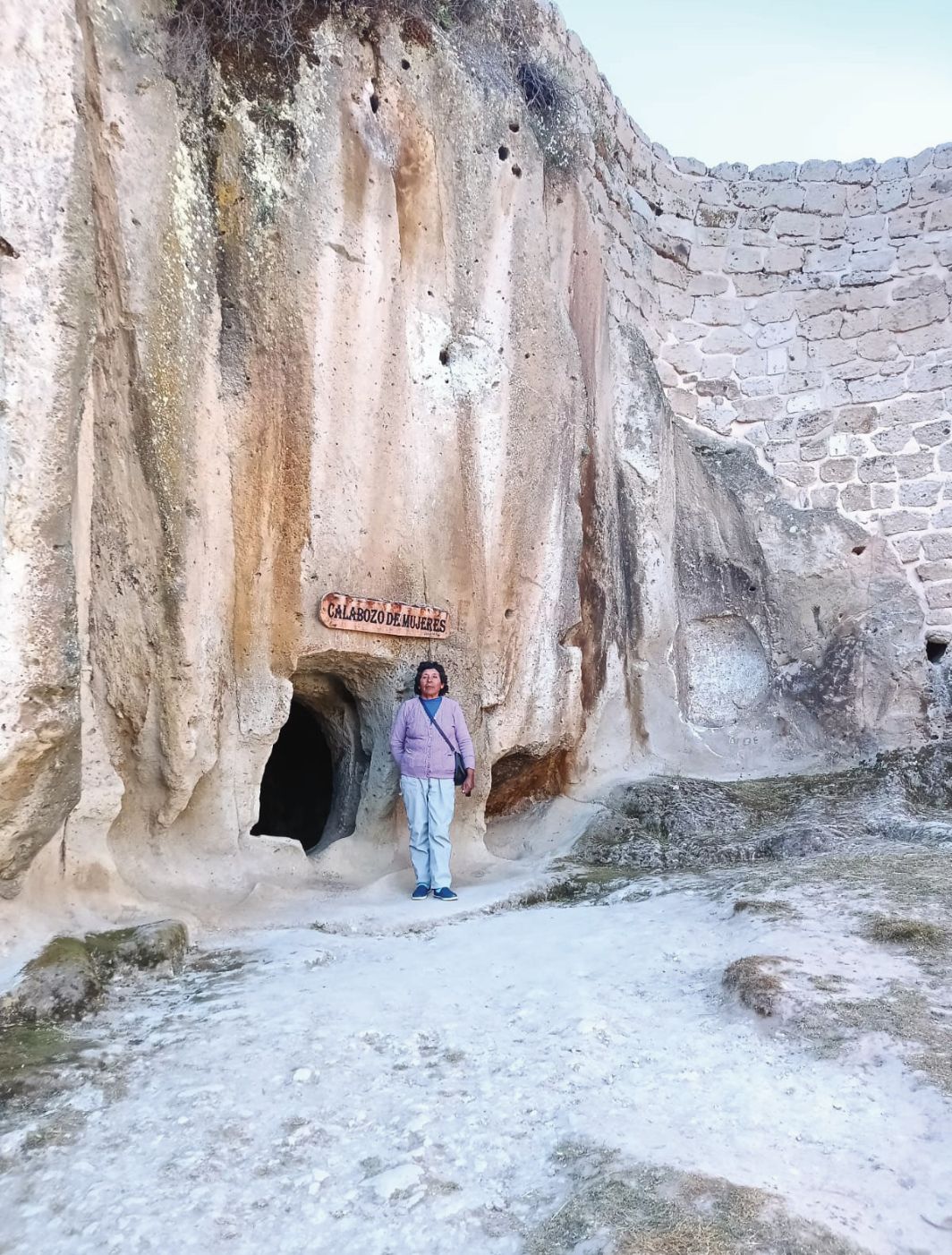
“We never went back to the yoke of oxen that gave us food.“, Griselda recalls kindly and sure that in the past the work was harder than in the present. Her memories of farming on the terraces with her grandparents date back to her childhood and culminate at the age of 15 when she travelled to the capital. Today there are no more cultivated terraces as there used to be. There were many cultivated terraces in the area where her parents and relatives lived.
She explains that the abandonment of the terraces has been due to the expansion of trade facilitated by the construction of a road linking the countryside with the cities of Puno and the nearby border with Bolivia and has led to a great deal of commercial activity and opportunities for migration back and forth.
She also tells us that in recent decades, the use of tractors was introduced and expanded among rural neighbours, encouraged by the opening of new markets for Andean grains such as Quinoa or Tarhui. The use of the traditional yoke was not replaced by new tools they coexisted for some time, the old and the more modern ones. The work in the fields was accelerated by renting a tractor for half an hour to an hour, depending on the terrain.
Local food in times of emergency
The Covid 19 pandemic has been a reason to go back to raising sheep by fattening them every day in the pastures of Huancarani, near Lake Titicaca. The sheep are complementary source of food for her family, her daughter and son-in-law, and her granddaughters and son-in-law, who live in the city.
In the case of Griselda, she cannot produce all she needs for daily life. She goes to the fairs and markets near Huancarani, in the town of Acora or in Chucuito. Her small pension is enough to support her stay in the countryside, where she produces foodstuffs such as quinoa and potatoes, as well as for her daughter and three granddaughters. With that fund she could cover the needs of all of them. In the nearby village of Acora and in Platería, she obtains local products such as beans, oca and fruit brought from other regions to the weekly market as well as the precious food during her work, the small fish Pesqe, which still manages to survive in Lake Titicaca.
Griselda, like other women, prepares at home dishes of quinoa with chuño, dried white potato and fish, with milk or cheese. She also eats alone or with her granddaughters, eggs and trout, small Qarachi fish or boiled crab with tunta, dried black potato. Sometimes Griselda travels to the nearby city of Puno to collect her monthly allowance as a retired teacher. At other times, her daughter travels to the peninsula of Chucuito where she meets Griselda, bringing her the amount of her pension from Puno. Until then, Griselda keeps up the routine of her work in the fields, weaving, sowing, grazing the sheep and taking care of the pure water of the puquio that her father left to her care and for the use of all the neighbours of Huancarani.
Sheep raising
In certain periods the people in the countryside look after more than 20 to 30 sheep. However, Griselda analyses aloud which results in the following reasonable calculation:
“I have seven ewes, but only three guagüitas (babies) have had offspring; only two more will be due to lamb soon. With those offspring, that would make ten ewes, with two more due in November”.
Griselda remains calm during this trial period; there is no work for now other than herding the ewes, preparing their food in the morning and knitting in the late afternoon. Before nightfall, she will put the sheep to rest. She will also rest from six o’clock in the evening indoors, knitting warm jumpers for her granddaughters. Her thoughts, worries and dreams revolve around the responsibility she assumes as follows: “Now we must sow. So, there are good days to choose from, not just any day, we must know which day is good. We choose dates, rainy days or Catholic saints’ days. If the year is well marked, then it will give good production. When it is not well marked, we must grab our Almanac. Sometimes it says Tuesday and we say bad day ... Then we see if it is a full moon in our Almanac. We read the Bristol Almanaque others read the official SENAMHI weather report...”
Final reflection
I have presented this text respecting the structure and form of the oral narrative, according to Griselda’s childhood memories and recollections as well as present reflections and practices. Much of it is written in her own words, the product of telephone conversations during the year 2021. It has been an enriching process of family dialogue with a woman, a friend who the COVID pandemic led her to resume her agricultural activities following the logic and voices of her memory from which emerged themes finely attuned to her natural environment.
I would like to emphasise that since the state of emergency decreed by COVID 19, Griselda spent a brief interlude in the city of Puno to fulfil her civic duty to vote and elect the new president of Peru. On her return, she confessed to me that it is better to be in the countryside than in the city. In the countryside, she works in the open air, lives in front of the great lake, enjoys a social atmosphere of solidarity, mutual help and appreciation for the agricultural work . In other words, the crisis opened to her the possibility of recreating the Andean Buen Vivir, which is nothing more than a commitment to rural life, in coexistence with nature, where many forms of life are possible.
Rights and permissions
Open Access. This article is licensed under a Creative Commons CC BY 4.0 license, which permits use, sharing, adaptation, distribution and reproduction in any medium or format, as long as you give appropriate credit to the original author(s) and the source and indicate if changes were made.
About this article
Cite this article
Romero, R. (2021). Between the countryside and the city: Female Rurality & Situated Knowledge. International Terraced Landscapes Alliance Journal, 2(1), 32–48. https://doi.org/10.5281/zenodo.7306821
- Published
- October 2021
- Issue
- Volume 2, Number 1
- Journal
- International Terraced Landscapes Alliance Journal, ISSN 2754-7639 (Online)
- Archive
- Zenodo record 7306821
- Andean highland agriculture
- terraces
- women's perception
- situated knowledge