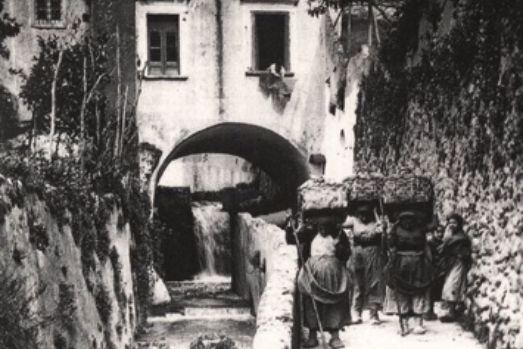
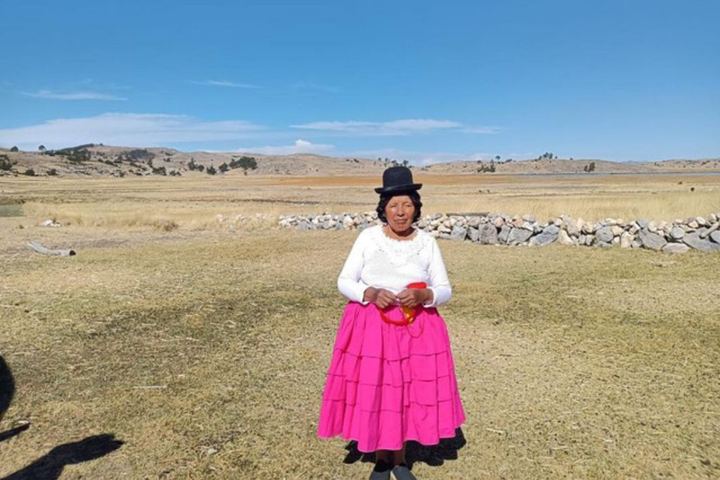
Stone-breaking in Skirts Women building terraces in Pelendri village, Pitsillia, Cyprus
Affiliations
- 1 Executive Director of the Laona Foundation for the Conservation and Regeneration of the Cypriot Countryside
International Terraced Landscapes Alliance Journal volume 2, issue 1, pp. 6–15 (2021) · Cite this article
- 176 views
- 180 downloads
- DOI10.5281/zenodo.7306789

Abstract
In the early part of the 20th century, the island of Cyprus in the East Mediterranean, then a British colony, had a mostly agrarian economy to which the whole family contributed its labour during the harvesting seasons (vineyards, carobs, olives, fruits, potatoes), if not all year round. So, village women were a regular part of the farming scene, working alongside their menfolk, whether it was sowing, tending to their cultivations, or maintaining the dry-stone walls that supported the terraces.
In the fifties and sixties, in the wake of the island’s independence came early tourism and light industry, as well as road works and other infrastructure. At that time, while village men joined the workforce, it was mainly women who took charge of the family’s agricultural activities, including maintaining the terraces on their land (terraces were officially encouraged to support the soils and prevent erosion).
This paper focuses on six women farmers of different ages from the mountain village of Pelendri, in the vine-growing Pitsillia area, who exchange memories and observations. They include the choice of stones selected for wall-making; the incentives received as encouragement for maintaining stone walls, in the form of foodstuffs; and the special challenges that women had to face being both full-time farmers, as well as homemakers and carers.
Keywords
- terraces
- women
- Pelendri
- dry-stone walls
- Cyprus
Cyprus is the third largest island in the Mediterranean (9251 km²) and a land use map from the 1950’s by geographer Demetris Christodoulou, shows a large part of it covered in terraced vineyards. This is not the case today. Although many terraces survive in the Troodos Mountain range, many are abandoned, reclaimed by natural growth, and others have merged into the hilly landscape, discernible only to the trained eye. The rock formations that underlie the island are of such variety – from creamy-white limestone and other sedimentary rocks to the dark lavas and igneous rocks – that there are noticeable differences between terraces in colour and shape of stone, as well as building techniques (Figure 1). For example, the way of interjecting small stones to close the gaps among bigger ones has a characteristic aspect which differs in the country itself, and also from similar terracing carried out in neighbouring countries such as Syria.
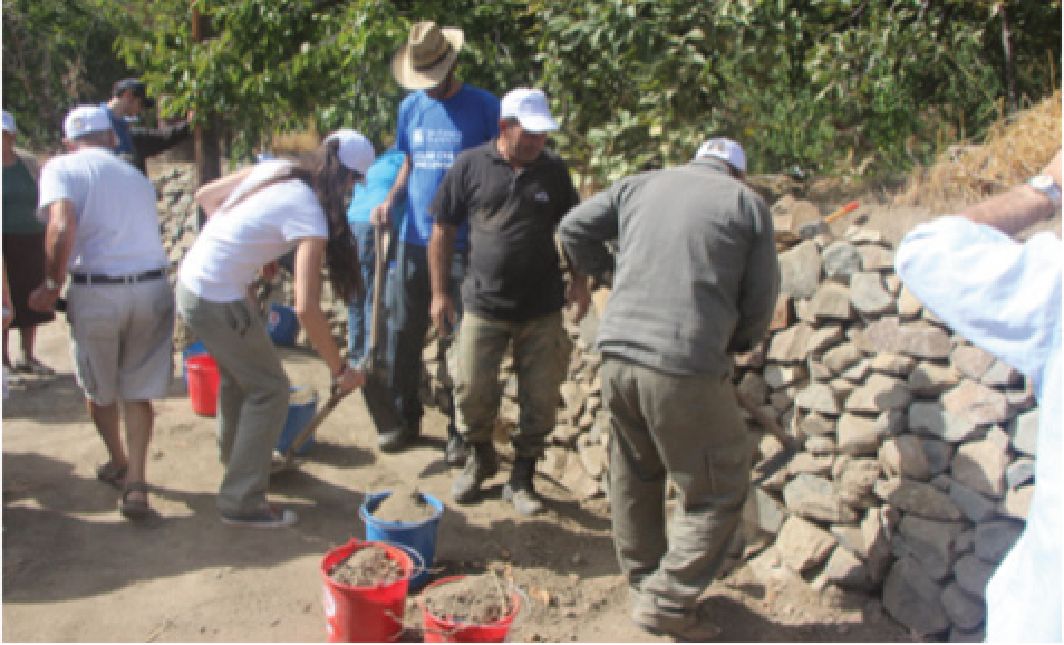
It was the observation that the ‘bigger stones’ were not so very big in the terraces of Pelendri (a village in the Pitsillia region of the Troodos Mountain range); and the suggestion that this is because women were heavily involved in terracing (adapting the choice of stones to their carrying capacity), that led the author of this paper to investigate further. Was this really the case? Was there something to be learned here?
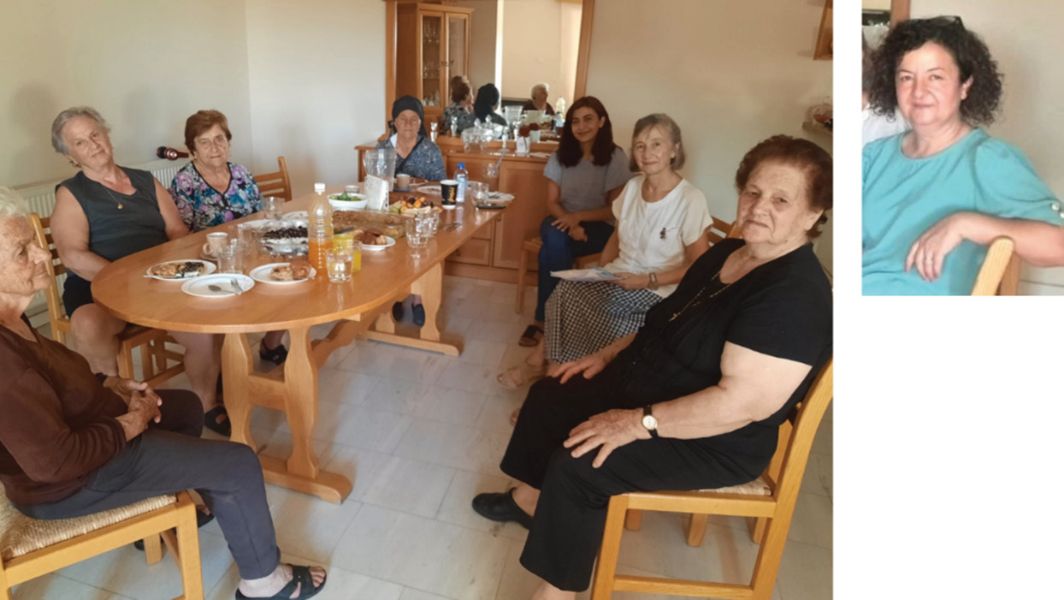
Eleni, a teacher of IT (Figure 2) in the district high school and member of a farming family in Pelendri, agreed to bring together six women involved in stone terracing in the past, for an unstructured joint interview. The process was loosely based on a questionnaire to help jog memories and to ‘move their story along’. It was felt that meeting them all together would act as a springboard, so to speak, helping to bring up more memories and experiences. The meeting took place on a hot July afternoon, supported with delicacies made for us by Eleni, the convener of the meeting, who is also the daughter and daughter-in-law of two of the six lady stone-wallers present. Their ages varied from early 60s to mid-80s. Although their experience was based on working on their families’ land (vineyards and other cultivations) it soon became evident that the older women had the fuller experiences and, also, the more taxing ones. The two older ones had done it all, from selecting and carrying stones to actually participating in building the terraces, whereas the 70-year-olds had joined the family on the land, helped with selecting and carrying stones, but the heavy work and construction was done by the men.
The two younger women (in their 60’s) had helped farm the land, but mainly watched the terracing process, although they claimed familiarity with it. They all assured me that their experiences were typical of their generation and were replicated by women in all the villages of the area. Their narratives exposed the harshness of life for those who worked on the land. All of them carried out their daily domestic chores on top of the farm work, at a time when washing-powder, let alone washing-machines, were an unknown commodity. Two of the older ones had gone into labour during or just after returning from their work on the land, and certainly there was no let up for women during their difficult days of the month in a society to which the sanitary towel was yet unknown. Graphic explanations were given about the use of strips of material which per force were changed only when the women got home in the evening for a wash in the tub, after heating water on a log fire. (Those familiar with hot Mediterranean climates will be aware that exposure to the heat causes much heavier period flows, especially if accompanied by active labour and carrying of weights; so it is to marvel that women kept going, come what may).
Did the women have any happy memories from those times? It appeared not. The only happy memories were unconnected to the land. For example, during the Carnival time (12 days just before Lent) women called upon each other’s homes dressed up as men or covered in sheets and had innocent fun.
By contrast, the litany of bad memories were all associated with the land and related to aching backs (which persisted through their lives), long hours and demanding fathers. The older ones whose memories were drawn from the 1940s and 50’s had been taken out of primary school and put on the land, while the boys were allowed to finish schooling. Loading the family donkey figured often in their reminiscences, as well as a less common experience: the annual visit of the official land steward. He assessed how many metres of terrace had been maintained, what the land had produced, and how long the water flowing through the common water channel, should be allowed to each cultivator for use on his land. The steward wielded considerable authority. In an agrarian society constantly threatened by the vicissitudes of climate and rainfall, the man who received a monthly government salary commanded immense respect, even today, as they recalled him from their memories. The land steward also claimed respect because he and his men handed out the coupons for the government-supplied free food items: sugar, cooking oil, bully beef, that contributed to the family budget. Our meeting convener, now in her forties, remembered being instructed by her mother to take the coupons and be at a certain field at a certain time so as not to miss out, when the food items van would arrive. The two older women had gone from working on the land to working on the construction of public roads, their terrace building experience having stood them in good stead. They removed the earth and stones and spread the tar in unbearable conditions, due not only to the sun, but also to the heat exuded by the flames of the tar-layer machine itself. But the women were paid a regular wage, and they liked the feeling of earning their own pay, even if most of it was handed over to their father.
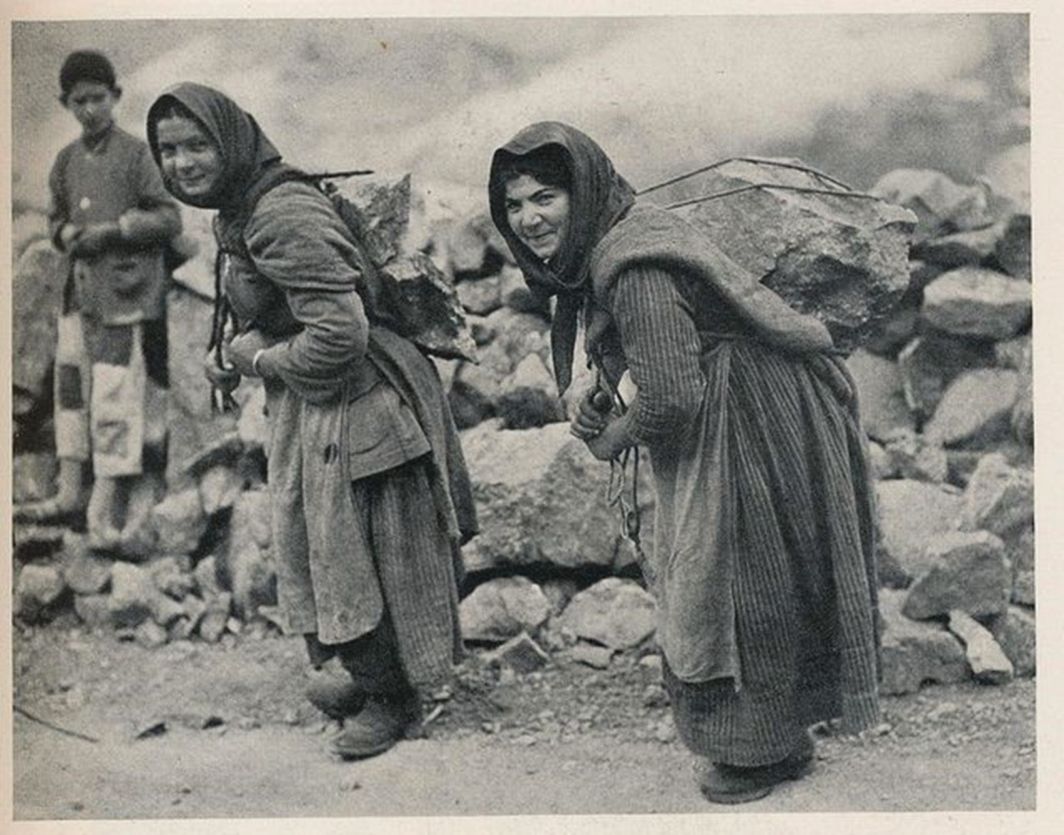
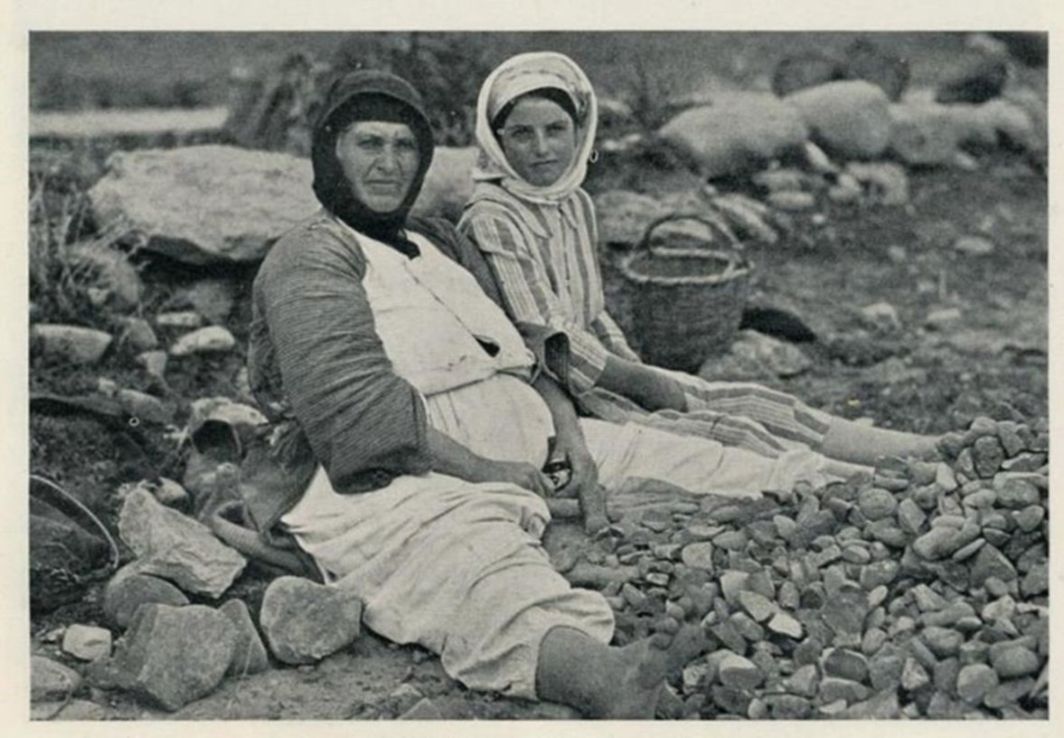
Many social historians consider that mining in the early 20th century was what took men off the fields, creating the first working classes and the forerunners of trade unions. Working on the roads – a labouring occupation that attracted both men and women –seems to have been over-looked as a major contributor to mass labour beyond the field. And yet, these tasks dating from the 1920’s carried on well into the 1950’s and 60’s, with women as part of the work force, even though they were paid less than men, because of their comparatively lesser ‘horsepower’ (Figure 3). Other women had moved on from picking stones off the ground (Figure 4) on their land to picking oranges off the trees in the low-land orange plantations. At a time when the only means of transport was one bus going down in the morning and one returning in the afternoon, they would leave at the crack of dawn for the two-hour journey on the long and winding road. They wore trousers under their skirts to shield them from male eyes as they climbed ladders pitched against the citrus trees. Their arms ached, and they knew that on return there would be children waiting, meals to cook, cleaning, washing, and ironing; but they were getting a regular wage. For farming families with unpredictable incomes from the land, that regular pay was important and made it all worthwhile.
So, what came out of this meeting in Pelendri village and the stirring of common memories?
The affirmation that women played an active role in terracing in the days when farming was an active occupation. The confirmation that those times were hard, and women had to play all roles: farmer, mother, home-carer, with farming always being the top priority, even as they were about to give birth. And yet, despite the hard conditions, they stated that their lives held more interest, adventure, and novelty than women of the same age today whose lives revolve around ‘softer’ options. The technological advances that appeared over the years (such as refrigerators, purpose-built bathrooms) improved their quality of life immensely and were never taken for granted. An unexpected find was the fact that women went on from stone terracing to even harder ‘careers’ as road-makers, complementing, the male workforce. As mentioned, regular pay was the lure that brought women off the farm, so it is fair to say that women, too, contributed to forming the first working-classes. And even though they were not urban, in the sense of being landless and forced into the cities (but neither were most miners landless), these were the first instances in the 20th century of women working outside the family in a ‘mixed’ occupation with men who were not members of their family.
There are projects today, notably in villages such as Alona, Platanistasa, and Polistipos in the Troodos Mountain range, working to revive the craft of dry stonewalling, in coordination with the Cyprus Institute. Men and women attend, mostly as a weekend activity. The focus these days, when agriculture is much diminished, is also on the environmental benefits of stone terraces, as natural habitats and for protection against soil erosion. Cyprus has just suffered catastrophic forest fires (June-July 2021) which burnt out about 55km² of forest and agrarian land. There is much talk of taking action to prevent erosion of the devastated hill sides, especially on land intended to be replanted in due course. Might this lead to a revival of dry-stone walling and the agriculture it supports?
Post scriptum: Since this paper was written the Laona Foundation has organised the restoration of more than 150 metres of stone walls on burnt lands.
References
- Christodoulou, D. (1959) The Evolution of the Rural Land Use Pattern in Cyprus. Geographical Publications, Monograph 2: Cyprus, ed L. Dudley Stamp, World Land Use Survey, London
- Constantinou, G. and Panayides, I. (2013) Cyprus and Geology: Science – Environment – Culture. Nicosia: Bank of Cyprus Cultural Foundation.
- Demetriades, K., Sofocleous, A., Argyrides, P. (2017) Geography of Cyprus. Nicosia: Cyprus Geographical Association.
- Zoumides, C., Bruggeman, A., Giannakis, E., Camera, C., Djuma, H., Eliades, M. and Charalambous, K., 2017. Community-based rehabilitation of mountain terraces in Cyprus. Land Degradation & Development, 28(1), pp. 95-105.
Rights and permissions
Open Access. This article is licensed under a Creative Commons CC BY 4.0 license, which permits use, sharing, adaptation, distribution and reproduction in any medium or format, as long as you give appropriate credit to the original author(s) and the source and indicate if changes were made.
About this article
Cite this article
Yiordamli, A. (2021). Stone-breaking in Skirts Women building terraces in Pelendri village, Pitsillia, Cyprus. International Terraced Landscapes Alliance Journal, 2(1), 6–15. https://doi.org/10.5281/zenodo.7306789
- Published
- October 2021
- Issue
- Volume 2, Number 1
- Journal
- International Terraced Landscapes Alliance Journal, ISSN 2754-7639 (Online)
- Archive
- Zenodo record 7306789
- terraces
- women
- Pelendri
- dry-stone walls
- Cyprus