Women's voices from La Gomera: Multiactivity and self-recognition on a terraced island
Affiliations
- 1 Independent researcher, Canary Islands, Spain
- 2 Instituto de Oceanografía y Cambio Global (IOCAG), Universidad de Las Palmas de Gran Canaria, Spain
The Journal of Terraced Landscapes volume 1, issue 2, pp. 50–81 (2020) · Cite this article
- 155 views
- 173 downloads
- DOI10.5281/zenodo.8059503
Abstract
This work aims to contribute to the knowledge of the way of life of the inhabitants of terraced agricultural landscapes, with special attention to the work carried out by women and to the self-recognition of the value of their work. For this, it is necessary to listen to the female voices that have been made invisible and undervalued by a patriarchal society and by a historiography practiced by men.Through interviews with women over 70 years of age, from different locations with terraces on the island of La Gomera, the aim is to incorporate the female experience into individual and intra-history. of these cultural agro-landscapes during the last stage of the Franco regime. This work is based on the concept of cultural landscape. Terraced landscapes are landscapes built, cultivated, inhabited and perceived by its inhabitants, an expression of the deep knowledge of the environment by its inhabitants. For this reason, the interviews have tried to address all these aspects. The results show that women from La Gomera has also formed an active part in the structure of economic, social and domestic life in these cultural landscapes. They have been the custodians of the rich and diverse intangible heritage since time immemorial, although agricultural abandonment is endangering the survival of that legacy. The women interviewed recognize the important work carried out by them, individually and collectively in the survival of these landscapes in a hard period in the history of La Gomera.
Keywords
- women
- terraced agricultural landscapes
- knowledge
- trades
- self-recognition
- La Gomera
Since its very conception, rural women have been a driving force behind agricultural production. According to the Food and Agriculture Organization of the United Nations, they are responsible for 60-80% of food production in developing countries and 50% worldwide (FAO, 2000).
In recent decades, factors that include male emigration, the globalization of agrifood systems, conflicts and, more recently, global pandemics, have seen a rise in the ‘feminization of agriculture’ (Lahoz, 2006; Slavchevska et al, 2016). Although this is a modern-day global process, it should be highlighted how, on La Gomera (Canary Islands, Spain) there are several episodes of feminization associated with the wars (independence of the American colonies, world and Spanish civil wars) and migratory processes (Cuba and Venezuela) and, in a more recent stage, with the long working hours of the men who worked in construction of dams and roads on the island.
Nonetheless, the greater presence of women in agricultural activities has not necessarily been accompanied by their empowerment (Lastarria, 2006), understood as the set of processes that bring about the development of self-confidence, self-esteem and the capacity to undertake meaningful actions that promote change and enhance personal dignity at a personal, collective and close-relationship level (Rowlands, 1997).
The invisibility of the rural woman, defined as a social and hence systematic construct, unseen and unheard in numerous areas of the political, social, economic, and cultural reality, has been a constant throughout history (Ascanio, 1998 and 2000) and historiography (Rey Castelao, 2014). Indeed, many authors have spoken of the triple invisibility of rural women; for their status as female, rural and worker (Camarero et al, 2006).
In Spain, it has been shown “that official data underestimate the activities of rural women by some 85%” (Camarero et al, 2006, p.139). Therefore, the use of interview-sourced information and data collection methods has been recommended to explore the reality of their work without prior assumptions of its importance or social utility (Camarero et al, 2006, p. 144).
On the Canary Islands, some island-based associations for the promotion of rural development have carried out works aimed at recording and saving the know-how of rural women. These include the Saberes Project (‘saberes’ meaning ‘wisdom’ in Spanish) in Gran Canaria which is involved in the preservation of rural women’s custodianship of seeds, tastes and sounds (AIDER GC, 2018). Other relevant initiatives include attempts to preserve the knowledge held by craftswomen of La Gomera specialising in clay pottery and the palm tree, and in agricultural work (stone wall building, grapevine cultivation, export crops, etc.) although in the latter case there is less specific emphasis on female involvement (AIDER La Gomera, 2008).
Very little, however, has been published aimed at raising awareness of the work and life of the Canary rural population in so-called ‘subsistence or family agriculture’, particularly in the period of the Franco dictatorship which marked the end of the economic model based on primary sector activities. This lack of studies can have drastic consequences for the preservation of traditional culture and landscapes as they are the result of accumulated knowledge, skills and culture of relating to terraced landscapes over centuries. Its loss can generate a crisis of cultural identity and knowledge that can continue to be useful in the event of a return to agricultural activity. The only scientific papers that study the invisibility of women in the rural environment of the island of Gran Canaria or of the Canary Islands as a whole, are those of Ascanio (2000) and González-Pérez (2004), respectively. On the other hand, there are papers published by the Research Group on Underdevelopment and Social Delay (GISAS) of the University of La Laguna on the role of rural women in the transition from an almost despotic semi-feudal agrarian economy to a contract worker - based in the southeast of Tenerife and in La Gomera (Jerez Darias, 2015; Studer Villazán et al, 2017).
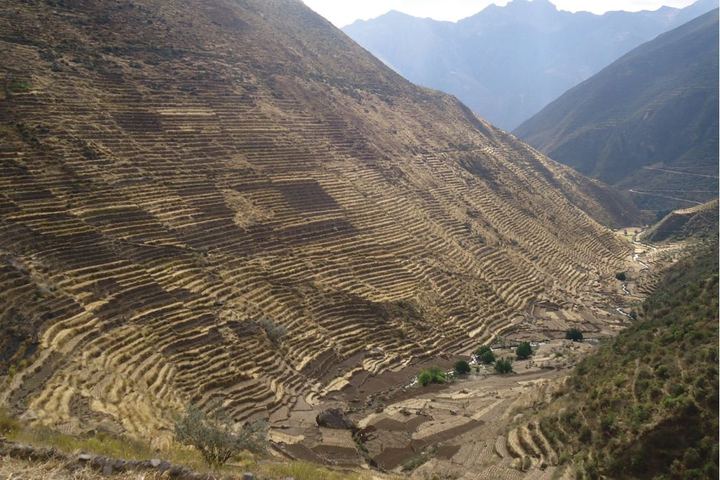
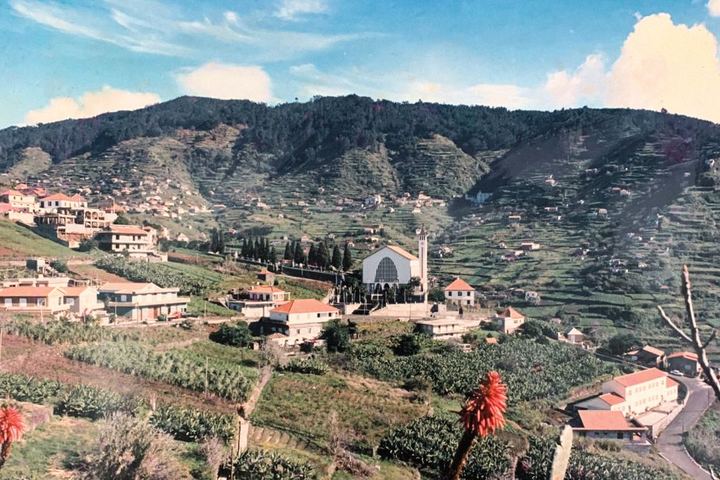
On one of the most mountainous islands of the Canary archipelago, such as La Gomera, agricultural activity was established following a process of banking that began with the cultivation and sugar industry (late fifteenth century) after the Castilian conquest. The terraces currently continue to be the defining characteristic feature of the agricultural landscapes of this island (Romero Martín et al, 2019a and b). The diversity of these terraces is such that they receive several different names in Spanish, many of which give rise to place names. In this document, from now on we will refer to them simply as “terraces”.
These types of cultural landscape have been the object of study and protection by the International Terraced Landscapes Alliance (ITLA) since its foundation and first World Congress (Honghe, China, 2010). La Gomera was one of the hosts of the IVth World Congress of ITLA in 2019 which showcased the magnificent system of terraced slopes of this island and indeed others in the macaronesian region, as well as those from 20 other countries. Included among the lines of study and action of ITLA are, most importantly, the recovery and preservation of their knowledge and culture.
The present study follows this principle, one of its objectives being to recognize and make visible the rural women of La Gomera. Their life and work on the island’s terraces has made them acquire and accumulate a culture perfectly adapted to their environmental characteristics, coevolving with their socioeconomic history. Very little has been published, at either international or local scale, on the gender perspective in relation to these agrosystems. For this reason, we consider it necessary to incorporate, analyse and discuss the ‘feminine viewpoint’ in the common history of the agricultural terraces of La Gomera.
In view of all the above, the general aim of the present article is to make known the life and work of rural women in the framework of the terraced agrosystems of the island of La Gomera. There are two additional specific aims: the collection and analysis of testimonies provided by the women about their knowledge, occupations (both inside and outside the family circle) and life experiences and, secondly, an evaluation of the extent to which their labour (in the age in which they happened to live) has been acknowledged, recognised and appreciated.
2. Study Area
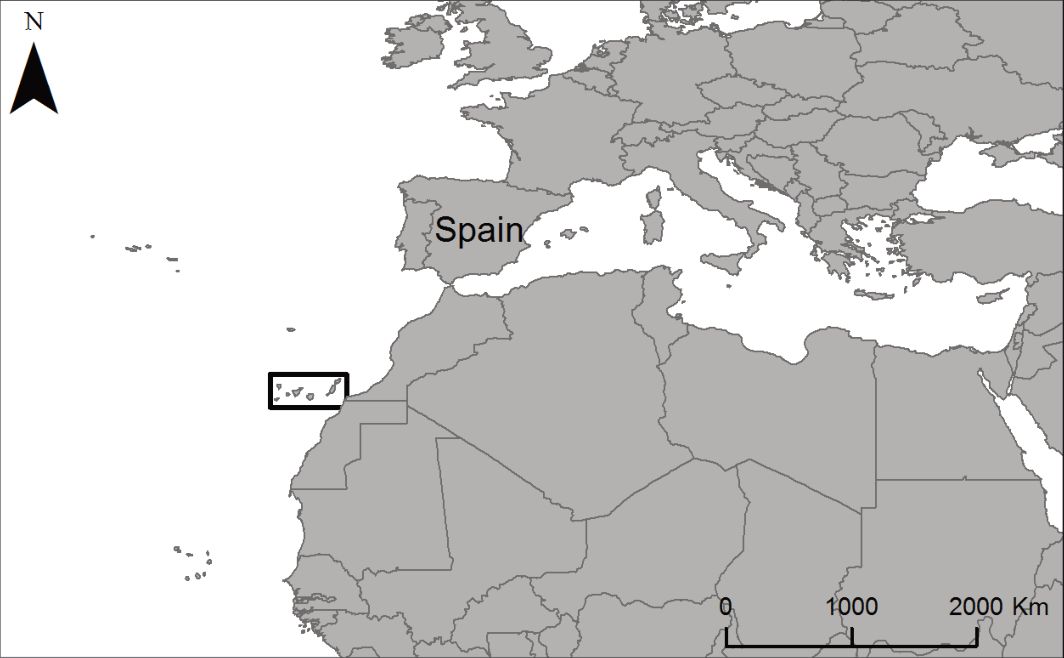
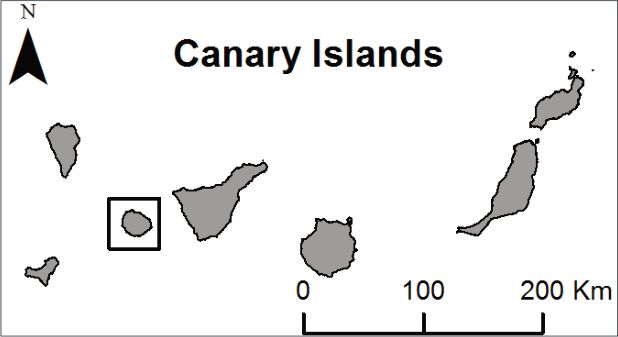
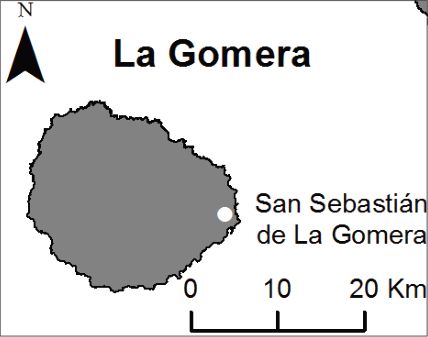
La Gomera is the sixth largest of the eight islands that make up the Canary archipelago, located in the northeast Atlantic off the coast of Africa (Figure 1). Small in size (369.8 km2), it rises steeply from the coast to its central plateau, Alto de Garajonay, at 1,487 m above sea level (a.s.l.). This volcanic island, though without eruptions for some 2 million years, has been described as an ‘authentic museum of eroded volcanic forms’ (Carracedo, 2008, p.161). It is an ancient massif with a roughly elliptical shape where intermediate heights (73.4% of the island’s surface area falls between 200 and 1,000 m a.s.l.) and sharp slopes (61.2% of the surface area has slopes > 12°) predominate and very few flat areas are found (Santana and Villalba, 2008). Its shape can be compared to that of an orange juice squeezer, with a very abrupt relief, characterized by a radially distributed network of ravines which originate in the central plateau, and a cliff-dominated coastline (Figure 1).
The natural and cultural values of the island have been recognized by numerous institutions, including UNESCO who, in 1986, listed Garajonay as the first Spanish World Heritage Natural Site. Garajonay had previously been declared a National Park by the Spanish state in 1981. The whistled language of La Gomera, the Silbo Gomero, has been included in the intangible cultural heritage list of UNESCO since 2009 and the island as a whole was declared a Biosphere Reserve in 2012. At the same time, the regional autonomous community government has incorporated 17 spaces, which correspond to 33% of the surface area of La Gomera, in the Canary Network of Protected Natural Areas.
The island has an abundance of resources (water, fruit, dye-producing plants, timber, fish, seafood...), which were already being exploited by the island’s first pre-Hispanic settlers. However, it was not until the conquest and colonization of the island by the Spanish in 1488 that the terrace-building process and agricultural activity began, reaching its zenith in the 1960s. From the beginning, two opposing agricultural models have co-existed on the island: the traditional model of subsistence farming and the commercial or food export model (Jérez and Martín, 2017). Plots for subsistence farming tend to be situated inland and at mid-elevation and in valley beds. Different types of crops have commonly been grown (cereals, vegetables, fruit, grains) by small landowners and/or landless peasant farmers working on common land. Small landowners have also often found themselves obliged to work the lands of others to ensure their subsistence. Entire families were subjected to this kind of semi-feudal existence. The terraces dedicated to subsistence crops have experienced the greatest degree of abandonment in more recent times, particularly as the result of the mass emigration that took place during the 1950s, “great post-war population crisis” (Burriel De Orueta, 1982)1 and today those that are still in operation are commonly cultivated only on a part-time basis. Export agriculture - based on the cultivation of a monoculture - began with sugar (in parallel to the exploitation of the salt mine) followed by the vine and cochineal2. These crops were largely replaced from the beginning of the 20th century onwards with the introduction of tomato and banana cultivation. The owners of the banana and tomato farms were large local and foreign landowners who invested in major hydraulic works.
The workers were local people working under a semifeudal sharecropping regime in the case of the banana crop and as tenant farmers in the case of the tomato crop. In both situations, workers’ rights were virtually non-existent and entire families were typically subjected to extensive practices of abuse of power. The farmed terraces of bananas and tomatoes were distributed around the entire coast of the island, though finally tomato growing became more concentrated in the hills of the south of the island where the climatic conditions were more conducive to its cultivation (Jerez Darias, 2015; Jerez Darias y Martín Martín, 2017).
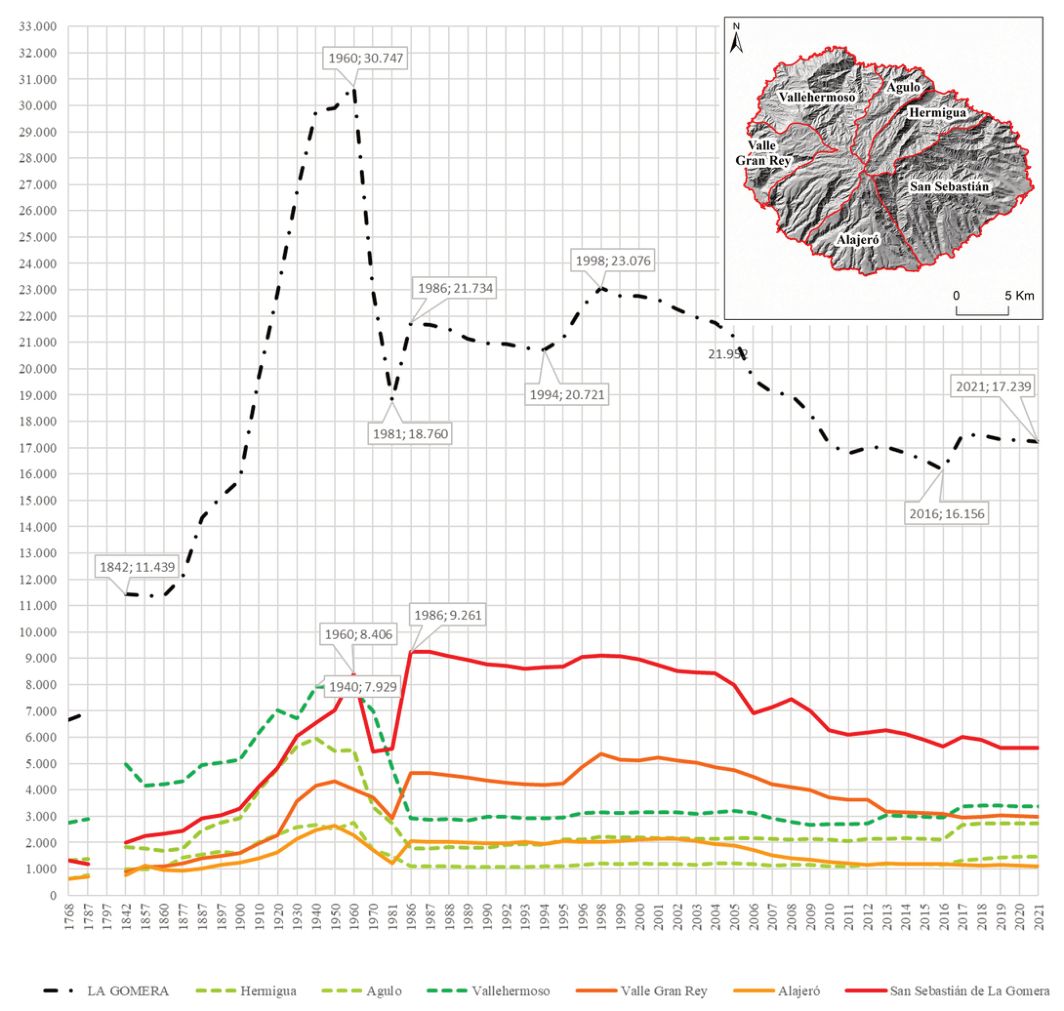
The greatest changes in the agricultural history of the island took place during the 20th century, with a rapid population growth, which induced territorial pressure, and intensive terracing and tilling of lands gained from the mountainsides. A clear demographic and geo-economic inflection point can be seen in the 1950s and 1960s (Figure 2). The population census that was held in 1960 shows a peak number of inhabitants (30,747) that is double the number at the start of that century and considerably higher than the 17,239 recorded in 2021 (ISTAC, 2022). From the decade of the 1960s onwards, an economic polarization began to take place that was favouring the southern slopes, with the valleys of the north (Vallehermoso, Hermigua and Agulo) undergoing socioeconomic stagnation. A significant part of the large export-based farming properties of the valleys and hills of the south were converted into tourist developments and residential areas. The island economy saw a drastic departure from being farming-based (76% of the active population in 1950) to becoming strongly dependent on tourism and services (80% of the active population, according to EPA, 2021) (Figure 2).
Migration, first to Cuba (second half of the 19th century3), later to Venezuela (1947- 1980, post Spanish civil war-Venezuelan oil crisis) and more recently to Tenerife (1970s and 1980s), acted as an ‘escape valve’ against underdevelopment, social injustices and the uncertain future of La Gomera’s population. The first of these emigratory periods let mainly to the loss of young men, while the second was a process that began with the departure mostly of married men who would, in some cases, subsequently call upon their wives to join them (a ‘family regrouping’ initiative promoted by the Venezuelan government). Often, however, the families would never be reunited and the emigrees would settle down with Venezuelan creoles4. Exactly how many women joined their husbands and how many were permanently left behind is difficult to know as the emigration statistics did not include the names of the women (Hernández González, 2008).
Another important factor to consider is the highly deficient communication network on the island. This was correct until 1949 when the northern highway was finally completed. And even until the 1970s, when the port of San Sebastián de La Gomera began to grow and the ferry connection to the south of Tenerife was opened, as a result of the rapid growth of tourism there. Prior to that time, however, any travel that was made on the island was on winding and dangerous roads and paths (Curbelo, 1984).
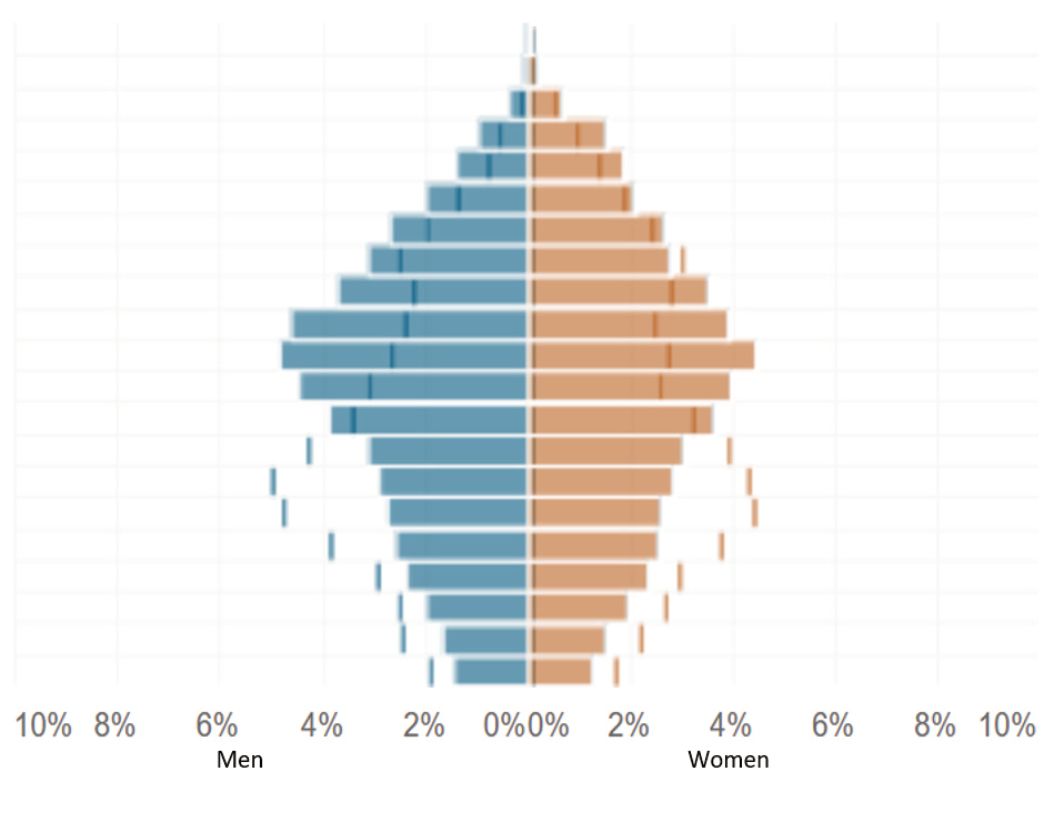
La Gomera presently has the third lowest population of the different islands in the Canary archipelago with 17,239 inhabitants (ISTAC, 2022). It has an ageing population (Figure 3) with a low birth rate, and a highly varying female:male ratio5 (in 2021, from 100.1:100 in Agulo, a municipality in the north of the island, to 89.54:100 in Alajeró, situated in the south of the island) (Figure 3).
Within the archipelago, the island is in penultimate place in terms of cultivated agricultural land, after Fuerteventura, with 853 ha (2021, ISTAC). Today, la Gomera’s inhabitants mostly work in the service sector, with the island welcoming around one million tourist visitors each year. The island has become a nature-based tourist destination, with interest primarily in hiking and cultural and scientific topics. Since 2009, it has formed part of the EUROPARC network through the European Charter for Sustainable Tourism, with the management of the Garajonay National Park, the Association of Rural Development and other public-private institutions ensuring the defence and promotion of ecotourism on La Gomera.
The abandonment of agriculture, the fall in the number of inhabitants, the ageing of its remaining population and the rise of tourism are endangering the preservation of the cultural terraced landscapes of the island, its agricultural diversity (traditional varieties of cereals and legumes, fruit tree orchards, grapevine cultivation, etc.). Although some walls of the farmed terraces have been restored (thanks to the La Gomera Ecoplan, different plans developed by island associations, tasks undertaken by the island’s local government), important work has been carried out to save and preserve the cultural memory of the terraces (AIDER La Gomera, 2008), and new custodial territory management formulas have been tested (AIDER La Gomera, 2010-2013), these have been insufficient to slow down the state of abandonment and deterioration of many of the terraces or to promote their active recovery. Finally, it should be noted that this deterioration not only affects the walls of the agricultural terraces, but also palm groves and farmhouses, along with many other elements of the ethnographic heritage associated with agriculture and animal rearing (presses, wells, threshing floors, bread-making ovens, brick ovens, limestone kilns, corrals, stables, cave houses, mills, etc.).
3. Methodology
The methodology employed is qualitative in nature. Several semi-structured interviews were held with questions in three thematic blocks: biographical data, occupations and knowledge, and life reflections, to learn about their lives within the terraced cultural landscape of the island
During the interviews these topics were tackled with a dynamic margin so that the women would perceive the interview as an informal chat that would make them feel comfortable when expressing themselves and, in this way, provide the interviewer (lead author of the present paper) with the opportunity to uncover aspects that had not previously been taken into consideration. Open and general questions were formulated, which, over the course of the interview, evolved towards more specific questions under the semi-direction of the interviewer who would redirect the conversation to the thematic blocks.
A total of 8 women were interviewed during 6 sessions, with two women being simultaneously interviewed in two of the sessions. Although it was hoped to be able to cover the entire island in terms of interviews with women from the six municipalities of the island, we were unable to find interviewees from two municipalities in the south: Alajeró and Valle Gran Rey. The north of the island, however, was fully covered, with 1 woman from Hermigua, 3 from Vallehermoso (2 of which from Tamargada district), 1 from Agulo, 2 from Cuevas Blancas (San Sebastián de La Gomera) and 1 from Tejiade (also San Sebastián de La Gomera). The selection of women was based on a similar profile, focusing especially on age, social class, and proximity to agricultural work. In this line, the women interviewed come from the peasant social class, with an age between 70 and 90 years (interval in which they were able to consciously experience the Civil War and the postwar period), and who dedicated themselves in their youth, and part of their adult life to work in the fields. Currently, some of them continue to cultivate their land idly, while others have no contact with agriculture, either due to age, lack of property or because they do not want it. The main themes that were addressed in the interviews were two: on the one hand, their link with the stone-walled landscape (such as the domestic and agricultural tasks they performed), and on the other hand, self-recognition and social life. Including the knowledge and occupations of the women, their opinions on self-awareness, how they value their contributions, as well as questions and reflections on traditions and aspects of their lives in the past that they miss in the present. All the interviews were orally recorded after obtaining prior consent to do so. The results given in the following section were obtained after analysing the transcriptions of the interviews, treating the data obtained from a deductive analysis that starts from their testimonies, and following the structure of the interview. Based on the testimonies of the interviewees, the aim was to uncover information about the past history of rural women from La Gomera island, their domestic stories, and their female intrahistory. The methodology that was followed, which involved directly listening to the women relating their own life stories, also allowed us to ensure the preservation of multiple aspects of their lives that would otherwise have run the risk of falling into oblivion. The prime purpose was not merely to give voice to these women, but to additionally use these studies as tools to ensure those voices are heard.
4. Results
4.1 Occupations and knowledge of women in the terrace agrosystems of La Gomera
The women interviewed, all of whom were born in La Gomera, had an average age of 82 (in 2021), and their lives had been closely connected with farming in different forms and occupations. While their original family structures were varied (for example, the interviewee IH had 15 siblings in contrast with CA who had just one sister), all of them had married and formed families with generally 2 or 3 children. Just one (HP) had stayed on the island when her husband emigrated, whereas the others went with their husbands to Venezuela (LA, JM and two who preferred to remain anonymous) or Tenerife (one who preferred to remain anonymous). All the women described their own life in their rural environment as, at the very least, highly demanding. Although the work they undertook received little external recognition, they described the tasks they performed as being of equal value to those of their husbands since they considered the contribution that each was making as essential for the survival of the family. For this reason, while there may have been a gender-based work distribution (especially regarding those that demanded physical strength or ‘brute force’, as required in the construction, for example, of large terraces, tanks or roads), they did not perceive their work as being ‘unequal’ even though it was unpaid (unlike that of their husbands) but rather as being part of a reality with which they simply had to live.
The construction of the terraces (where the farming activities would take place) was a task predominantly carried out by the men given the physical strength that was required. Nonetheless, the women would contribute and participate in some tasks, like transporting buckets with stones for the construction of the walls. However, while there was generally little or no participation by the women in the actual terrace construction itself, all the interviewees were able to describe in perfect detail the different steps and materials necessary in the process, including the use of guidelines, wedging stones, earth filling, and donkeys (to transport the materials). They also explained the meanings of several local words and expressions that were used to describe different aspects of the process, including sorriba6, portillo7, ripias8, ereta9, and llano10, the different uses of harder and softer stones, and the names of tools used to shape or move the stones, including the marrón and barra11. One of the women offered the following description:
They’d shape the stone with a hammer. You see how those walls are levelled, well they’d stretch a line of thread from that corner to this one and the wall would end up perfectly levelled. Stone by stone and with no cement. One further in and another further out, acting like a wedge. You should go to Cuevas Blancas and have a look there (IH, 2021). Another explained a part of the process in the following manner:
The men with a claw tool and hammer... They’d have a sort of mallet, large and heavy. The man would lift it over his head and smash it down to split the stone. If it didn’t split completely it would usually at least open up a bit of a gap and they’d stick an iron wedge in there, whack the wedge with the mallet and split the stone that way (EM, 2021).
Some of the women highlighted the brute force that was required to carry out this work and how it was impossible for them to lift or carry as much weight as the men. However, they did not see this as a question of inferiority but rather a simple distribution of tasks. The interviewees were born and worked on the lands that their parents and grandparents shared with others and/or on small plots which they owned. Their participation in agricultural tasks included numerous activities such as planting, collecting or bartering food, among others, although the intensity of the work may vary due to different issues (number of children who can help in the family unit, as well as the presence of the husband or other relatives to distribute the work).
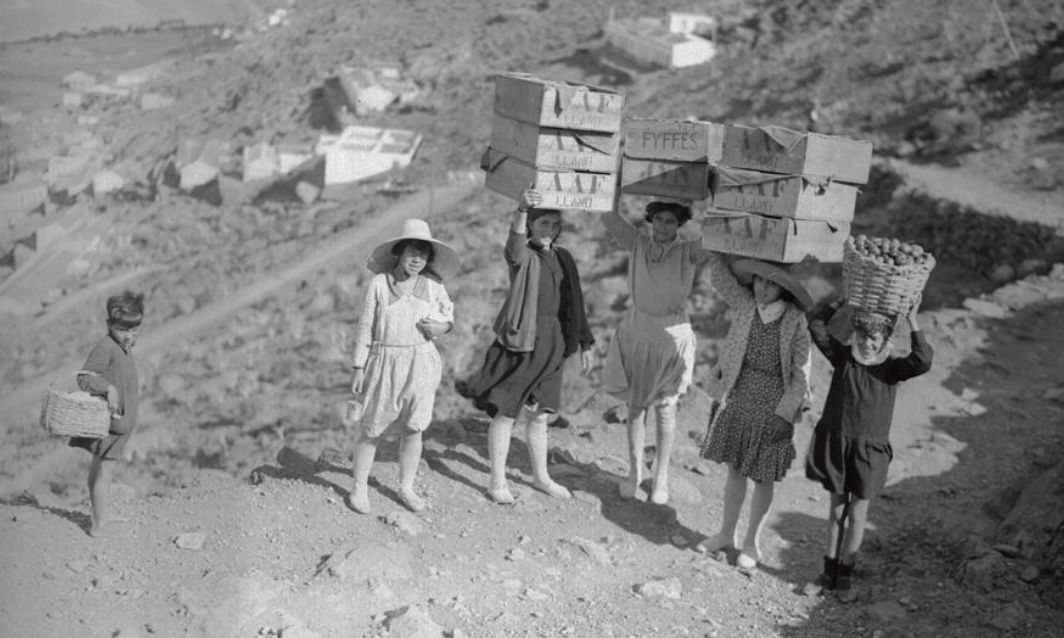
In all cases, the crops that the worked lands supplied were used to sustain the household, and it was the women who managed the meals, cooked and fed the family. A traditional form of goods exchange - bartering with neighbouring households and nearby settlements - was employed to obtain other foodstuffs that were not supplied by the families’ own land. On occasions, the women would go by foot (sometimes barefoot) to other places on the island to exchange, purchase or sell food (Figure 4).
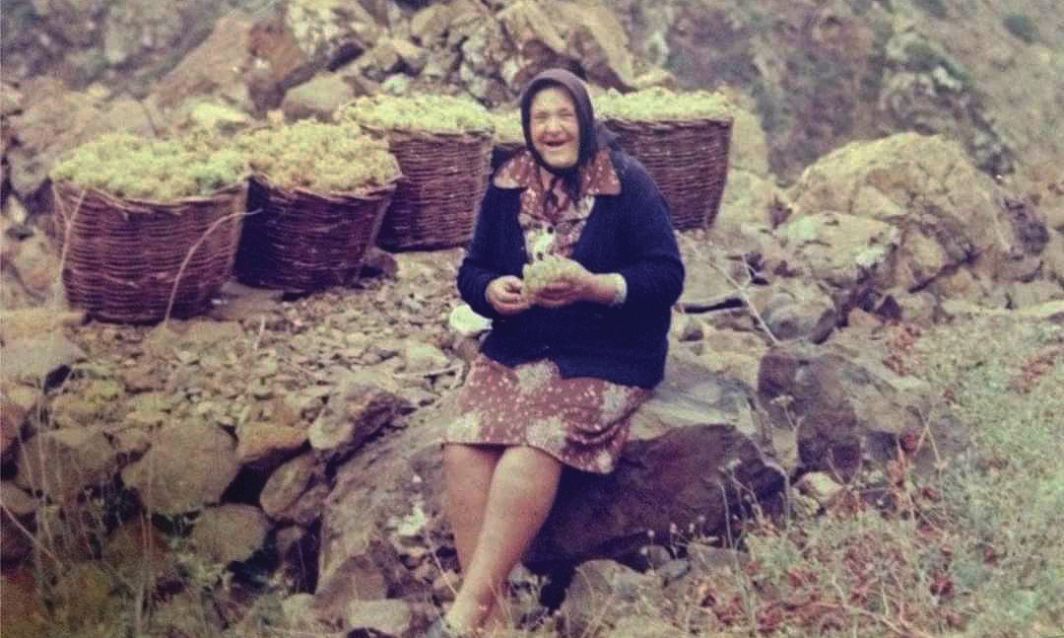
The viticulture process was the same in all stories presented by the women interviewed: leaves were removed to allow better sunlight access and to extend the growing period of the clusters. When the grapes were fully grown, the clusters were cut and taken to the press, where the grapes were crushed underfoot and the must was obtained. This was commonly an opportunity for a family gathering which combined work and fun and in which both adults and children would participate (Figure 5). On occasions, the crushing process would be repeated to obtain a better must. The barrels were then filled and left in rooms for storing wine barrels for at least two months. Today, however, this activity has disappeared to a large extent, with the traditional processing method largely abandoned. Many of the presses around the island have fallen into disuse, are in ruins or have been left behind in sheds and forgotten about.
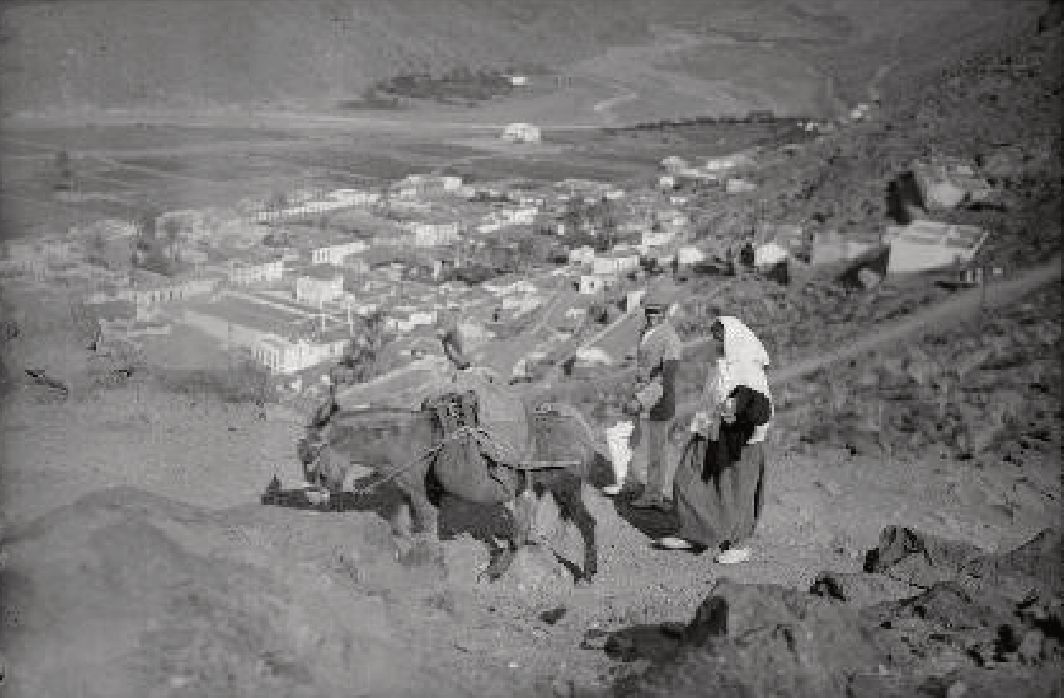
The women were also responsible for looking after the animals from a young age. All the families had animals of one sort or another: goats, cows, sheep, chickens, pigs and donkeys. While the donkeys were only used for carrying loads (Figure 6), the others all played a vital role in providing food for the family. Looking after these animals was an essential role in the rural families, and it was the women who undertook most of the work involved while their husbands spent long days working in other places.
The goats provided milk and cheese, two essential foods in the households. The cheesemaking technique, almost exclusively a task undertaken by the women (with both cow and goat milk), was passed down orally from mother to daughters. All the interviewees knew how to make cheese and their descriptions of the processes involved were all similar. The women also participated in wheat threshing and winnowing, as well as in the sheep shearing process to obtain wool with which to make blankets or jergas12. The animals were of vital importance as a source of food and/or labour in numerous farming tasks. While relation between human and beast may, to a large extent, have been utilitarian in nature, bonds of affection were often established with the animals as their owners were fully aware of their value and importance for the survival of the family.
As commented previously, it was also the women who were responsible for managing the food and preparing the meals. The most typical meals comprised large stews and soups into which whatever foodstuff was available would be thrown:
Do you know what we used to eat a lot of before...? Watercress stew, which we’d collect in the ravines. We’d go to Las Rosas ravine which was all nice and clean, though today it’s very different and covered in bramble. We’d collect watercress and beans there, and the running water was just so clean and transparent (EM, 2021).
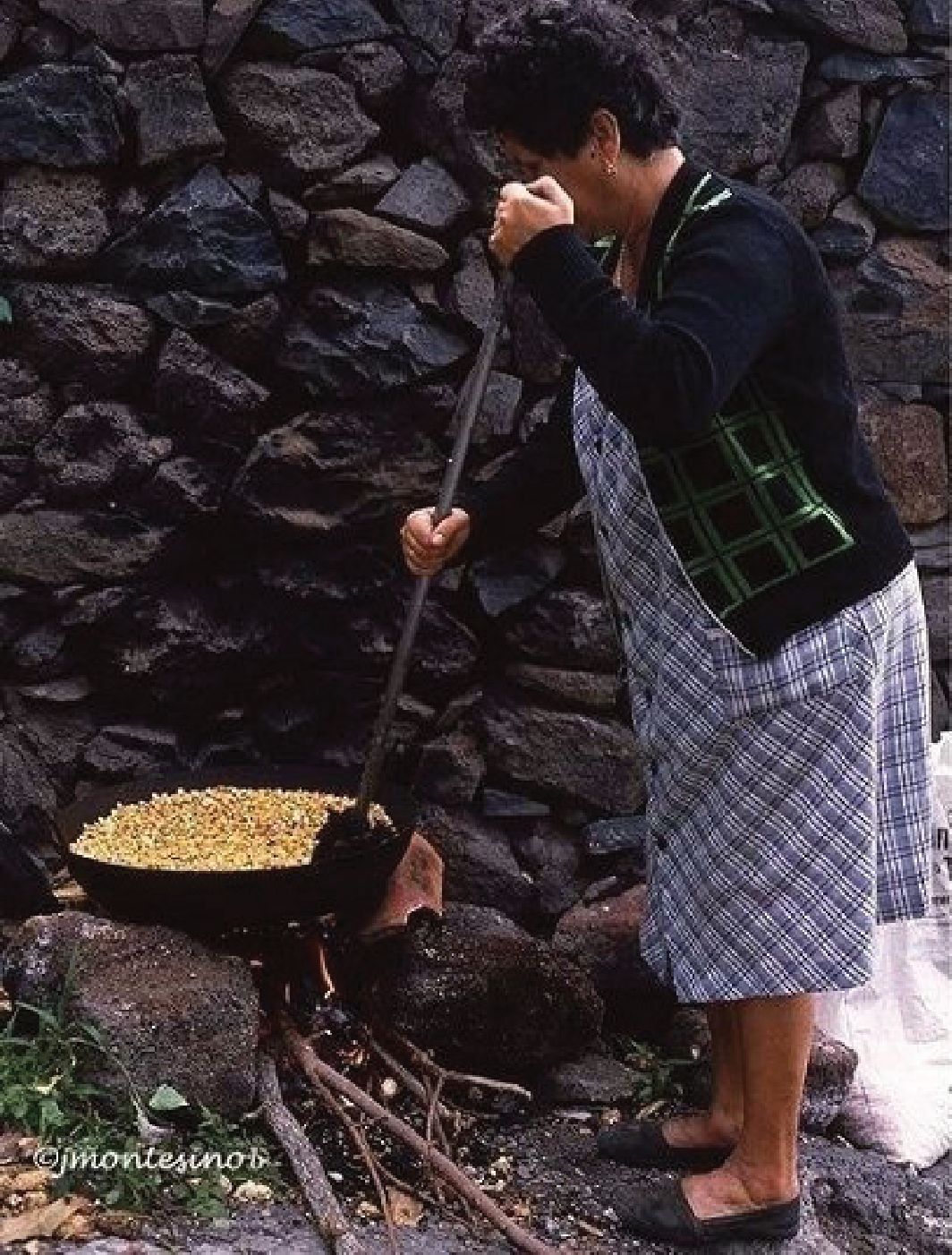
Apart from vegetables and potatoes, their dishes would also involve fish (salted for preservation purposes), cheese, hard-boiled eggs and pork, etc. One of the most common foodstuffs they used was gofio13. To toast it, they would place a clay pot (bought from the women who came from Chipude) on top of the chiniques14 and, with a juercan15 , they would stir the corn together with beach sand to prevent it from burning (Figure 7). Then, with a zaranda16, they would separate the sand from the corn and start the process again. Once toasted, it would be taken to the mill to make the gofio, although traditionally it was also made by hand using a stone grinder.
When special events were being celebrated, including Easter Day or the Saints Days of John or Mark, the women would meet to knead bread and make large batches of junkets, rye bread cakes and sweet buns for all the neighbours. On such occasions - as the pots and ovens were heated using firewood - all the women recall going, from a very early age, into the mountains to search the firewood for cooking, and returning with large loads. The matrilineal nature of the oral tradition for passing on recipes and culinary techniques was described by all the interviewees. It was the mothers, grandmothers, aunts and sisters who were responsible for feeding the family.
The growing of herbs for medicinal and culinary purposes was common at the time framed in this study. These were used to soothe aches and pains or to add taste to the soups and stews. These herbs were grown close to the houses as opposed to on the terraces (which were not necessarily situated near the houses) so that they would be easily accessible daily. Some of the interviewees reported how various of the herbs would be bought from women who came from Chipude, “grown from the seeds of magas17” (CA, 2021).
Another use of these herbs was to soothe the menstrual pains that the women would suffer from, especially when they were working on the terraces. Menstruation, it should be noted, was strictly a taboo topic at that time, and the women were unable to communicate their physical discomfort.
So much pain. Very strong. There were women who would go out into the countryside to work and just be unable to continue and shout out that something had come over them. Someone would take them home, and they’d boil up some water with some herbs in it, which they’d sip at until the pain passed (EM, 2021).
Despite the many occupations and tasks the interviewees were responsible for, their work remained essentially invisible and undervalued within society at large. One of the main reasons why the work of rural women was so ignored was the fact they were not paid for their labour. As a result, there is no statistical record of their efforts and no possibility of quantitative studies being performed; their work was essentially not being taken into account in official narratives nor within social-economic system (Ascanio, 2000; Camarero-Rioja et al, 2006). Some of the interviewees recall going to have government coupons stamped, but they were always dependent on the main source of income of their husbands or a subsequent widow’s pension:
I’ve never worked anywhere but in the fields and at home. I was daft to have worked so hard but never be paid a penny. Then, when my husband died, we got virtually nothing in terms of pension or coupons (IH, 2021).
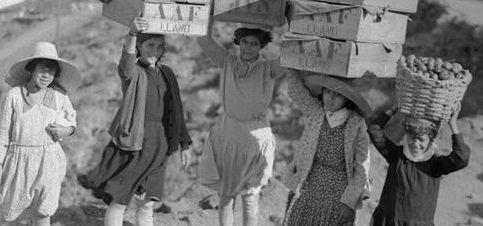
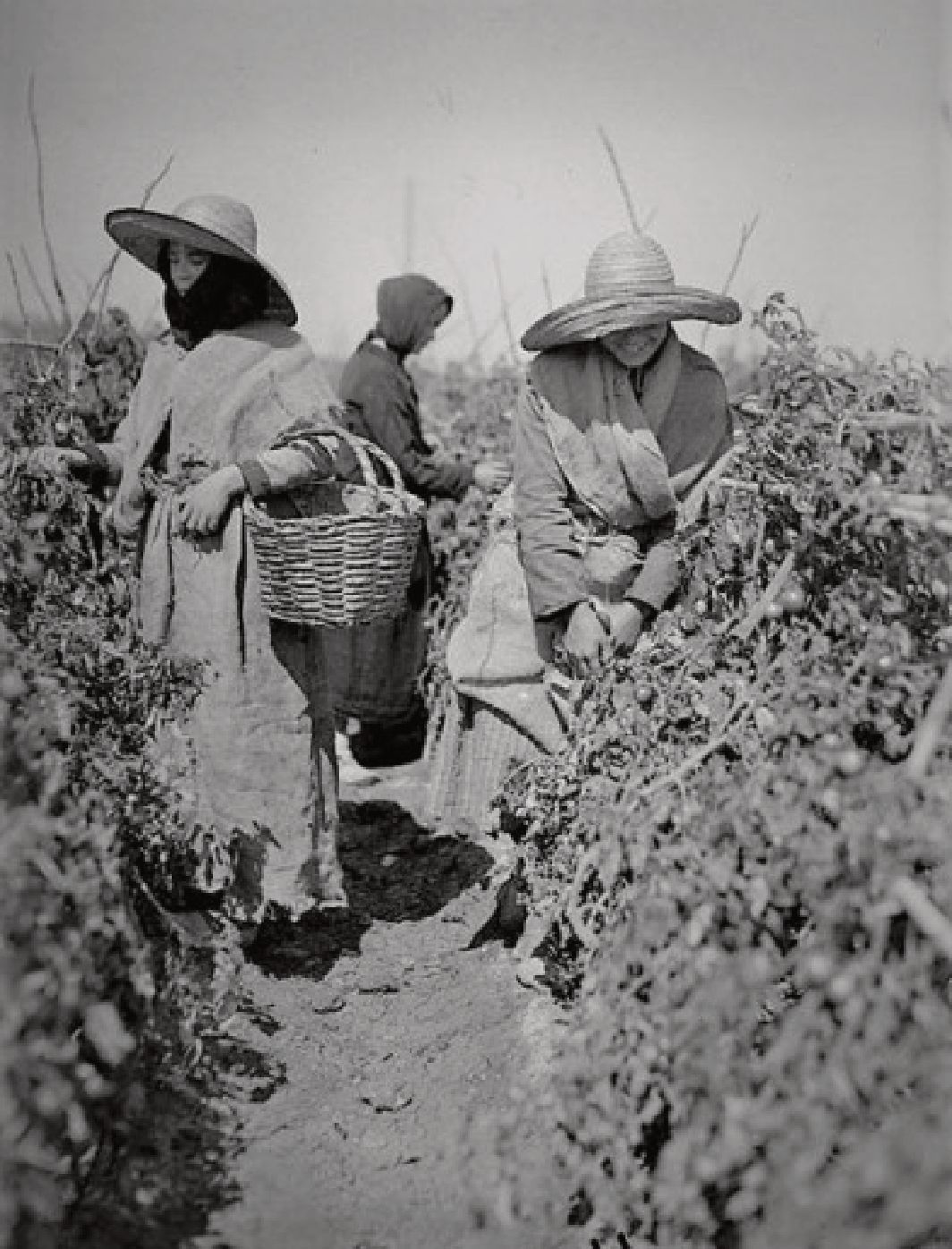
As reported by Jerez (2015) in a thesis on the territorial organization of La Gomera, the paid work performed by women tended to be as day labourers, sharecroppers or tenant farmers in tomato plantations (Figure 8) or in packing warehouses or fish canneries, all of which were situated in the south of the island. Of the women interviewed, at least three of them worked in the tomato fields and were paid for it, even if the conditions were not suitable. A type of semi-feudal sharecropping regime was the most common type of work in La Gomera at that time, a system that was grossly unjust for the peasant community. The women suffered the most through a double discrimination in terms of their social status and gender: they were paid less than the men and underwent a series of abuses and harassments, which could be described, at best, as discriminatory (Jerez, 2015).
Nonetheless, the labour of the women in the tomato plantations was essential, with La Gomera being the third biggest tomato exporter in the Canary Islands (Díaz, 2008). Although many women moved to the south of Tenerife to work in the tomato plantations there, there were also many successful companies operating in La Gomera, including Elder and Fyffes (British), Rodríguez López S.A (Tenerife), or Fred Olsen S.A. (Norway), and later the Bonny Group. Through these companies, women began to occupy a place in the rural labour world, especially in tomato or banana packing. Even so, extremely few of the women signed any actual work contracts and had precarious working conditions with no fixed salary or work schedule.
In short, the labour of the women interviewed on the terraces of the island is present in agricultural activity and its multiple processes: from planting and cultivation (through harvesting, irrigation, harvesting and bartering) to its ultimate end of sustaining the family. Although their work in the construction of terraces has been minor, in order to study the cultural landscape of terraces, other factors that go beyond physical and architectural aspects must be taken into account, such as cultural heritage and the social relations of production that underlie the stone-wall system of the island.
4.2. Women’s lives and life experiences on the farmed terraces of La Gomera from the perspective of dignity and sisterhood
Once the role of the interviewed women in agriculture on the island has been analysed, it has been considered relevant for the case to focus the following block of analysis on the selfrecognition that the interviewed women had of themselves, in order to give voice to issues such as their awareness and opinion about gender inequality, the sisterhood that existed between them, community solidarity as a key to survival, or loneliness in situations such as migration. According to studies such as the one by Studer Villazan et al (2017), women would have a double (and even triple) working day. If one day, for example, a woman had to go and work on the land and had nobody to leave the children with, she would take them with her and stay on the land until sundown.
I’d get up, give the kids some breakfast and take them with me to pick herbs. I’d lay a blanket on the ground and sit them there. When I’d finished, I’d stick the blanket on my head, and with one of the children on my back, another in my arms and two or three others hanging on to my trousers I’d drag myself and them home. That was what a woman’s life was like back then, for me and everyone my age (EM, 2021).
Another reported as follows:
In the times of the civil war, yes, people would help each other. There was always a mother, a grandmother or a sister who’d take care of the little ones. But that wasn’t the case at other times when you’d have to look after them all day yourself, sitting them down somewhere close while you went about your work or searching for something to eat that night. And you’d probably have to carry what you’d got or picked back home on your head while carrying the kids as best you could. A lot of women went through that. Life was so tough back then (LA, 2021). When they returned home, they would prepare the food and feed themselves and the children. If the husbands were out working all day, some of the women would go to them, carrying on the top of their head, which was covered with a ruedo18, large pots of prepared food to feed the whole group of men as they would not conceive of taking food for just one man.
Throughout the interviews the women would repeatedly express and stress just how difficult their lives had been, the hard work they had to do, the sacrifices they made, and the enormous physical and psychological efforts that were required to carry on with their lives. Mothers, grandmothers, aunts, sisters, daughters, all played the role of caretaker, food manager, cook, seamstress, livestock breeder, farmer… While the men were off on long workdays, the women were relegated to domestic tasks, in the silence and invisibility of the home.
However, and despite the above, they remember with nostalgia those times when neighbours would help each other. The collective actions of these communities of neighbours were often a determining factor in the survival of families. If anybody needed help or if somebody in the family fell ill, others would lend what they could in assistance. This form of behaviour was remembered several times by all the interviewees, independently of whether they had been directly asked about it or not. Some of them had been lucky enough to receive help from their parents, grandparents and in-laws in the upbringing of their children, while others either had to make their own arrangements or relied on the support of a neighbour, thereby creating a community-based upbringing with a backdrop of sisterhood and solidarity.
It is because of the existence of this strong social cohesion that the interviewees said they did not feel a lack of equality between them and the men when they were growing up and being raised in their rural environment. All played a vital role in the proper functioning and performance of the rural works that were carried out and in the survival of their families, with both men and women undertaking arduous tasks. While it may be true that some of the interviewees described their work as being ‘of assistance’ to their husbands, they nevertheless proudly defended having successfully raised their children while their husbands were out at work. Others, on the other hand, underlined how they worked as hard as the men, and indeed more so given that once they had returned from work the men would never engage in any household chores. The women, however, would do so, aware as they may have been that this was in effect a double workload but also that such chores were just like a real job: “What happened was that when both the men and their wives were out working all day and it was time to go home, it was always the women who would work in the house while the husbands did nothing. God spare us! So basically, it was the women working double time” (Anonymous, interview 6, 2021).
Likewise, several interviewees reported how the baton of the role of mother would be passed on to the eldest daughter of the family. The families tended to be large in number, and some of the interviewees were the first female offspring in the family and, despite having elder brothers, it was they who would take on the role of caretaker. In contrast, the younger sisters were not given that responsibility, at least not to anywhere near the same extent. In addition, being the eldest sister had other responsibilities, as they were the first to live through situations that it was socially frowned upon to talk about. These would include the taboo surrounding menstruation or the wedding night. The women who spoke in the interviews about how they would have to suffer the pains of menstruation while working on the land described how hard it was to be unable to stop working despite feeling exhausted and their frustration at being unable to openly communicate to others their physical discomfort. Here, once again, sisterhood played its part, and among each other the women would find support, understanding and assistance.
We’d have to carry around this sort of chamber pot to wash and clean ourselves in secret so that our brothers wouldn’t see it. You wouldn’t believe how much I’d cry when my period came. But amongst us sisters, we’d whisper about it to each other in secret and lend each other whatever was needed (IH, 2021).
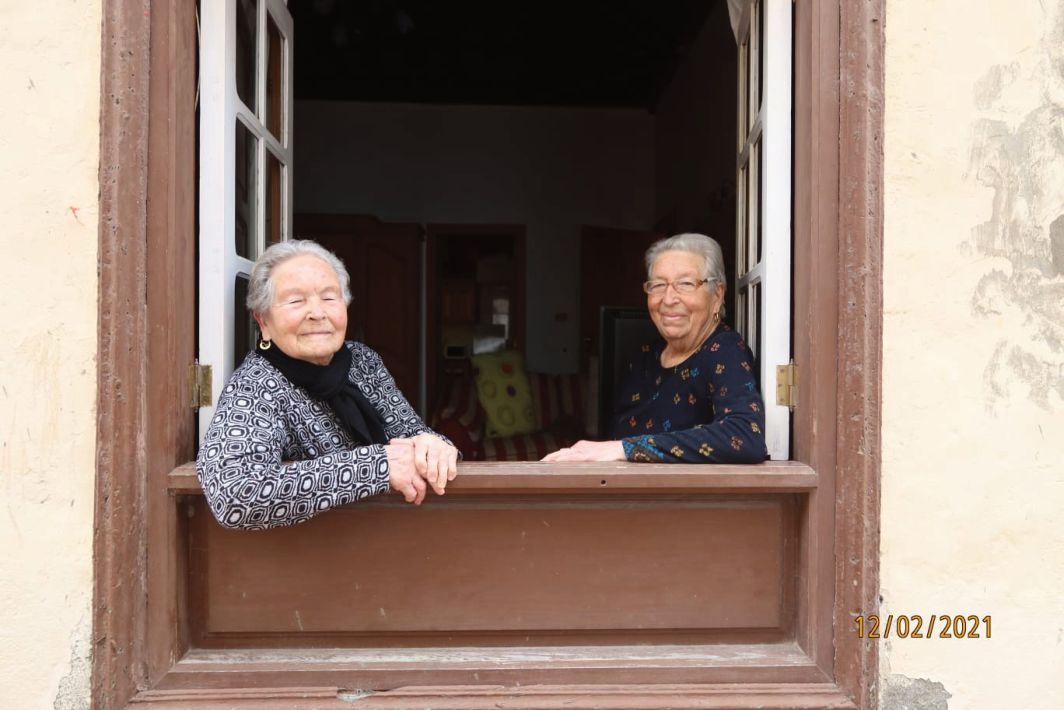
Their self-awareness and self-determination were showcased in the interviews when the women spoke of the pride they feel when recalling the life, they have lived, with some saying they would be happy to live that life again. All the women, however, indicated that they were not really aware during their youth of what they were going through, but that they simply accepted it as the reality that was happening to them (in reference to their labour, economic, family or marital situation) (Figure 9).
Well, some argue that they’re just the times you’re born into. But I would say that if things go from bad to better, then that’s good, but if they go from good to worse, then that’s not so good at all because you can go through anguishing times without knowing how to deal with them and worrying about where it’s all going to end up. The newest generations have it all laid on for them from the day they’re born. I guess you just have to adapt to what there is, and that’s that (LA, 2021). Some of the women even recall the shame they felt when they had to go to the villages, aware of the social stigma attached to them for being peasants at a time when the island was in a moment of transition and its productive system was shifting towards the tertiary sector. However, while this may, at the time, have generated some type of inferiority complex, when they were relating these events the women who were interviewed revealed their strength of character and indifference, demonstrating their dignity by describing the hardness of the of the rural nature of their life when compared to that of the villagers who enjoyed a more comfortable and modernized way of life.
Yes, that’s the way I think today. We worked much harder than they did, but grew up ashamed of our situation (IH, 2021).
According to the results of a study carried out by Studer Villazan et al (2017), such narrations should be placed into the historical context of the Franco Regime and conservatism, where the invisibility of women in the type of society that they happened to live in was also manifest in the sphere of work, as they tended to have no contracts, no allowances, no unemployment benefit, no disability payments, and few old age pension rights. In any case, for women to be able to exit the family situation, gain their “independence” and discharge their parents from the responsibility of feeding and housing them, they would have to marry and switch from the family yoke to a marital one. It should be noted that the women who were interviewed got married between the ages of 16 and 23, with some of their husbands as much as 10 or even 15 years older than them. According to one of the women:
Yes. I went to Venezuela. When my mother died, she was 42 years old and I was 16. I got married when I turned 17 and at the start of the next year I set off for Venezuela. My husband was already there. It was a proxy wedding. We spent a few years working there, but all the children were born here (Interview 6, 2021).
In light of this last statement, it should be noted that three of the husbands of the interviewees had to emigrate to Venezuela (though also to Cuba and the south of Tenerife in other cases) in order to send money and packages to their families back home that would allow them to survive. Some of the women spoke of how they were left behind by their husbands while others went with them at an early age. In the case of those who remained on the island, they reported how they had the support of their parents and in-laws, ensuring that between them the lands could be worked and the children born before the husband’s departure raised. It was the women, however, who were essentially responsible for managing the family budget, the house, the animals, the meals and the farming land. In other words, it was these women who constituted the cornerstone in the livelihoods of those who stayed in rural La Gomera during the migratory boom of the 1940s-60s. Other interviewees reported how they followed their husbands shortly after they had migrated but did not stay long. Others accompanied their husbands from the start, returning together some years later having saved sufficient money to build a house, buy land and maintain a family.
5. Discussion and Conclusions
The successfully achieved aim of this study has been to give a voice to rural women from La Gomera and see how they lived their lives as young and mature adults in a period during which the current extreme abandonment of farming activities began. What has been reported from other territories is confirmed; namely that the women of La Gomera performed multiple tasks in multiple spheres (productive, reproductive and community) over the course of very long workdays, which exceeded those of many men. The perfect adaptation of these women to the complexity and severity of the natural environment in La Gomera, because of altitude, geographic orientation and the orographic barriers that constitute the ravines and catchment areas, has also been shown. The diversification of strategies, the combined and complementary use of different ecosystems and agrosystems (mountain, coast, terraced farming for food, wine, etc.) form an important part of the farming culture of la Gomera in which the women have been major protagonists.
The fact that social structures have historically pushed women into the background is not necessarily reflected in the self-awareness that the interviewed women had of themselves. In one way or another, they expressed being aware of their productive, reproductive and community-based importance and - with pride and without any sense of victimhood - defended the numerous sacrifices they have had to make in their lives. With character, they have described their work, how it provided them with dignity and empowerment through its remarkable achievements, despite occasionally acknowledging the unusual nature of certain aspects of their past life.
Given the interviewed women’s multiplicity and diversity, it is impossible to speak in a generalized manner about their lived realities. These realities varied depending, among other factors, on where exactly the women were born, their life experiences and other character-forming circumstances. What can be spoken of in a generalized manner is undoubtedly the importance of the exhaustive and exhausting work that the women undertook during their lives both on the land and in their homes: “I was never a slave to my husband, I was a slave to the land” (EM, 2021). Conscious of the arduous work they did during their lives, they also shared the sorrow they feel when they see the current state of abandonment and deterioration of the lands where they toiled so hard.
It was also possible to discern and record through the interviews with the women their world view, the elements that formed part of their lives, the long journeys they had to make to trade and barter provisions, the way they managed the food supply, brought up their children and conducted their marriage, as well as their views on illness and death. All this forms part of the cultural landscape of the terraced farmland, because not only is it important to consider their construction, subsequent uses and productive exploitation, but also all the social, economic, political and cultural systems that were associated with them, and which also form part of the cultural heritage of the island.
For this reason and given the risk of losing forever this history and cultural heritage, if it is not recorded for posterity, we defend the importance and necessity of undertaking this kind of qualitative research. The technique of interviewing not only allows the recovery and recording of local terminology and know-how, but allows, through their own voices, capturing the life stories and biographies of otherwise anonymous women and, in this way, show a part of history that has been stigmatized and pushed into the background (González, 2004). As an ongoing scientific research, the hope is to continue this study by increasing the number of women interviewed and even extending its scope to include women of other social classes in order to gain a more holistic viewpoint of the female universe of the time period considered. And part of these testimonies can be incorporated into the narrative dedicated to women, in an interpretation center that has been projected to install the town of Agulo on terraces. The voices of some of the interviews can also be used in audio guides of interpreted routes on terraces that are designed and offered as tourist experiences. For all the above reasons, it is important to engage in recording, investigating and highlighting these narratives, thereby preserving for posterity otherwise untold memories of rural women.
This is a living cultural heritage from which much can be learnt and based on which the present can be improved and the challenges of the immediate future tackled, including adaptation to global climate change and the attainment of the Sustainable Development Goals or, more specifically, food sovereignty and gender equality.
Finally, from the registered testimonies, it can be verified that despite the triple invisibility indicated by some authors (woman, rural and worker) (Camarero et al, 2006), the Gomeras were women with self-confidence, self-esteem, with high personal dignity and conscious of their abilities and the support received by their family environment, their neighbours and their peers.
Acknowledgments
This work was conducted in response to the Commission set up by Tourism Department of the Canary Islands Government as part of the Plan for the Promotion of Tourism in the North of La Gomera through the projects “Rural women of La Gomera: knowledge and participation in the cultural landscape of terraces” and “Valuing a heritage asset, cultural landscapes in terraces in the north of La Gomera: proposals for their conservation”.
References
- AAIDER La Gomera (2008) La Gomera, hablando con la memoria. Dirección Editorial: Asociación Insular de Desarrollo Rural e La Gomera.
- AIDER La Gomera (2010-2013) Agropaisajes insulares. Proyecto de custodia del territorio en islas turísticas y rurales (La Palma, La Gomera e Ibiza), financiado por el Ministerio de Agricultura, Alimentación y Medio Ambiente, en el marco de la red Rural Nacional.
- Ascanio Sánchez, C. (1998) Deconstruyendo olvidos: el proceso migratorio canario desde una perspectiva de género, in XIII Coloquio de Historia Canario-América. Gran Canaria: Cabildo Insular de Gran Canaria.
- Ascanio Sánchez, C. (2000) La mujer en el medio rural grancanario. Enfoques y sistemas de invisibilidad, in XIV Coloquio de historia Canario-Americana. Gran Canaria: Cabildo Insular de Gran Canaria.
- Burriel De Orueta, E. (1982) Canarias: población y agricultura en una sociedad dependiente. Barcelona: Oikos-tau.
- Camarero Rioja, L.; Castellanos Ortega, M. L.; García Borrego, I.; Sampedro Gallego, R. (2006) El trabajo desvelado. Trayectorias ocupacionales de las mujeres rurales en España. Madrid: Ministerio de Trabajo y Asuntos Sociales, Instituto de la Mujer.
- Carracedo Gómez, J.C. (2008) Los volcanes de las Islas Canarias. IV La Palma, La Gomera y El Hierro: Editorial Rueda S.L.
- Curbelo Curbelo, C. (1984) La Gomera: Transporte por carretera y organización del espacio insular. Revista de Historia Canaria, 175, pp. 855—870.
- Díaz Padilla, G. (2008) Pescantes de La Gomera: testimonios de la arqueología industrial de Canarias. Cabildo Insular de San Sebastián de La Gomera.
- EPA (2021) Encuesta de Población Activa. Madrid: Instituto Nacional de Estadística de España.
- Facebook (2021) La Gomera, su paisaje y su gente. Available at: https://www.facebook.com/jmontesinob/?locale=es_LA (Accessed: 19 August 2022).
- FAO (2000) La mujer rural y el derecho a la alimentación, in El derecho a la alimentación en la teoría y en la práctica. Available at: https://www.fao.org/3/w9990s/w9990s10.htm#TopOfPage (Accessed: 19 August 2022).
- GitHub (2022) Latin America and the Caribbean. Available at: https://carlosmunozdiaz.github.io/ (Accessed: 19 August 2022).
- González Pérez, T. (2004) Las mujeres en el mundo rural isleño. Tenique Revista de Cultura Popular Canaria, 6, pp. 215—233.
- Hernández González, M. (2008) La emigración canaria a América a través de la historia. Cuadernos Americanos, 126, pp. 137—172.
- ISTAC (2022) Estadística de la Evolución Histórica de la Población. Municipìos por islas de Canarias 1768-2021. Gran Canaria, Tenerife: Instituto Canario de Estadística.
- Jerez Darias, L. M. (2015) La organización territorial de La Gomera: un ejemplo de subdesarrollo. PhD tesis. La Laguna: Universidad de La Laguna.
- Jerez Darias, L. M.; Martin Martin, V. O. (2017) La Gomera: Una isla en manos de la gran propiedad territorial isleña. Boletín de la Asociación de Geógrafos Españoles, 74, pp. 9—33.
- Lahoz, C. (2006) El papel clave de las mujeres en la seguridad alimentaria. Seguridad Alimentaria y Políticas de Lucha contra el Hambre, pp. 117.
- Lastarria Cornhiel, S. (2008) Feminization of Agriculture: Trends and Driving Forces. Washington, DC: World Bank.
- Quijano, M. A. F.; Correa, E. P. (2003) Mujeres rurales y nueva ruralidad en Colombia. Cuadernos de desarrollo rural, 51.
- Passaporte, A. 1 (1931)Tenant farmer women carrying tomatoes in San Sebastián. Photographic collection of the Spanish Historical Heritage (Fototeca del Patrimonio Histórico Español). Collection no. 10792. LOTY Foundation.
- Passaporte, A. 2 (1931) Man and woman with their donkey returning from San Sebastian. Fototeca del Patrimonio Histórico Español. Collection no. 10803. LOTY Foundation.
- Passaporte, A. 3 (1931) Women working in tomato harvesting. Fototeca del Patrimonio Histórico Español. Fototeca del Patrimonio Histórico Español. Collection no. 10788. LOTY Foundation.
- Rey Castelao, S. (2015) El trabajo de las mujeres rurales en la España Moderna. Un balance historiográfico, 1994/2013. Revista de Historiografía, 22, pp. 183—210.
- Romero Martín, L. E.; Hernández Cordero, A. I.; Santana Cordero, A. M.; Vargas Negrín, C.; Palerm Salazar, J. M. (2019a) Terraced landscapes in the Canary Islands: La Gomera, "The Terrace Island", in World Terraced Landscapes: History, Environment, Quality of Life. Cham: Springer.
- Romero Martín, L.E; Rodríguez Rodríguez, Mª Ángeles; Callejas Castro, E. (2019b) Los bancales como señas de identidad de los gomeros: una mirada al territorio, in Habitar en Territorios de Terrazas y Bancales (Conclusiones del IV Congreso Mundial ITLA). Gobierno de Canarias, Canarias Cultura en Red, Observatorio del Paisaje de Canarias.
- Rowlands, J. (1997) Questioning Empowerment. Working with Women in Honduras. Oxford: Oxfam Print Unit.
- Santana Santana, A.; Villalba Moreno, E. (2008) Atlas Anroart de Canarias. Las Palmas de Gran Canaria: Anroart Ediciones.
- Slavchevska, V.; Kaaria, S.: Taivalmaa, S. L. (2016) Feminization of agriculture in the context of rural transformations. What is the Evidence? Washington, DC: World Bank. https://doi.org/10.1596/25099.
- Studer Villazán, L.; Martín Martín, V.O.; Jerez Darias, L.M.; Fernández Peraza, C.J.; Torres Mejías, A. M. (2017) La mujer rural en el sureste de Tenerife (1960-80): Un estudio de historia oral. XXII Coloquio de Historia Canario-Americana, pp. 1—10.
Notes
- La Gomera suffered at that time the exhaustion of its economic activity (exceeding its carrying capacity) and it is the time of the Spanish civil war and the famine.
- The cochineal is the Canary name for Dactylopius coccus Costa, a parasite of plants such as prickly pear, native to America, from which the natural dye is extracted, made up of two famous substances, carmine and carminic acid.
- Between 1848 and 1898, coinciding with the cochineal trading crisis, a total of 1,461 people left La Gomera for Cuba. Of these, 1,285 were men (87.95%) and just 176 women (12%). This migratory period was thus dominated by males, generally young and single.
- It is not known exactly how many so-called ‘white widows’ were permanently left behind by their husbands in La Gomera. These women were defenseless, along with their children, before the law and had no rights to a pension or similar financial assistance.
- For more information on the number of females per 100 males, see GitHub (2022)
- Sorriba: transportation of plant material from the uplands to the terraced areas closer to the coast
- Portillo: local name used to describe the falling of rocks from the walls of the terraces
- Ripias: name given to small stones and fragments of split stones used to fill up gaps in the walls and allow drainage
- Ereta: name given to terraced plots on La Gomera with a long and narrow stretch of levelled land
- Llano: name given to larger-sized terraced farms often situated on valley beds
- Marrón and barra: names of tools used in the construction of the walls to, respectively, ensure the proper shape and size of the stones and their correct positioning
- White woolen blankets with three strips which were sown together and finished off with a black-coloured stripe or squares
- A sort of flour made from toasted grains
- Stones used to support the cooking pots
- Stick with a cloth ball at one end held together with strips of banana leaf, and used to stir the corn while being toasted
- Type of sieve made from vegetable fibres; also the name of a traditional dance in Lanzarote island
- Name given to women who lived and worked in the countryside in the westernmost islands of the Canary archipelago
- Cloth that was wrapped around the top of the head so that the load would be easier to carry and to ensure that what was being carried would not enter into direct contact with the skin. Sometimes the women would pick fresh herbs and place them on the cloth so as not to burn their heads.
Rights and permissions
Open Access. This article is licensed under a Creative Commons CC BY 4.0 license, which permits use, sharing, adaptation, distribution and reproduction in any medium or format, as long as you give appropriate credit to the original author(s) and the source and indicate if changes were made.
About this article
Cite this article
Izquierdo Suárez, I., & Romero Martín, L. E. (2020). Women's voices from La Gomera: Multiactivity and self-recognition on a terraced island. The Journal of Terraced Landscapes, 1(2), 50–81. https://doi.org/10.5281/zenodo.8059503
- Published
- December 2020
- Issue
- Volume 1, Number 2
- Journal
- The Journal of Terraced Landscapes, ISSN 2754-7612 (Online)
- Archive
- Zenodo record 8059503
- women
- terraced agricultural landscapes
- knowledge
- trades
- self-recognition
- La Gomera