Marks on the land by the "little hands": A testimony of life
Affiliations
- 1 Centre for Art History and Artistic Research (CHAIA), University of Évora; CHAM Azores, Portugal
The Journal of Terraced Landscapes volume 1, issue 2, pp. 32–49 (2020) · Cite this article
- 344 views
- 276 downloads
- DOI10.5281/zenodo.8059495
Abstract
Since the early settlement of Madeira Archipelago women have always played an important role in the history of family agriculture. In addition to their household tasks, they had to collaborate with the work on the fields among other farming activities. However, when it comes to agriculture, the perception of working the lands is mainly associated as an exclusive men’s task perhaps due to connotations of the hard work carried out on the steep mountain slopes of Madeira Island in a real battleground for the human being against the hostile forces of Nature (Natividade, 1953). This article aims to homage the Madeiran female farmers and pay tribute to their contribution on the Madeira Island’s rural landscape anthropogenic shaping process.
Keywords
- poio
- agriculture
- women
- Madeira island
Agriculture is inextricably linked to human survival. To produce food, human being has had to explore the territory to create colonization strategies so to inhabit it and benefit from its lands. This was a difficult process on the Madeira Island, carried out in an almost inhospitable territory, due to its forbiddingly orography. Notwithstanding all the geographical obstacles, the people from Madeira have managed to inhabit the territory in an extraordinary manner, transforming the rural landscape into something epic and functional in terms of agriculture. To that end, it was necessary to set up soil by building “poios”1 and to bring water through the construction of levadas2. From that moment onwards, people on the island began to intelligently obtain the sustenance from the fields, becoming an economic reference on the Atlantic routes, through the cultivation of wheat, sugarcane and wine3.
It is in this sui generis territory where the “Marks on the Land by the Little Hands” article unfolds. However, when considering the arduous construction of the island’s cultural landscape, the female labour contribution on the fields is omitted and underestimated. Whether in existing literature, illustrations, or photographs, it is difficult to find a clear depiction of the true role of women in agriculture. The conveyed image is connoted by the differentiation of genders, that is, the woman is responsible for the domestic tasks (being the housewife, laundress, sewer and embroiderer) and the man is responsible for cultivating the land and undertaking the more physically demanding jobs. However, there’s a distortion of reality, because in an island with an extreme orography such as Madeira Island’s, there are women who worked hard in the “poio”, where the strength of the manual labour does not distinguish man and woman. The author João França’s description of agriculture on the Island shows this to be true: men and women went in a line of ants down a steep path, in curves and zigzags. Each one carried what they could: hoes, sickles, saws and axes, clothing, and pots. The field was way up high. Once they have arrived, already familiar with the agrarian land affairs, they looked around, discouraged by the steepness of that scrubby strip (...) defying the law of gravity (França, 1972, p. 110). The research methodology on this subject comes from the oral testimony of a 91 years old woman, Ms. Eulália Gonçalves, from Campanário parish located in Ribeira Brava Municipality who, since an early age, was “obliged” to work on the fields with her father and two brothers to contribute to the household subsistence (parents, four sisters and two brothers). Among her female siblings she was the less talented in the typical Madeira Embroidery4, wherefore life on the “poios” (terraces) became her destiny5. On the other hand, the existing bibliography and photographs were used to support the testimony. The content presentation will be preceded by a brief characterization of the Madeira Archipelago and its parish of Campanário so that the reader can understand the interviewee’s discourse.
2. Characterization and Geographic Setting of the Island of Madeira
The Archipelago of Madeira is located in the Atlantic Ocean, southwest of the Iberian Peninsula, between 30º and 33º latitude North. The main island of Madeira, the name of which derives from the many, thick and large trees with which it was covered and all with an infinity of wood (Frutuoso, 1998, p. 40), is a large “natural rock” consisting of 741 km2 of volcanic origin that rises monumentally above the Atlantic Ocean, to reach an altitude of 1,862 m at Pico Ruivo (Figure 1). It is an island characterized by a very abrupt relief, creating a landscape of mountains and cliffs cut by deep valleys and, according to Gaspar Frutuoso, since it is very fragile, it is said that its proper name was, or should be, the Island of Stones (Frutuoso, 1998, p. 40).
[...] so many woods and rocks, so many hills and glens, that everyone says that, of the ten parts of the island, they don’t make the most of two, because most of it consists of mountain ranges, hanging land, rocks and glens and slopes, and there is no flat land, except in small parts, but these are such that they are worth more than any other size in gold; and, in general, the substance that has all the things that this island itself produces, either by nature or through art, is priceless (Frutuoso, 1998, p. 55).
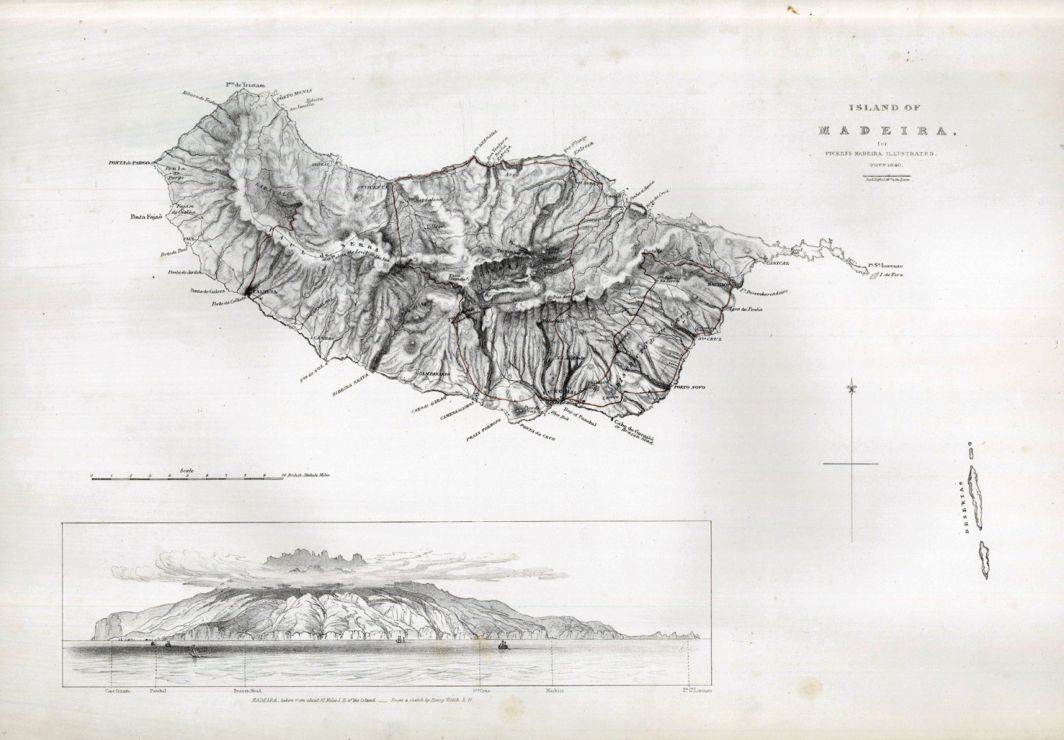
3. Understanding the Cultural Landscape of the Island
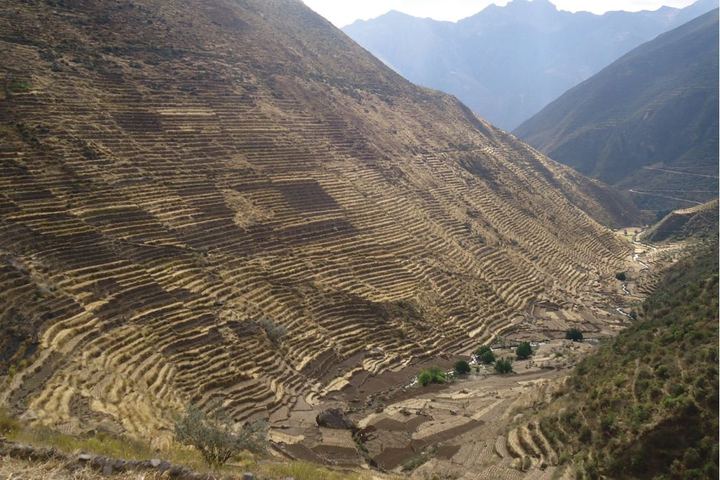
Agricultural activity has been the main way in which the landscape of Madeira has been humanized. Given an island made of “rock”, it is necessary to “sculpt” the land, create soil on its surfaces and channel watercourses in order to inhabit it. This is how the socalco (terracing), better known as “poio” on the island, has emerged. Vieira (2017, p. 2) states that what we usually define as humanization is nothing more than a process of territorialization, which has marked the appropriation of the island. This territorialization process is undoubtedly made possible through the “poio”, which provides the matrix for the organization of the space and the mark of identity of the Madeiran landscape (Figure 2). Madeira is better than all this: it is epic work, the glorification of human effort. So present is the influence of humanity everywhere, the magnificent fruit of such heroic toil, the rough stroking of calloused and rough hands, that the landscape, so to speak, has become soaked in this presence and become humanized (Natividade, 1953, p. 28).
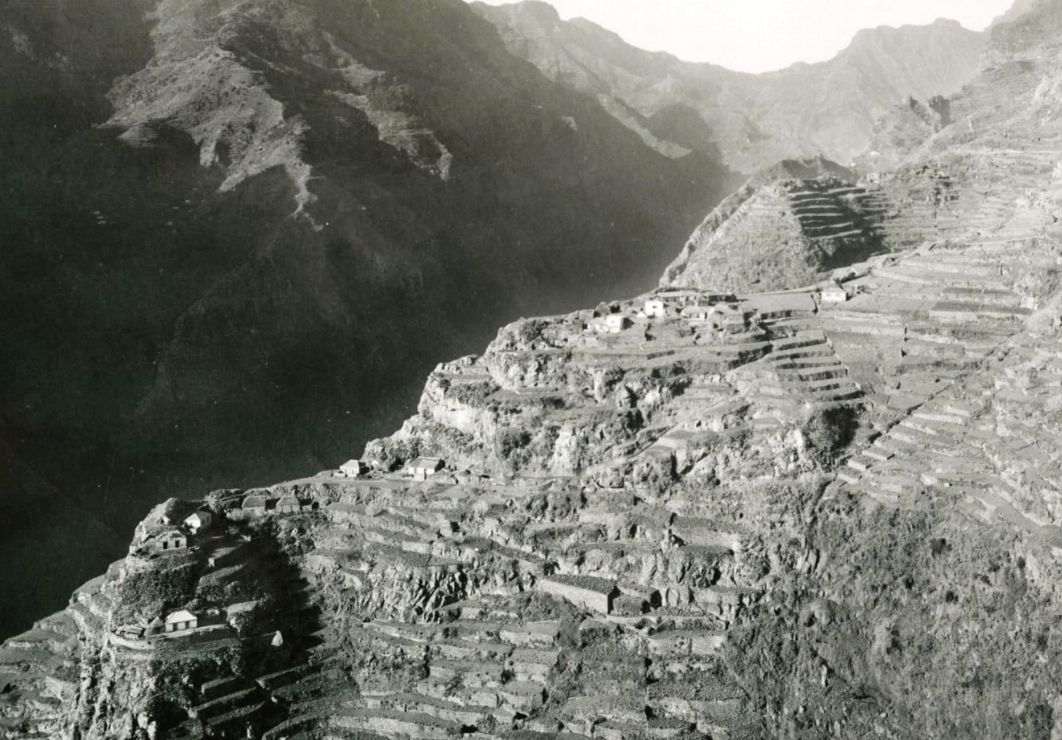
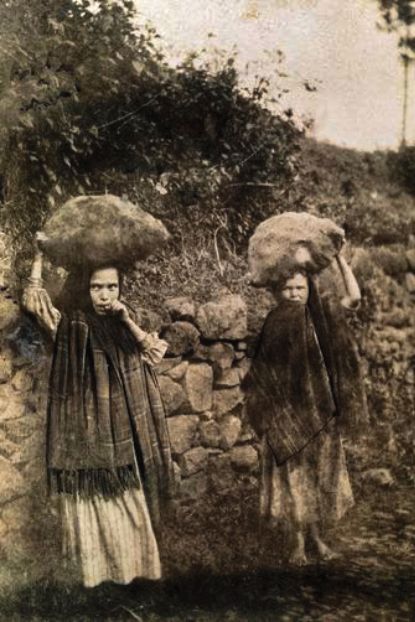
There is no corner of the island of Madeira where we do not perceive the humanization of the landscape, especially through its walls, which are sometimes too high to allow the use of soil (Caldeira, 2021, p. 33). The terracing is, in this context, an architectural element of earth containment, an ancestral construction made with dry stone walls6, with the aim of creating areas with soil favourable for cultivation and avoiding landslides generated by the considerable instability of the soils, a characteristic of mountain landscapes. Ribeiro (1985, p. 60) explains that building and repairing the walls on the island of Madeira is very hard work, as it is necessary to carry the stones on one’s shoulders or head and work hanging over the abysses supported by ropes and pulleys. The author also mentions that the stone walls that support the soils are bigger or smaller depending on the slope and, as if this were not enough, after building the walls it is necessary to form the soil, that is, carry the earth from other places on one’s back in baskets, where it is of better quality and to fill the platforms.
The “poio” is the expression of Humanity’s wisdom over Nature, responsible for the humanization of the cultural landscape of the island, in a challenging process of territorialization that led the Madeiran “peasant” to construct, just using these poor materials, one of the most extraordinary agricultural constructions in the world and thereby write this great Epic with their blood, sweat and tears. They attacked the rock to obtain the earth, then carried it on their backs over improbable paths; they lovingly polished the mountain, the ridge, the steep slopes, the cliffs, as if they were working on tiny diamonds, often leaning over abysses and permanently risking their own life; they built poios upon poios to hold these handfuls of earth, and finally fertilized it, conquering and dominating the thread of water mysteriously born on high and which, transformed into a levada, they channelled with infinite labour along capricious and extremely rugged paths (Natividade, 1947, p. 15).
4. Campanário
Campanário is a parish in the municipality of Ribeira Brava, located on the south coast of Madeira Island, with an area of 11.80 km2. It is a high land, a huge promontory that rises at an average altitude of 200m above sea level, where currently 4,582 inhabitants reside7. According to the Elucidário Madeirense, when the discoverers arrived in Madeira, and while exploring the island, they came across a small islet near the coast, which from a distance ‘seemed to have the shape of a bell tower, the name they gave to that passage and which later spread to the surrounding land Da Silva, De Meneses, 1921.
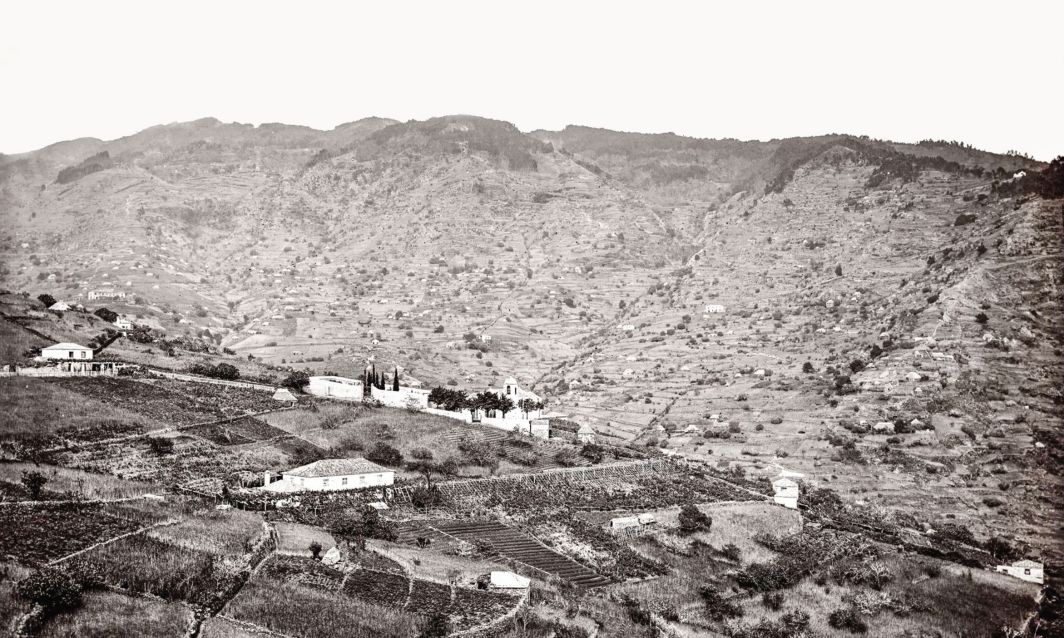
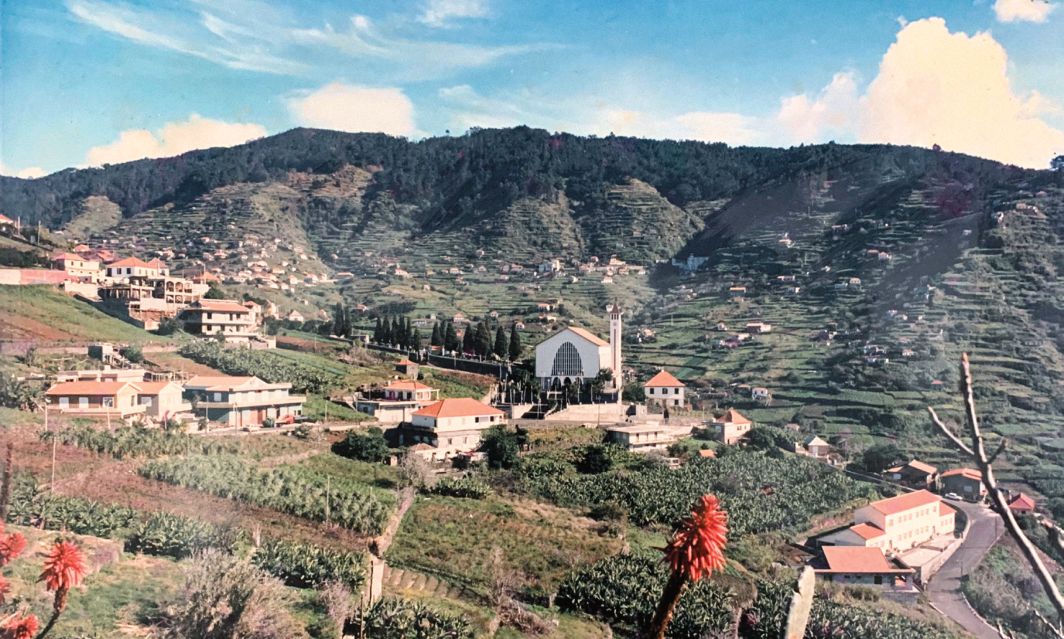
Water is Madeira’s greatest asset, enabling irrigated crops to be grown almost all over the island by means of the levadas. Curiously, our testimony takes place in one of the parishes most mentioned in the literature in relation to the lack of water and the radical change of the landscape before and after the existence of the Levada do Norte8 (Figure 3, 4, 5 and 6) built in 1940 by the Administrative Committee for Hydraulic Water Use on Madeira.
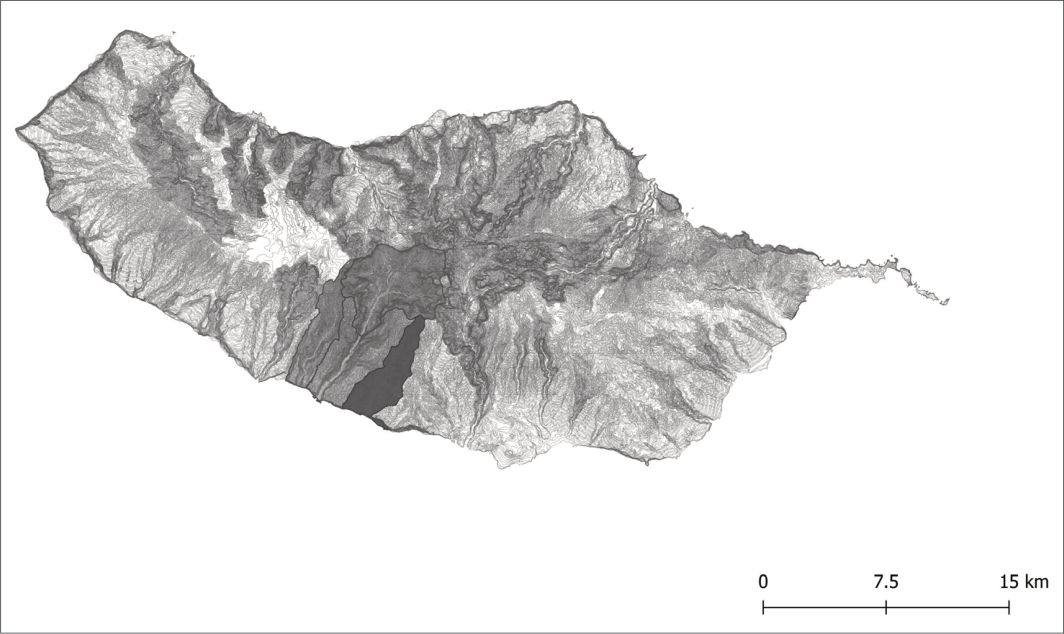
Gaspar Frutuoso describes the agricultural landscape of Campanário as the land for raising and farming wheat and rye, because they were mountain people, given more to raising cattle than to cultivating vines (Frutuoso, 1998, p. 49). On this subject, Lieutenant-Colonel Sarmento (1953) points out that in Campanário the cereal was so plentiful that the population had plenty of it such that ships would call and obtain even more for consumption in the African markets, which is why Campanário was in the early days called “the Conquered Barn” (Sarmento, 1953, p. 41). Furthermore, Orlando Ribeiro, in his exploration of the island of Madeira, found that irrigation covered almost the entire agricultural surface of the island and non-irrigated, rainfed crops are an exception, particularly in the parish of Campanário and on the eastern slope of the Machico valley. According to the author, during the summer, these regions look desolate: clumps of Andropogon hirtus and cereal stubble thinly cover the desiccated soil — pale yellow stains on a brick-red background.. In the Machico valley the contrast is vivid (Figure 7 and 8) between the land “below the levada”, covered with green crops and the land “above the levada”, abandoned from the harvest until the autumn rains (Ribeiro, 1985, p. 63). However, to irrigate the land at Campanário, it was necessary to fetch water from levadas and springs located in places with difficult accesses, far away, and dryland farming was the only means of subsistence.
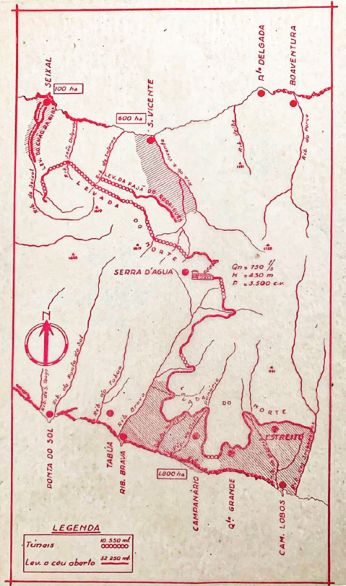
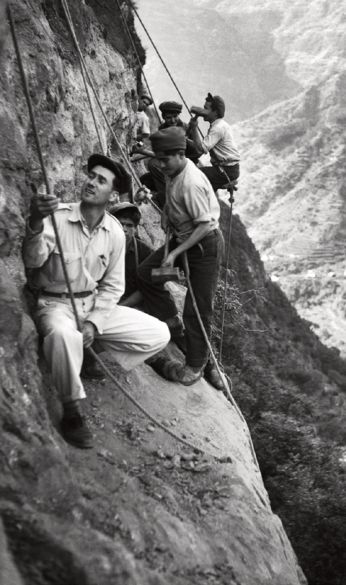
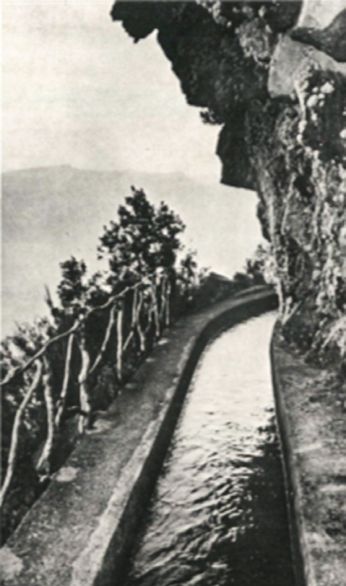
Regarding rainfed cultivation, Alberto Vieira (2015, p. 5) alludes to Fernand BRAUDEL when comparing rainfed crops with freedom and irrigated crops with slavery, pointing out that there is clearly a human dependence on this condition determined by the climate, so there was the need to create irrigated areas in Madeira through the construction of levadas. Undoubtedly, the Campanário crops were for centuries “free”, but with the appearance of the Levada do Norte, people’s lives came to depend on water and rural life revolved around it. Levadas are water channel paths, but also access paths to agricultural areas and habitation and, consequently, special circulation paths for the products of the land. Water, in turn, is not only intended for irrigation, since it also has various uses of a domestic nature. Water for domestic use, cooking and cleaning purposes was available in the levada. The levada also supplied the public washhouses as well as water for cleaning public roads (Vieira, 2015).
5. the Testimony
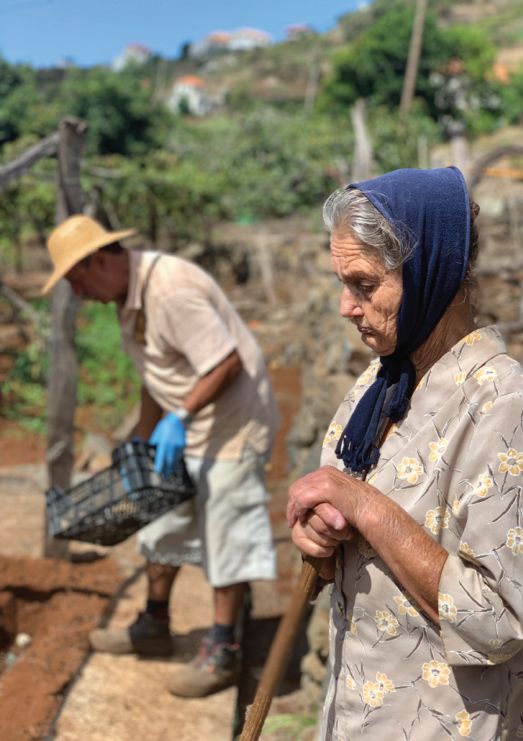
Name: Eulalia Ferreira Gonçalves (Figure 9) | Date of Birth: 1930 | Resident at: Campanário – Ribeira Brava
How was your agricultural life?
What appeared to be an interview turned into a monologue following a simple question. After a brief pause, looking deeply and reflectively at a past that is still present, Ms. Eulália, 91 years old, began by recounting her life in the countryside.
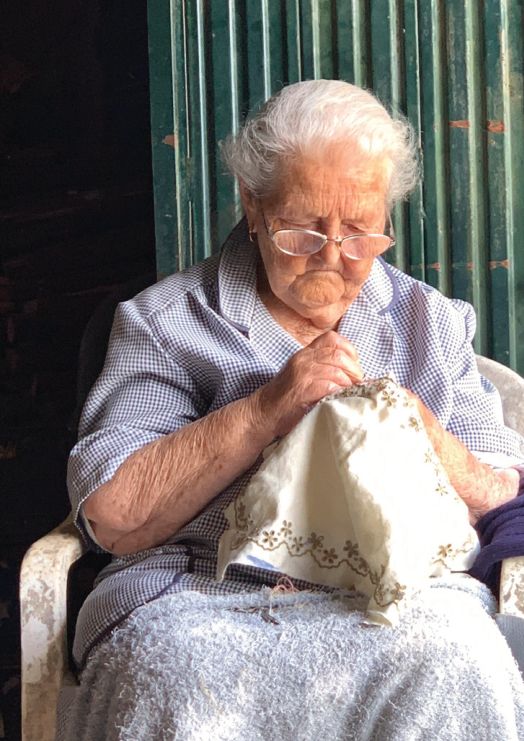
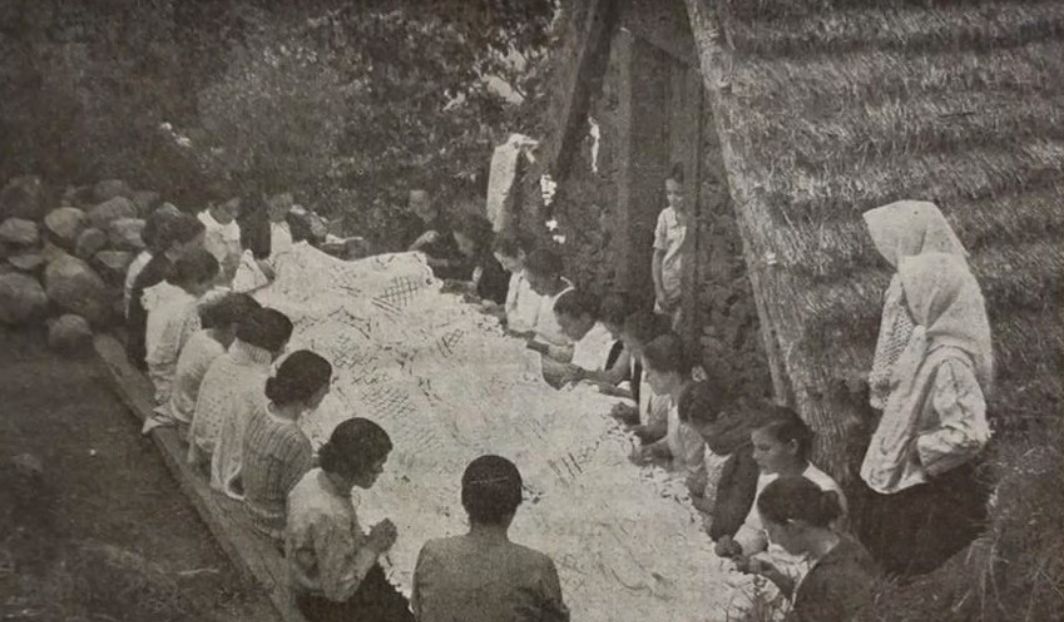
Senhora Eulalia: My life in agriculture begins at a very young age. I’ve always been a “farmer” since I was a child, probably around 10 or 12 years old. In fact, I didn’t really know how to do the Madeira Embroidery9 (Figure 11), unlike my older sister who at just 5 years old, was already making perfect “garanitos” 10 for the embroidery house. My mother told my father to take me with him and my other two brothers to help with the work on the fields. To be honest, I wanted my sister to go with us, but because of her talent for embroidery she had to stay at home to help with the expenses. It is interesting, but even today, at the age of 92, she still receives embroidery to work (Figure 10). I don’t know if it is important to say this, but I didn’t know how to embroider, I wasn’t any good at it! I had small hands that were only good for farming.
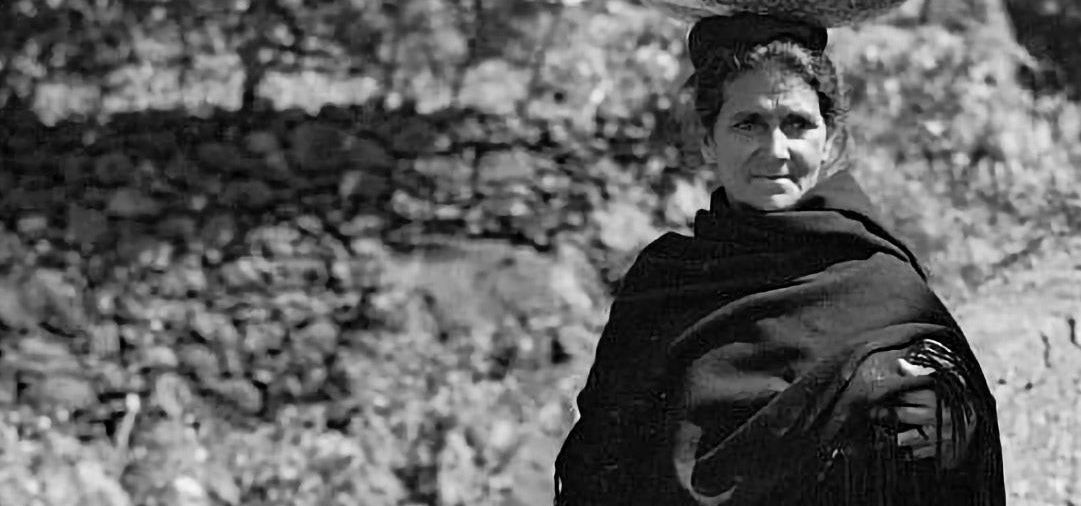
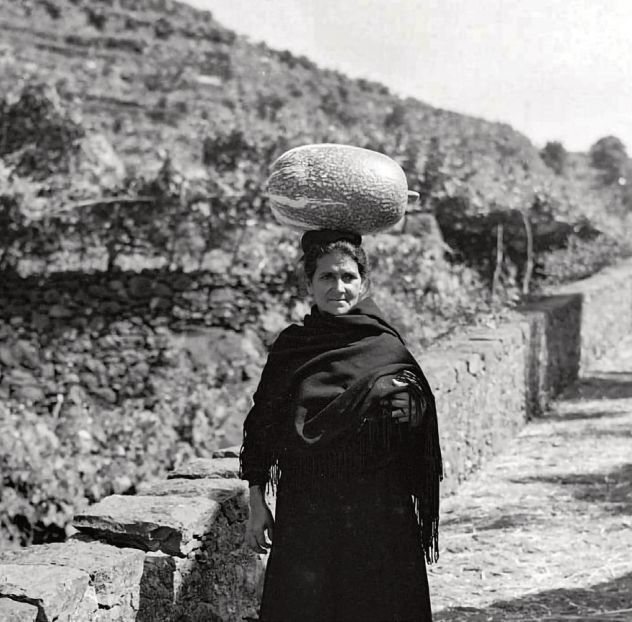
At that time, we worked on the fields to have food to support the family. My family was like Abraham’s11, as big as the world, like the stars of the sky and the sands of the sea... I always worked on the land and did what my father taught me: planting the rama12, hoeing the soil, putting down the moss, set the cow dung while my father worked out the regos13. It was him who worked these ditches and made the strips of land because on sloping land like ours, the work has to be done well to avoid landslides and to provide good irrigation through watering. Only later did I start to do the ditches on my own. It was hard work. We carried the potatoes, the pears and the cabbages on our backs, making as many trips as was necessary (Figure 12 and 13). Father did not want us to carry too much, but thank God I always had the strength to carry what was necessary. I brought what I could, but my brothers carried the heaviest loads.
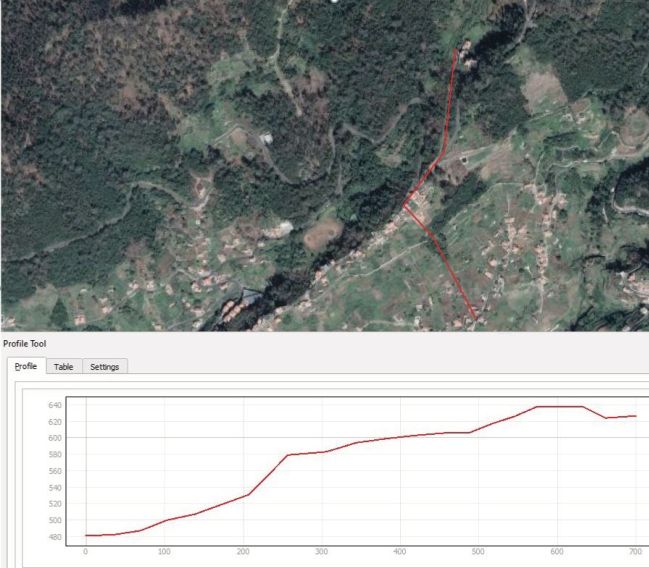
At that time, we planted on dryland and there was no Levada do Norte. Before the opening of the Levada do Norte, we used to fetch water from a pit in Cova da Velha called the Poço Grande to water our farm and to our household needs (Figure 14). As water was scarce in Campanário, we tried to take advantage of springs or streams, that’s why our ancestors built wells with mud and rock (tanks) or reservoirs called furnas placed inside the rock14.
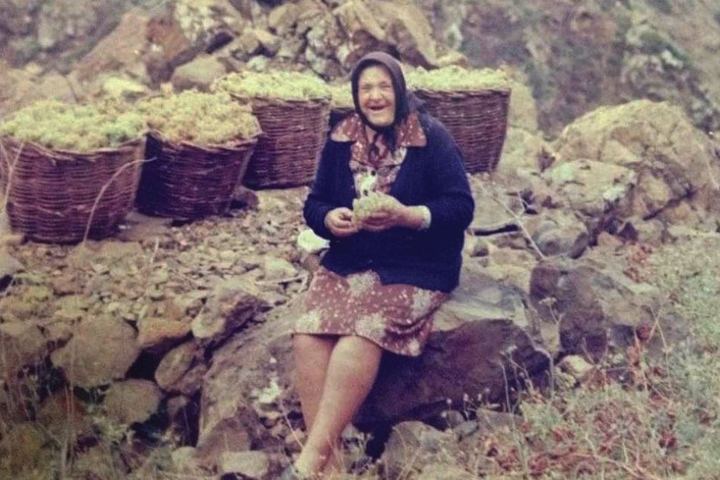
In the past, Campanário was only irrigated with rainwater, however at that time the weather was more stable. We grew potatoes and sweet potatoes which, despite being irrigated with rainwater, were tiny and tasted delicious. I don’t know why, but those drylands produced good potatoes! With the irrigation coming from the Levada do Norte, production doubled and so did the size of the potatoes. We always produced vines on trellises and under the vines we planted food according to the season. We produced so many grapes that we sold the surplus and best quality grapes to Madeira Wine15.
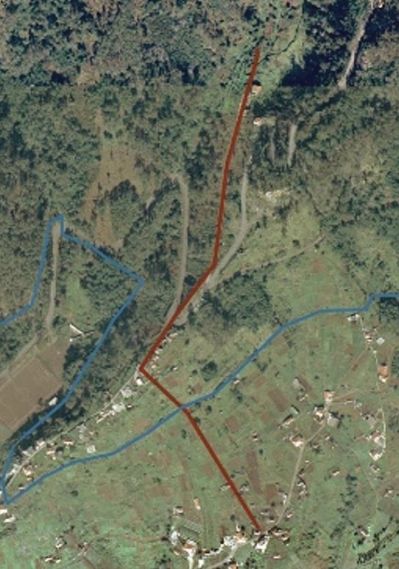
With the appearance of the Levada do Norte people had to build tanks and channel the water through constructing small levadas that vertically crossed the land and in turn branched off, linking up with neighbouring levadas (Figure 15). However, we had to deal with the rotating water (água de giro) 16 during the night, because in those days the rotations were made mostly at night. I always controlled the water and went with my brother-in-law to water the land. It was only later that the rotations took place during the day. The rotations were in order, on average 44 minutes for each neighbour, depending on the size of the building, and we organized the time with them and with the Levadeiro 17. At that time there wasn’t an inch of the farm left untitled, with all the poios from the sea to the mountains, and do you know why? Because during Salazar’s time18 we had nothing! We did not have olive oil, cooking oil, flour, sugar or soap. It was only after the revolution of the 25 April19 that products began to appear. I thank Américo Tomás, António Espínola and João Galvão, who carried out the coup d’état and changed our lives.
Ah! the old days...nowadays it’s wonderful, while in the old days there were no cars to transport everything. Today people prefer other types of work, because agriculture does not provide enough. It is not valued and in Madeira you have to have the strength to climb up and down the poios to bring the products to the nearest path. If young people could earn a good living, perhaps agriculture and the landscape would return to what it was, but for wages that corresponded to the sacrifice entailed by the work. Young people only want to be in school and do not care about agriculture!
I am 91 years old, and I still plant some potatoes, tie the vines, remove the leaves from the vines, and collect grass. Now at my age I only do the land around my house. What I can do I do; what I cannot do I don’t do. Agriculture has always been my job, but while Madeira embroidery was recognized for retirement, I had to work in both, because they never gave me a pension from agriculture, but from embroidery they did.
A land with immense stairways that seem to lead up to heaven; not leaving an inch of land untouched (...) human beings dig, dig, flatten and till, to open up to agriculture an endless series of steps, the poios, which provided wine and a vegetable garden which grew everywhere (...) (Castro, 1989).
6. Conclusion
Despite the island’s mountainous characteristic that forced the use of land in poios (terraces), Madeiran women left a clear and evident “mark on the land”. The rural environment still preserves its traditions and women play an important role in the family farming and not just that.
In a territory where technology is still unable to overcome the constraints caused by the Island’s orography, agriculture depends and will continue to depend on the human effort. In this regard, it is necessary to recognise that women are playing an increasingly important role in agriculture. This article is an appeal to the need to raise awareness about real human effort and women’s participation in this process, whether in transforming the forest, the hillsides into cultivated “poios” and in subsistence food production.
The physical conditions of the island, and these manifestations, present since the 15th century and caused by its orography, evoke this intimacy, this family spirit, which is shown in the interaction of all within the spatial nucleus that makes up the family or the community. Here, there is the idea of the “poio” as an expression of that unity, which is then transposed to the mind of the islander and is affirmed as a genuine expression of Madeira’s agriculture and rural life (Alberto Vieira). note: the text was provided by the author as part of the project he was developing about Agriculture in Madeira Island at the Center for Atlantic History Studies (CEHA).
References
- Caldeira, D. (2021) A agricultura Madeirense e Eu. Funchal: ARTELEIA, produção de conteúdos literários.
- C. A. d.A. H. d. (1952) Levada do Norte (Ribeira Brava - Câmara de Lobos). Funchal: n.n.
- França, J. (1972) A ilha e ó tempo: romance. Funchal: Editorial o Século
- Frutuoso, G. (1998) Saudades de terra - Livro II. Ponta Delgada: Instituto Cultural de Ponta Delgada.
- Da Silva, F.A.; De Meneses, C.A. (1921) Elucidário madeirense. 1a edição. Funchal.
- Madeira Quase Esquecida, a (2021) Available at: https://www.facebook.com/MadeiraQuaseEsquecida/photos/a.701949559841419/483756678327376/ (Accessed: 18 October 2021).
- Madeira Quase Esquecida, b (2021) Available at: https://www.facebook.com/MadeiraQuaseEsquecida/photos/a.226268560742857/778611218841919/ (Accessed: 18 October 2021).
- Madeira Wine Company (2021) Our history. Available at: https://madeirawinecompany.com/en/about-us/our-history.html (Accessed: 18 October 2021).
- M. d. O. P. -. C. A. o. A. H. d. (1969) O Aproveitamento da Água na Ilha da Madeira, 1944 – 1969. Lisboa: Comissão Administrativa o Aproveitamentos Hidráulicos da Madeira.
- Museu de Fotografia da Madeira – Atelier Vicente's. (2021) Available at: https:/www.facebook.com/mfmvicentes (Accessed: 18 October 2021).
- Natividade, J.V. (1947) Fomento da fruticultura na Madeira. Funchal, Madeira, Portugal: Serviço de Publicações da Direção Regional da Cultura da Madeira
- Natividade, J.V. (1953) Madeira: a epopeia rural. Funchal, Madeira, Portugal: Junta Geral do Distrito do Funchal.
- Nunes, E. (1952) Levada do Norte (Ribeira Brava - Câmara de Lobos). Funchal: Comissão Administrativa dos Aproveitamentos Hidráulicos da Madeira.
- Pereira, E. C. (1940) Ilhas de Zargo. Funchal: Companhia Portuguesa Editora, Ldt.
- Picken, A. (1840) Madeira Illustrated. London: Day & Hagues and Hodgson & Graves.
- Ribeiro, O. (1985) A ilha da Madeira até meados do século XX: estudo geográfico. Lisboa: Instituto de Cultura e Língua Portuguesa.
- Sarmento, A.A. (1953) Freguesias da Madeira. Funchal: Edição da Junta do Distrito Autónomo do Funchal.
- Vieira, A. (2014) Nova História Económica da Madeira. Funchal: Esfera do Caos editores e APCA - Agência de promoção da Cultura Atlântica.
- Vieira, A. (2015) As Levadas. Os Caminhos de Água na Madeira. Cadernos de divulgação do CEHA 9, pp. 5.
- Vieira, A. (2017) O Poio na Humanização do Território e na Construção da Agricultura Madeirense. Cadernos de divulgação do CEHA 3, pp. 1–43.
- UNESCO (2021) Art of dry stone walling, knowledge and techniques. Available at: https://ich.unesco.org/en/RL/art-of-dry-stone-walling-knowledge-and-techniques-01393 (Accessed: 18 October 2021).
Notes
- “Poio” is the local name for Terraced Landscape: Arrangement of land in small terraces on sloping land.
- “Levadas” are channels for transporting water flanked by a footpath. The first levadas on the island date back to the 16th century, and the more recent ones were built by the Administrative Committee for Hydraulic Water Use on Madeira, and date back to the 1940s. They are world-renowned for their tourist routes that show the island’s cultural landscape.
- On this topic see Vieira, A., 2014.
- Madeira Embroidery is a typical embroidery of the Archipelago of Madeira (Madeira and Porto Santo islands).
- “Poio” is the local name of a small terrace for agricultural purposes, a leveled surface built in the sloped territory.
- “Art of dry-stone walling, knowledge and techniques” is considered as intangible cultural heritage of humanity by UNESCO: “The art of dry-stone walling concerns the knowhow related to making stone constructions by stacking stones upon each other, without using any other materials except sometimes dry soil. Dry stone structures are spread across most rural areas – mainly in steep terrains – both inside and outside inhabited spaces, though they are not unknown in urban areas. The stability of the structures is ensured through the careful selection and placement of the stones, and dry-stone structures have shaped numerous, diverse landscapes, forming various modes of dwelling, farming and husbandry. Such structures testify to the methods and practices used by people from prehistory to today to organize their living and working space by optimizing local natural and human resources. [...]” (UNESCO, 2021).
- According to the 2011 census.
- The Levada do Norte is a section of the Ribeira Brava Levada - Campanário, Quinta Grande and Câmara de Lobos built in 1940 — which represented (as it still does), the largest work carried out on this island to date. If we emphasize that around 40,000 farmers benefit directly from it and, indirectly, the population of Funchal and other surrounding areas, the people’s contentment and their spontaneous enthusiasm on the inauguration day (...) is not surprising (Nunes, 1952, p. 37).
- Madeira Embroidery was one of the most important economic activities on the island along with wine and sugar. According to Pereira (1940) for the majority of Madeirans embroidery, emerged as a literally lifesaving board when faced with the difficult situation agriculture on the island passed through during the 19th century. The economic crisis, caused by the situation in the vineyards, led to new alternative forms of survival, with embroidery being one of these. Daily life on the island was transformed leading to women becoming increasingly attached to the home while gaining in their social importance. Household chores became companions to the art of embroidery. This became another focus of attention for the countless visitors as they became aware of this reality when travelling around the island.
- This is a stitch characteristic of Madeiran Embroidery.
- Biblical figure linked to the origin of various peoples.
- To plant the sprouted sweet potato.
- This is a ditch traced by a hoe in the soil to plant crops.
- Structures dug out of the rock that became known as “furnas” and which served various purposes.
- The Madeira Wine Company, S.A. was originally an association of a number of Madeira wine producing companies, who decided to join forces in order to strengthen their purchasing and wine making abilities. This Association was founded in 1913. During the inter-war years, the old family firms of Blandy’s and Leacock joined, followed immediately post war by Miles and Cossart Gordon, thereby creating the largest producer and exporter of Madeira wine (Madeira Wine Company, 2021).
- Irrigation water that one is entitled to, periodically every 8 days or so, against payment of rent.
- The person who controls and distributes the water from the levadas.
- António de Oliveira Salazar was head of the Council of Ministers of the dictatorial Estado Novo government in Portugal.
- A political and social movement which on 25 April 1974 overthrew the dictatorial regime of the Estado Novo and started a process that would end with the establishment of a democratic regime.
Rights and permissions
Open Access. This article is licensed under a Creative Commons CC BY 4.0 license, which permits use, sharing, adaptation, distribution and reproduction in any medium or format, as long as you give appropriate credit to the original author(s) and the source and indicate if changes were made.
About this article
Cite this article
Ferreira, L. (2020). Marks on the land by the "little hands": A testimony of life. The Journal of Terraced Landscapes, 1(2), 32–49. https://doi.org/10.5281/zenodo.8059495
- Published
- December 2020
- Issue
- Volume 1, Number 2
- Journal
- The Journal of Terraced Landscapes, ISSN 2754-7612 (Online)
- Archive
- Zenodo record 8059495
- poio
- agriculture
- women
- Madeira island