What if we were children: Education Diaries of drystone-adapted activities for three- to sixteen-year-old children
Affiliations
- 1 Heritage Architect, Limassol, Cyprus
International Terraced Landscapes Alliance Journal volume 4, issue 1, pp. 60–85 (2026) · Cite this article
- 0 views
- 0 downloads
- DOI10.5281/zenodo.23440571

Abstract
Three diaries record drystone activities devised for children from three to sixteen, in Cyprus and in Sardinia. The first follows nursery children collaging a terraced olive grove and handling stones in their own yard. The second is a school project in which teenagers built and painted bird boxes for a burnt landscape, and carried it on when the adults could not. The third is a morning in a Sardinian orchard, where children built stone basins around thirsty vines.
Keywords
- terrace pedagogy
- drystone heritage
- Cyprus
- children and landscape
- participatory methods
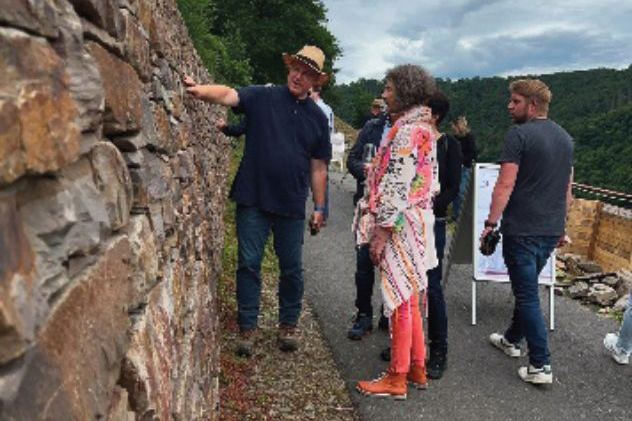
Curating the shared experience of the dry-stone landscape of Salamiou for a wider audience together with the local community and its specialised stone masons, led the way to deploying architecture as investing in a cognitive space instead of applying it to a design of material constraints. Architecture became the means to approach the field of what cognitive space is, what it can be, what it can do.
This is especially true when I began to pay attention to the heritage of terraced landscape and how I could evolve a way of sharing emergent understanding of its importance. Writing about it was one way, but this takes a long time to be completed academically correctly. I also always felt uneasy that local people, with whom I conversed and who always shared their knowledge eagerly in the hope of its preservation, would never be able to see the finished product, since it would become encased in volumes on library shelves, in universities in other countries, written in another language. The urgency of how to consolidate this gathered research, translate and transfer it back to the land and its people has always been a challenge. Workshops and PowerPoint presentations therefore emerged as a spontaneous sharing of what was learned, translated and condensed into a few hours in a few days, for a few people. While this was better, it is still not adequate. A longer-term approach of sharing drystone knowledge therefore evolved through pedagogy and listed below are some reflective outcomes of how these ‘lessons’ were devised, followed by a reflection of their outcomes, based on the differentiated teaching methodology of Koutsellini-Ioannidou (Cyprus University) which I attended in 2012-2013. Our first improvised, open-air drystone workshops together with stone masons from Salamiou, initially invited young adults and architecture students. Such activities carry heritage landscape beyond the intangibility of how it is perceived (largely empty) what it actually is, what it can be, and how drystone heritage in particular informs its context not only as landscape, but also as a foodscape, an artscape, memoryscape and even a shared languagescape of local terminology.
As these workshops were opened to anyone who was interested, schoolteachers (from both Greek and Turkish-speaking communities) enthusiastically participated, experiencing terracing for themselves, interested in introducing it to their classrooms. Through teachers’ but also children’s attendances, the pedagogical approach improvised further, diversifying to include different ages, and adapting to different capabilities. The aim, however, was always to tap specific wisdom from local communities and ground these emergent activities within areas that children could relate to, living in rural terracing communities or attending nearby schools.
It was within living communities where the realisation dawned that what I ‘saw’ in the landscape surrounding traditionally built stone villages was limited, compared to the locals’ spatial experience, both through their childhood past, as well as their present lives. A methodology evolved influenced by the approach of Visualisation in Participatory Programmes (VIPP) particularly relating to pedagogy, that aim for “dialogue between villagers, farmers, activists of a community, a region, with people who belong to local movements or initiatives” (Salas, Tillmann et al, 2010).
Relying on the principles of dialogue, that everyone expresses themselves, everyone contributes with their ideas, I engaged informally with particular groups within communities. Borrowing VIPP’s method of engaging mutual support, discussions followed with two nursery schoolteachers, sisters from Salamiou, but living and working in nearby Paphos town, where Andri Kedariti, heads her private nursery “To Trainaki tis Haras’ (i.e., “The Little Train of Joy”) and runs it with her sister Eleni. We talked about how to teach children about the landscape they are surrounded with. Andri shared that she introduces landscape teachings to pre-school local children through physical games. She became interested and volunteered in the drystone restoration workshops which we began in 2023 with her drystone-mason brothers, Argyris and Panayiotis Panayiotou.
We became an experimental nucleus, learning from each other. I talked about the general theory of dry-stone landscape, its cultural significance, they complemented with particular associative examples evoked both from their deep-rooted knowledge of growing up and attending primary school in Salamiou as children, but also observational knowledge of seasonal farming practices linked to localities (for example, I was touched when Andri gave me a jam she makes out of wild pears, gathered from a lone tree located in the shrubland, about a kilometre from the village, knowing when it is best ripe).
Formative questions, learned from the Visualisation Method, searched for patterns. A knowledge methodology evolved, without dominating local expertise or creating a hierarchy. Questions asked were: How do you personally relate to the terraces in your village’? What is your earliest memory of terraces? What is your earliest memory of being involved in terracing? What changes have you witnessed in the landscape, in society, in how children today approach dirt and stones in relation to your childhood? (we had a lot to share about this and about sensory deprivation of contemporary urban children). Further VIPP questions prepared us to consider how we could each imagine activities: What do we want to leave behind from the past? What do we want to take with us into the future?
Andri shared her belief in the benefit to children of holistic learning and teaching values from the landscape. I shared my concern that we are the last generation on the island with living memory of terrace heritage; that youngsters today will be young adults in a decade, which will be the decade of our old age if we are fortunate; that it is our duty to urgently close this gap and find a way to instil knowledge in children through positive memories and experiences that may perhaps return them to the land and to terracing.
From there on, testing in-field educational exercises followed reflective learning from these teachers themselves. As a facilitator, sharing but also observing and learning from their own pedagogical and personal experience, I developed other lessons for nine to twelve-year olds in the same year.
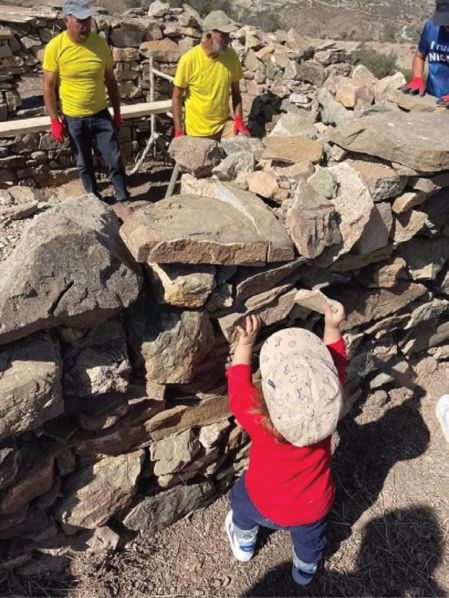
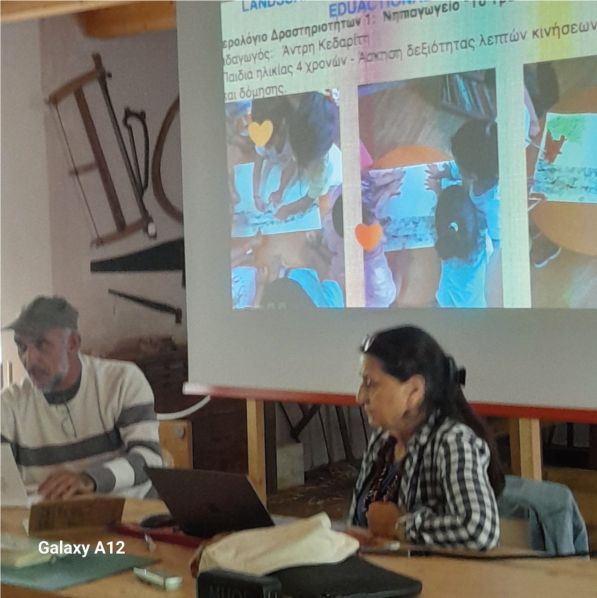
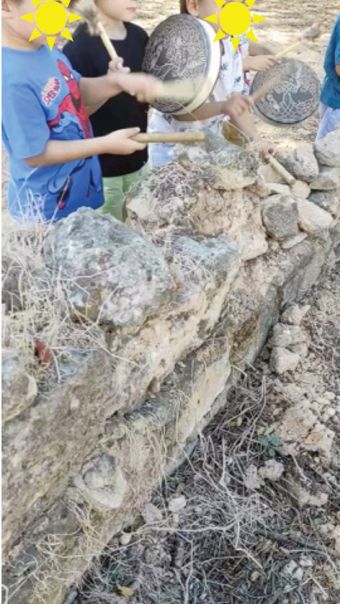
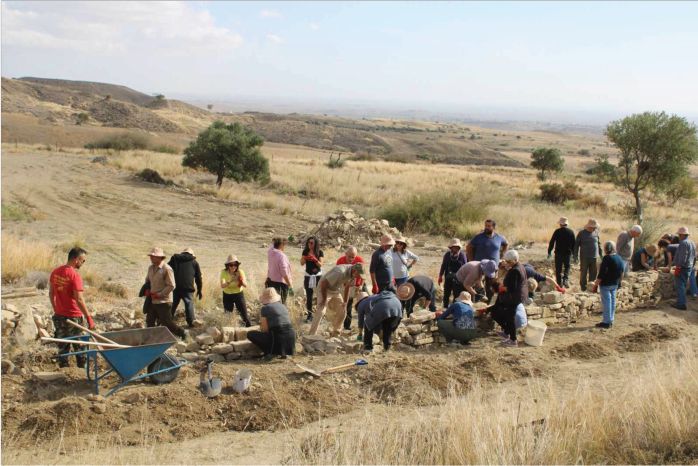
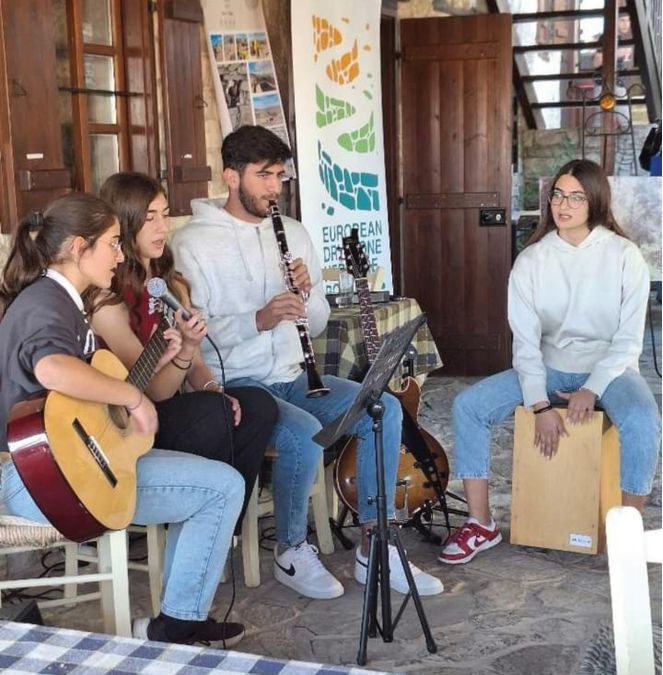
Inspired by how eagerly toddlers but also all children engage with dry-stone during our workshops (Figure 1), I would like to share how our experiences evolved first into nursery teaching of dry-stone lessons which Andri Kedariti designed and taught with Eleni, and their music teacher. We presented these activities together at the Cyprus Heritage Association in 2024. A report was forwarded to Dr Aravella Zachariou, Heading the Education for Environment and Sustainable Development Unit, at the Cyprus Ministry of Education, Sports and Youth, hoping for future cooperation. The pedagogies were also presented at ITLA-Italy’s 2024 conference in the Venetian Sawmill in Sega, Terragnolo during the “Not Only Rocks” Festival (Figure 2).
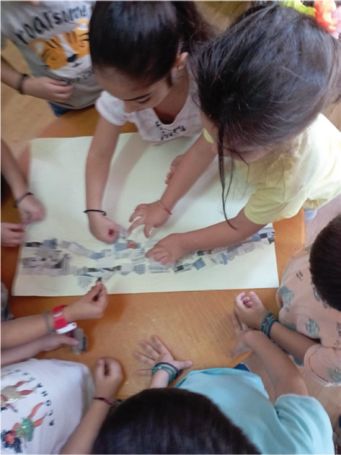
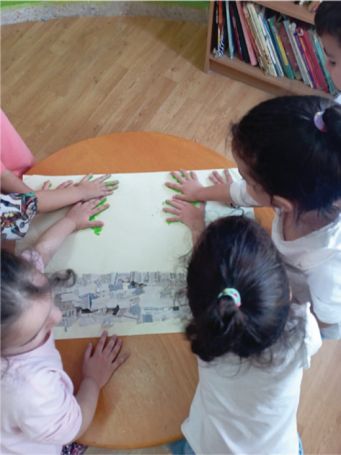
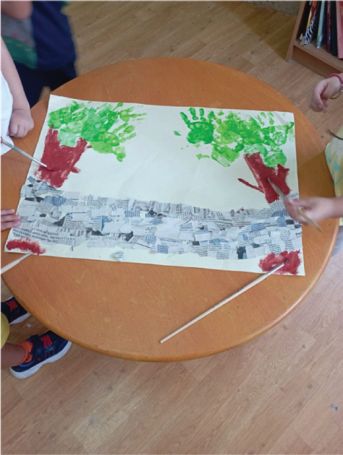
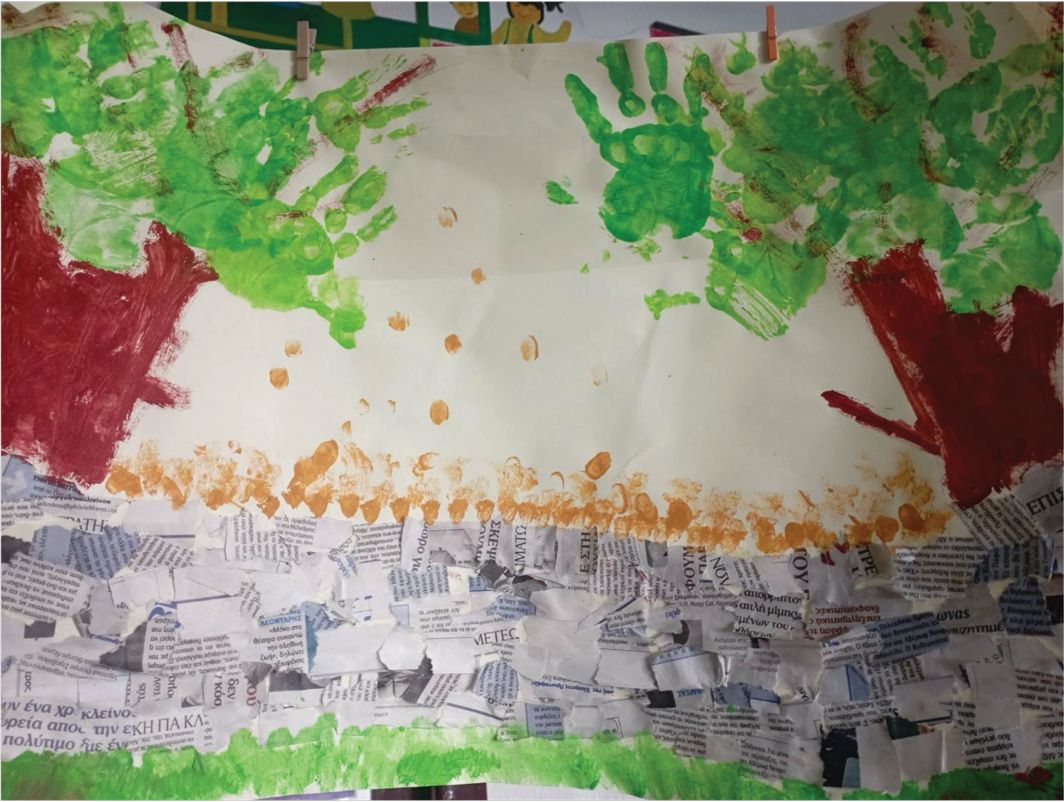
DIARY 1: Activity 1, October 2023, Paphos, Collaging a dry-stoneterraced olive grove
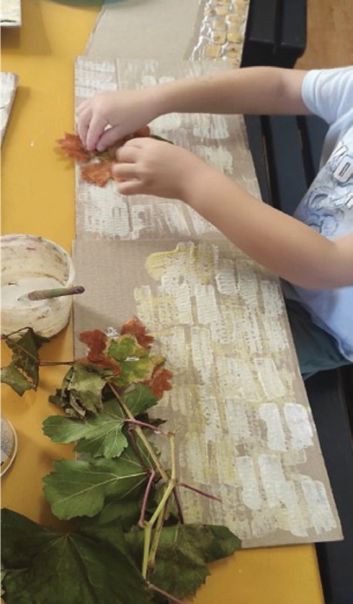
Located in downtown Paphos centre which is rapidly becoming urbanised, Andri’s private nursery is still surrounded by remnants of rural landscape. The children were taken out for a walk to a dry-stone wall in an olive grove nearby. There they were mindful to aspects pointed out by their teachers, about textures, materiality of stones, sounds. They observed what was growing above but also on the drystone-terraces. This site-specific activity increased their sensory awareness when recreated in the classroom. The children were thus encouraged to further appreciate the landscape values of the terraced environment, and to think about them creatively. By interpreting nature which they had experienced first-hand, out-doors, the classroom activity encouraged hand-coordination and delicate finger-dexterity skills suitable for their age-group, but also creative thinking, as well as group participatory experience (Figures 3–6).
Activity 2, Spring 2024, A week at the nursery school devoted to terraced landscape
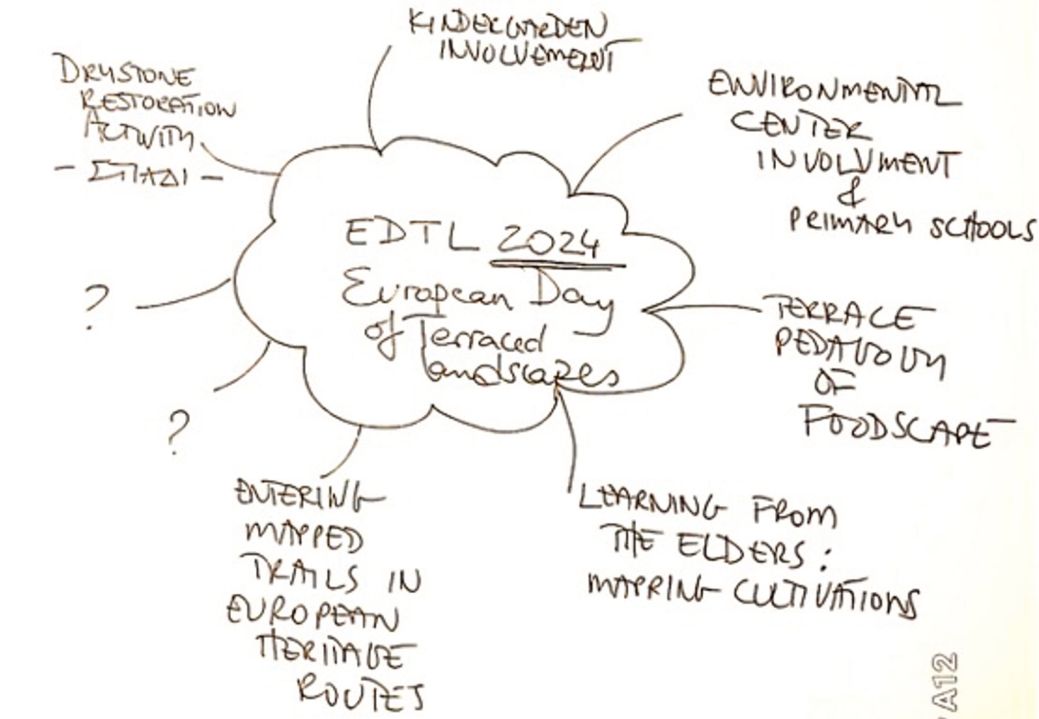
During 2024, all our planned dry-stone-activities, which we had brainstormed together with Timmi Tillmann and Maruja Salas (Figure 7), were inscribed into the European Week of Dry-stone Heritage, headed by the Department of Urban Planning and Housing, who had joined the European Drystone Network Association through the programme REPS (Red Europea de la Piedra en Seco). Throughout that year of condensed activities, a concept of an ‘operational chain of actions’ as discussed by Catapoti and Relaki (2020) began forming about the process of drystone building. The sequence of activities can be explained in just a few legible, but also collective steps; gathering stones, sorting them into types and assembling them into a dry-stone construction. Breaking drystone walling into such sequences of actions, allows for understanding and networking the primary ‘moves’ to further actions. The educational activity for pre-schoolchildren, revealed its own sequence which included looking, touching, carrying as well as laying stones, singing and drawing.
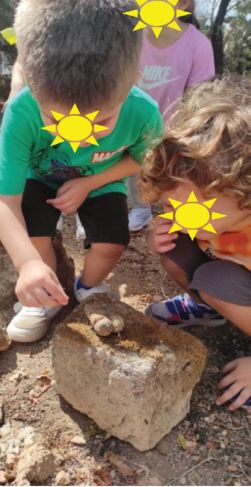
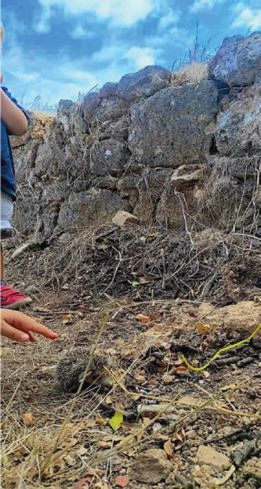
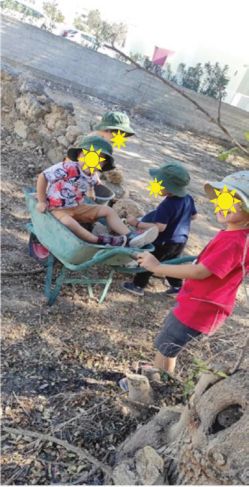
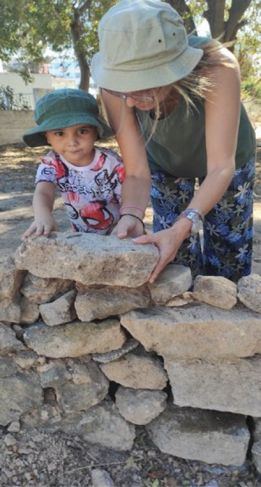
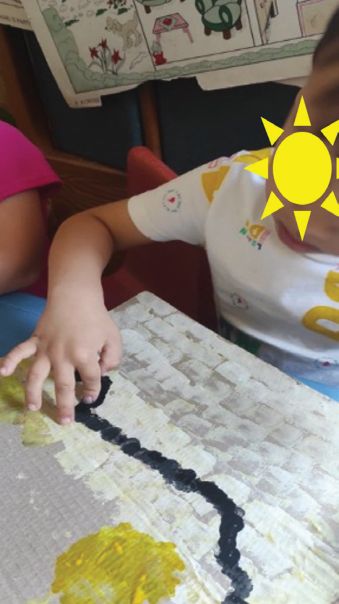
That year a full week of teaching drystone terrace teachings aimed that all children immersively participate in an onsite environment. The children’s daily playtime was beside a drystone wall at the foot of the yard, where the teachers had prepared stones, sticks, buckets and wheelbarrows. They were encouraged to look, touch and carry stones, by hand, or using buckets and wheelbarrows, and to place them on a prepared wall at suitable height. They were also encouraged to observe cavities in-between. An added bonus was a hedgehog crawling out prompting discussion of other living beings whose home is the drystone wall. The children’s amazement prompted them to note differences between this drystone wall and a newly built concrete one across the yard, fencing off new developments. Play-learning was tiered, allowing more dexterous children to work in supervised groups, while children who needed encouraging were assisted. The children also interpreted explored sounds in the landscape, both with natural materials, but also with rhythm instruments. During the week, they learnt a special song with their music teacher, which they then sang outdoors, beside the dry-stone wall. For this performance, they were encouraged to dress up with natureinspired hats or costumes (one hyper-active child chose the owl-costume, singing along, while flitting around). For their final activity, children crafted their dry-stone experiences by ‘printing’ stones using prepared starch-and-watercolour paints and potato-stamps. Outdoor observations were repeated through prompted questions – how were the stones assembled? What surrounded the stones? What lived in their crevices? A selection of leaves and cut-out figures were provided for the less dexterous, while the more adventurous could creatively interpret their acquired knowledge by drawing in figures themselves; such as a snake that wiggles in between the gaps, emphasising in fact, the void between the solid (Figures 8–14).
DIARY 2: 2024, Restoring memory of land, with high-school students at Yiannis Taliotis Yieroskipou Lyceum together with Salamiou community
It is hard to gather the multiple strands of this activity which did not evolve in a straightforward sequence. Yet its complexity revealed meanings, stratified sediments of mourning and loss, exhilarating hope but also concern. Those who work within heritage, habitat, environment, strengthen our souls against the eroding, slow violence of environmental degradation. We prepare ourselves for the front-line when sudden calamity strikes, like when the 2021 wildfires brought us together. A momentum emerged unexpectedly out of that devastation, building up capabilities between four loosely affiliated teams, collaborating through the Laona foundation Firescapes project, where we combined our separate expertise. The aim of Firescapes was to consider how dry-stone terraced landscapes could recover from fires and how we could share in empowering affected rural communities. This particular fire had destroyed 55 km² of RoC rural countryside leaving communities mourning loss of habitat, farmland and homes.1 Our groups came from NGOs across the Island: Martin Hellicar, founder of Birdlife Cyprus in the RoC; Terract, dry-stone wallers from Salamiou, in the Paphos district and with whom I have been working closely over decades; and since wildfires do not acknowledge lines of cease-fire, our network included the shared concerns of Martin Marancos, founder of Kuşkor in Ayios Epiktitos/ Çatalköy, and his volunteer associates in the north, across the island’s political divide.
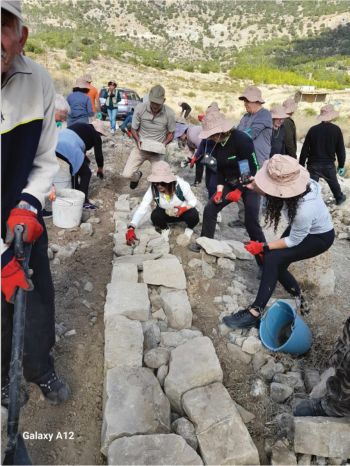
Over three years, our collaboration evolved beyond Laona’s Firescapes project. Each of our experiences, and knowledge-fragments fitted well together: Terract dry-stone wallers, brothers Argyris and Panayiotis Panayiotou, who have been building together since childhood, and who have chosen to live close to their terraced village, had already been training volunteers for many years, sharing their knowledge about how to assemble drystone but also how to appreciate terraced landscapes. When pointing out construction technicalities, they also highlight the dry-stone landscape’s food- production, and its own special habitat. Both Martins shared active concerns about this same environment that provides life for humans but also other living beings, particularly bird conservation through their respective organisations. Our mutual concerns of how the fragility of these habitats held together, merged. Together we began to kindle something positive, promising, that we could share with a wider circle of interested people, concerned, like us, for a way to give back to the land, to re-awaken memories, to learn to perceive. We attended each-other’s workshops, envisaged ways of integrating creative ideas, published, but particularly, discussed how to instil agency in children who live through wildfire devastation which often surrounds their villages, on both sides of the divide (Figures 15 and 16). We explored how to introduce meaningful acts of care. The workshops became a way for creating positive memories of habitat in children, to relate to in their own futures, looking back.
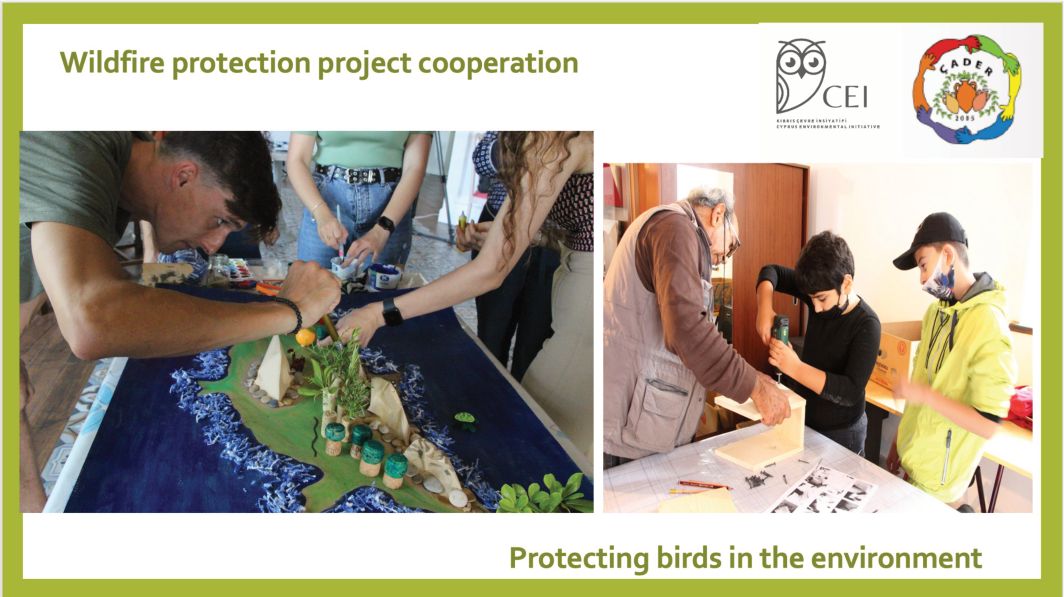
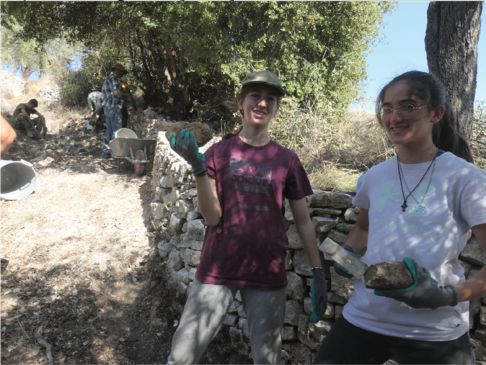
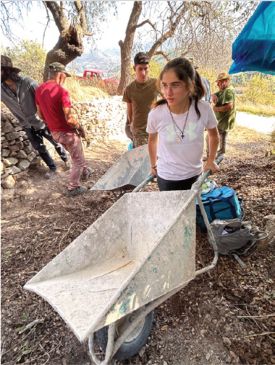
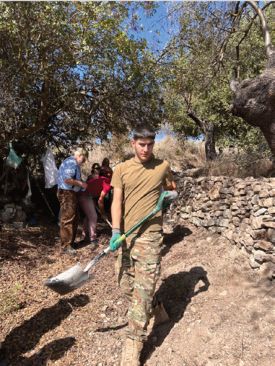
In the aftermath of these fires and in following years educational outdoor classes in terraced landscapes also evolved for primary schoolchildren, 9 to 12 years old. Local schools were engaged, located between the villages of Arakapas and Eptagonia. Here, together we moved stones, restoring burnt terraces where their stones had shattered into charred gravel. We observed how burnt trees (Hawthorn, Carob, Olive and Almond) planted from before, beside now restored terraces re-sprouted, and could once again provide habitat for birds and wildlife. The children spoke of their wildfire experience; they had watched birds ablaze, flying out of nearby burning woods. They remembered birds flying in distress, ablaze, falling to the ground, to rekindle more flames wherever they landed. I felt overwhelmed that this is what our generation with its capitalist negligence towards the quality of life of all beings has instilled in these children’s memories, scarring them for the rest of their lives. I wanted to do something with children about birds and drystone habitat. Between us we discussed workshops, which Kuşkor together with other local NGOs and I had conducted for schoolchildren (Figure 17). We also realised that our workshops for young professionals, architecture students and volunteers had somehow left out the teenage bracket. But teens had been regularly participating alongside us (Figures 18–20), volunteering, preparing kiddie events, digging, trimming thorny bushes. Moreover, they always participated in communal discussions organised within their community. They had hauled stones beside us at the restoration of a part of the medieval Kamilostrata (Camel Road) dry-stone walls, and kept asking questions in between the flow of events, always attentive, but in none of these events had we put them at the centre. In retrospect, their commitment provided them with a foundation of necessary knowledge and skills to collectively step in on their own initiative, when we floundered.
Working with the two bird-conservation Martins, gave a feeling of purpose. The fires had affected swathes of landscape, but uniting our voices created an emergent momentum which was being heard because it gave people a positive feeling – together, across the Island, we could co-operate on a citizen’s level despite the official animosity and stalemate which proved inadequate time-and-again while small but significant actions of practical care restored the aftermath. Realisations emerged out of our joint actions: many birds inhabit the dry-stone rural landscape surrounding terraced villages; this landscape was created by farmers in bygone times not only to produce food, but apparently to also protect nuclear villages from wildfires wherever terracing is maintained. Also, drystone terraces can be restored with will and communal effort, it is possible together to repair existing drystone walls, restore memories and stories, one stone at a time, to safeguard communities’ environment for the future. Lastly, knowledge and experiences can be shared between even linguistic communities across the political divide.
However, one can never prepare for devastation, particularly when losing people within such a small activist pool, itself fragile within this liminality of care. Just before our 2023 October workshop, which was to be held in Salamiou, we suddenly lost Martin Marancos. Then, in the following June of 2024, we lost Martin Hellicar.
Later that summer I collapsed with long Covid. All our plans came to an abrupt halt. The tucked-away, precious terracing world of Salamiou, which was to welcome us, and which has survived catastrophes of climate change, human misuse and abandonment, seemed all the more precious and miraculously resilient. Struggling to breathe day to day, trapped in this unknown disease wearing me down, I became aware of our own transience. We are not separate from the fragility that we witness and try to defend. We also fall through the gaps of lack of systemic frameworks of care. We need a community to pick us up.
Instead of becoming the springboard of a multiplication of possibilities we had all worked towards, I mourned the loss of my valued partners. The next year brought more physical and political obstacles after curating an exhibition that critiqued the government’s lack of policies to protect heritage landscape, particularly when the heritage, knowledge and memories belong to Turkish Cypriots. Funding was withdrawn. This ambiguous terrain of uncertainty we face is familiar to all freelance cultural workers, as pointed out by Kyriaki Kosta (2025) in her work ‘Without Detriment To Head and Hand’2. For, anything which defends people’s real space with the aim of preserving intergenerational memory, peaceful co-existence between communities, by sharing intangible experiences that speak up for the commons, has always been a hard win. When defending landscape values, I tend to think of this process as a frontline experience in real space and time.
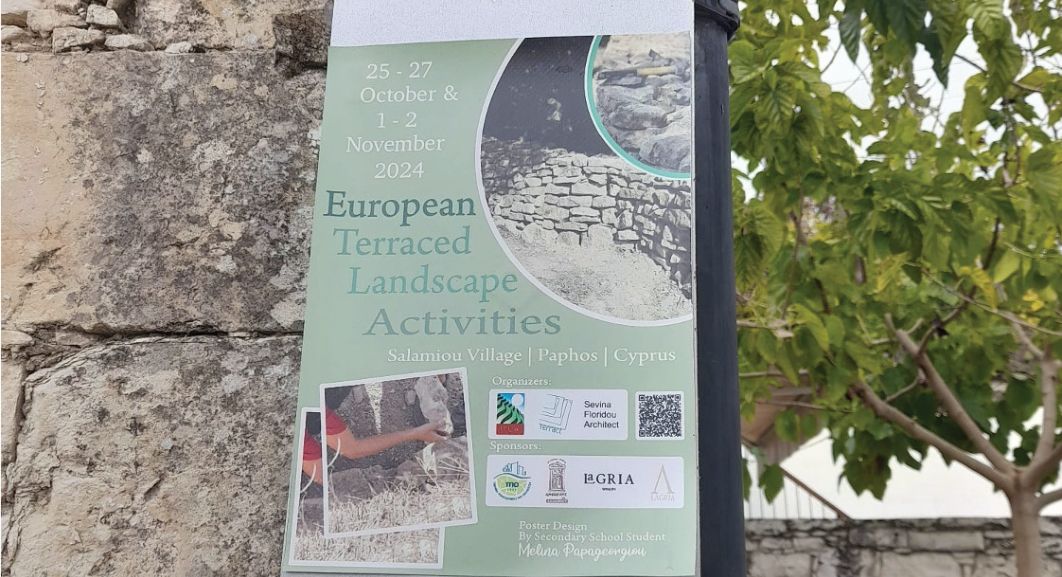
But we needed to mourn our beloved Martins and cried a second time together when Marancos’s wife Irene, came to Salamiou one afternoon, and lost her wedding ring amongst the stones, when together we gathered and built stones at Kamilostrata. Somewhere between those imperishable stones that archive their moving by hands working together, now rests an imperishable band of gold with Martin’s name inscribed on it. That curved drystone wall beside corner propping up the almond orchard became our own private monument. Meanwhile, the Salamiou teenagers were silent witnesses to our plights, perhaps not fully registering the immensity of what we were going through. But more than mourning the loss of our friends, was the urge to celebrate them and what they had achieved. I shared thoughts about the bird-nest making workshop with Vasiliki Petropoulou, founder of Terract. While I spluttered at home within a wrecked body, we co-ordinated over the telephone as she sprang into action, urged by her younger daughter Melina, aged 14, who decided to singularly hold the workshop afloat by designing that year’s poster (Figure 21). From there, the activity took on a life of its own, initiated by a collective of willing Salamiou teens, parents and teachers. We had talked with Vasiliki and Irene about replicating Kuşkor’s activity of children constructing wooden bird-nests. Birdlife had already uploaded nesttemplates on their web page, which we used. Melina’s sister Andrea, sixteen, took the idea to her teachers at the Lyceum. Socratis, a carpenter parent of Salamiou, whose children also attend the same school, provided the marine plywood and together with other Terract dads, some shapes for the bird boxes were measured out and cut. I had initially thought that four or five bird-nests would be feasible, that we would be making them together at Andriko’s coffee-shop on the village square. But the technology teacher, Chrysovalantis Zakhaios, turned their assembly into a class project. Together with Elpida Kyriakou (assistant headmistress/art teacher) and Christos Kyvernitis also in the art department, the nests grew into a full-blown school project.
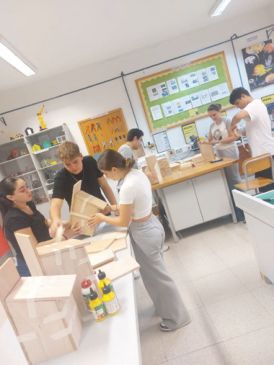
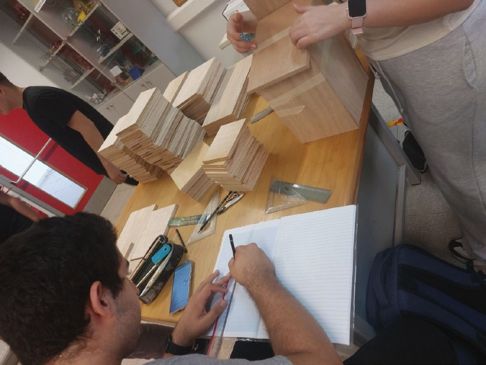
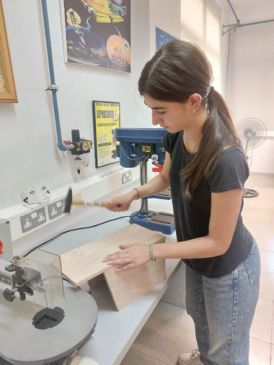
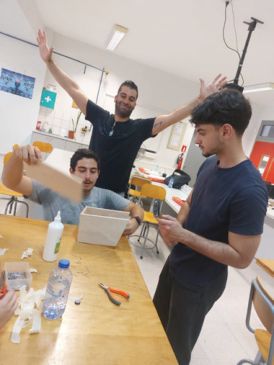
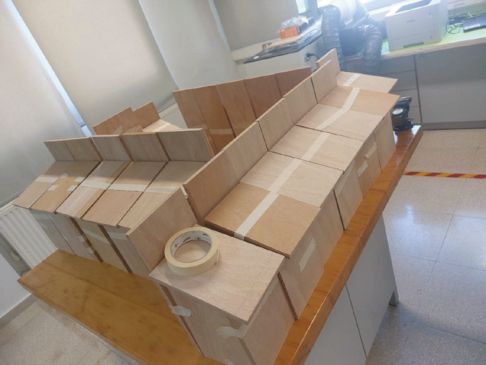
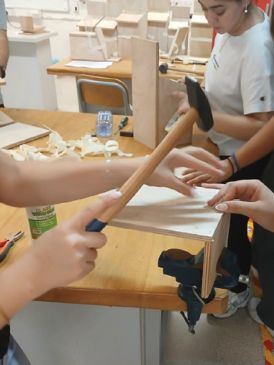
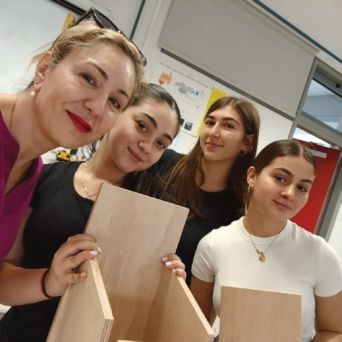
Every day images poured in on my cell-phone as I lay gathering strength at home. Twenty bird-nests were cut, their shapes arranged into neat piles; Chrysovalantis waving hello surrounded by happy youths; students measuring and cutting the template shapes in the school’s workshop (the girls dexterously handling tools with perfect manicures). And finally, a set of assembled plywood nests waited for their next phase. The students collaborated in detailed calculations, reading a technical linear drawing, transferring the layout for cutting, and collaboratively assembling, using a variety of tools. The course developed combined knowledge and skills with lifelong competence. Teamwork was encouraged throughout the lessons (Figures 22–27).
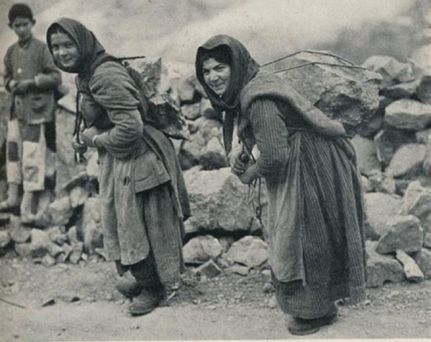
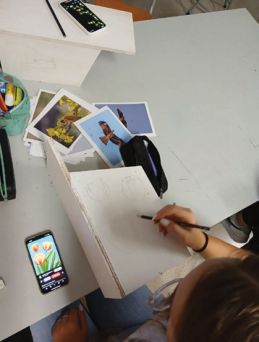
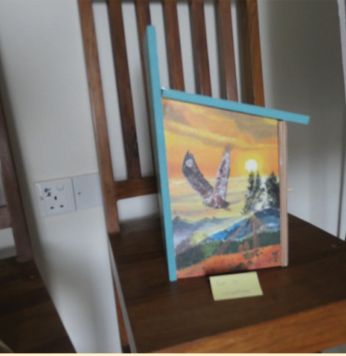
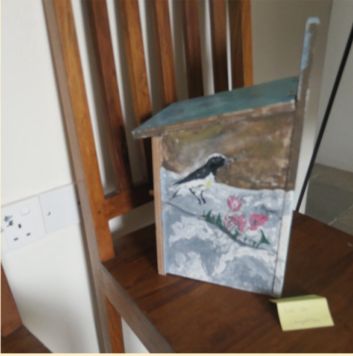
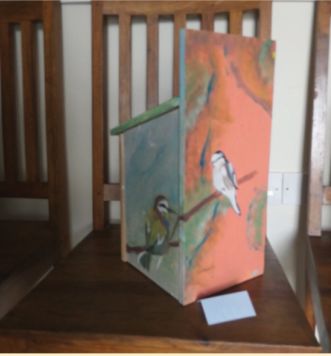
Vasiliki took the project a step further together with the art teachers, to decorate the nests with ecological colours, depicting the birds in Salamiou’s landscape. She market-researched and provided the school with appropriate, bee-friendly water-based paints3 (Figures 29–33). A few years before, Vasiliki had collaborated with Birdlife to identify birds nesting around Salamiou, which they had printed as a calendar. Pictures of these birds were provided to the students with guidelines to depict a specific chosen bird, but to use colours and shapes around them abstractly, in a way that would camouflage the nests when placed in the wilderness. Maria, a biologist who had also grown up in Salamiou, provided the names for the birds in Cypriot dialect, for the students to learn. We then chose Distrata locality where the nests were to be hung on trees, following Birdlife specifications. Distrata is a 1912 terraced trail, built by the great grandparents of the Salamiou youths, much like the 1928 image showing young girls working on dry-stone walls during colonial times which was also shared with the schoolchildren (Figures 28–33).
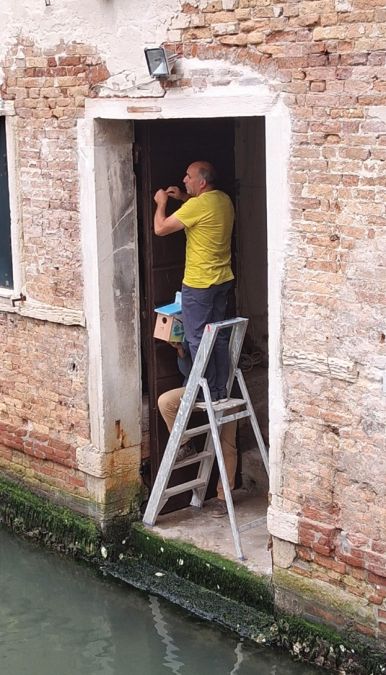
Finally, the decorated nests were presented in Salamiou, by the students and their art teacher at the “European Week of Dry-stone Heritage Routes’,4 event, under the scope of the European Dry-stone Network Association (Figure 34). Invitations were sent out, and the event was curated by Vasiliki Petropoulou, with the bird boxes on display at Lagria artspace to a wide audience of visitors, officials, organisations, Turkish Cypriot contributors, and locals. In 2025, one of the decorated bird-nests was displayed beside the canal at Spiazzi exhibition space at the Venice Architecture Biennale Cyprus pavilion which I co-curated (Figure 35). Our exhibition in Venice was titled ‘to the stones we gave you our breath, and you whispered it back to the earth’.
Conclusion
In the aftermath of our setbacks and loss, the hard win of this pedagogical endeavour evolved out of a sequence of adaptations. This win belongs entirely to the young Salamiou initiators and their parents. Together they held up the momentum, picking up so many fallen batons that life made us drop. Starting from a loose idea about how to motivate youngsters about birds in the terraced landscape, they collectively took initiative to make it happen. Taking the idea to their school affected more youngsters who live in the wider plains, where few have experienced terraces. Melina, in a younger class than her sister, could not participate in the bird-nest making. Instead, she volunteered a journalism-type school assignment about the significance of dry-stone landscapes. After some initial mentoring, she interviewed her drystone mason father, people from her community, and she wrote about Terract activities from her experience. At the end-of term her school awarded her excellent work.
This brief account aimed to narrate how awareness of youngsters in a rural community, who had been participants and witnesses (and willing volunteers) to a series of initiatives surrounding their dry-stone village heritage, picked up the baton on their own initiative, when we all faced the pressure of our fragilities, our inabilities, and so many grown-up realities which stopped us from carrying on. From there on, each and every one of us tried to make their initiative known, acknowledged and celebrated.
And yet, it is precisely under such pressures that urgent questions surface: who gets to ‘make’ culture, to recognise it, to pass it on, under what conditions, and also at what tangible but also at what personal, collective, and intangible cost is this culture owned, acknowledged, appropriated or ignored?
Two years on, this project has remained inconclusive; a wildfire in 2025 swept through the designated site we had chosen for the bird-nests, which was thankfully swiftly contained by volunteers, the girls’ older brother and uncle amongst them. The children have grown and have left for university, so we still need to plan for a re-union event when they all gather back, during holidays.
Also, while our government is veering away from long-term planning for the whole island (Vasquez Hadjilyra, 2026) consolidating instead only on planning funds for the territory of its own sphere of political influence in the Island’s south (thus acknowledging its indifference to unification in the next decades), it is also increasingly openly disfavouring individuals who discuss policies which lead to conclusive division. Anyone who defends inclusive solutions between the Greek and Turkish Cypriots for the whole of the island, who dares speak and write in the island’s dialects5 becomes nationalist media fodder, is publicly disgraced, allowed to be threatened by “outraged citizens” and has their funding blocked. As a next generation of youngsters grows, any project that aims to explore the common heritage of landscape care, particularly the large swathes of farmland that was farmed together and jointly owned, between Greek and Turkish Cypriots half a century ago, and that was shared between farmers of both communities on the island, is ‘gaslighted’, while instead millions are poured into ‘developing AI tools for education in (solely Greek speaking) classrooms. Yet it is precisely within this entangled joint care that re-awakened knowledge of particular dry-stone habitat restoration and rehabilitation is planted for us, saved in between the stones. Maruja6 has always been telling us to generate ideas and not wait around for money. Two years on, I am fully recovered, our bonds with Terract are as strong as ever, and Salamiou’s young people are now studying music, viticulture, architecture, engineering, veterinary science as well as a wide field of other subjects. Their own bonds are strong, and it is exciting to contemplate future collaborations with the emergent next generation. Whether the value of our defence of landscape dry-stone heritage is acknowledged, or whether our political elite can get away with infatuatedly militarising the island with dubious allies remains to be seen.
DIARY 3: May 2026, “Un cierchio di pietre belissime”, introducing children to the significance of dry-stone in Semestene, Sardinia
At Antonio Sotgiu’s invitation for the Krastu Mastru dry-stone workshop we improvised a small workshop for six to nine-year-old children who live in the surrounding villages. Antonio and some of the parents helped with the translating, but my concern that I do not speak Italian vanished when the children themselves reminded me that language is a construct that they effortlessly side-line with their inherent, spontaneity. Children are always quick to grasp the essence of what is at hand, if it catches their imagination. It is exciting to prompt, and watch them take initiative, their senses awakened to possibilities around them. As is most often the case, the children arrive with varying degrees of previous knowledge which the lesson must be able to adapt to in a simultaneous but also tiered manner; while for some children this was an original experience, some came prepared with their very own set of handcrafted toy tools!
The children were welcomed at the earth ramp embankment at the orchard, amidst piles of stones. They were introduced to the stone masons’ team, busy creating a twenty-metre-long dry-stone supporting wall. They were given goggles and gloves and were shown how to chisel stone, as they gleefully had a bash with a mallet (they could have happily remained there all day). They were also shown how to stack stones in twos and threes. We then walked up to a shady spot prepared for them in the orchard, where the aim was two-fold: how to collectively understand the components of the orchard landscape (what is below us? above us? near us and far away? They noticed the soil, the sky, plants and terraces). Together we identified both the wild and cultivated landscape, as well as ourselves in it, both individually and as a group. Also, to think about what role stones play and why so many of us have gathered here to build them up against the hill side. The lesson process aimed to replicate the collective building-processes of dry-stone, and to observe whether- through the sequence of improvisations, replicating working together to gather, sort, and place the stones, this could establish between the children, a sense of collectiveness that dry-stone building generates between builders.
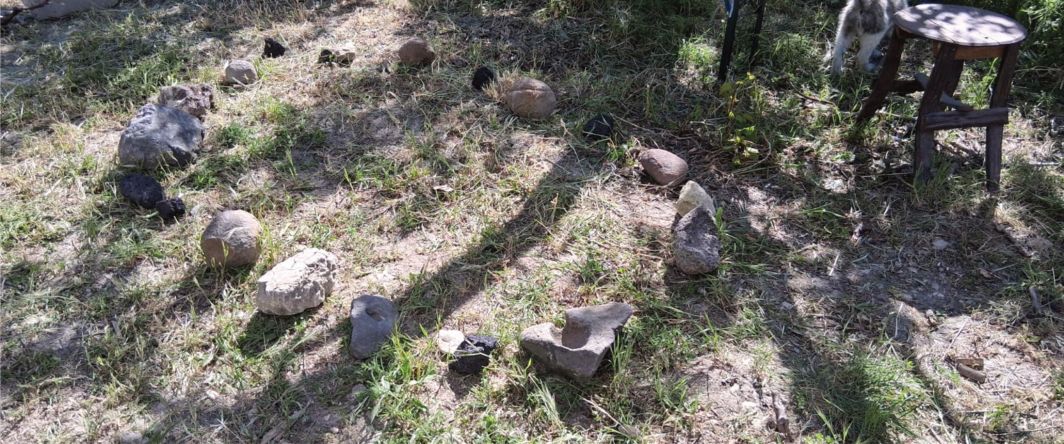
The children were encouraged to sit on the ground in the shade of a tree. A first question: What did they think all those people were doing at the front (“Building a wall!”). Could we see other similar walls around us? (they identified the dry-stone walls on the higher slope beside us). But what were these walls for? Why do we all build them? That would be the story that we needed to uncover together. Beside us on the ground I had prepared a circle of random, coloured, beautiful stones that were selected for them. One by one, the children were invited to walk through the circle and choose a stone of their liking, picking it up, turning it over, and sharing what they liked about it (they discussed its colour, texture, shape, weight, surprising features). In this way stones acquired individuality, while each child’s opinion was heard amongst their peers.
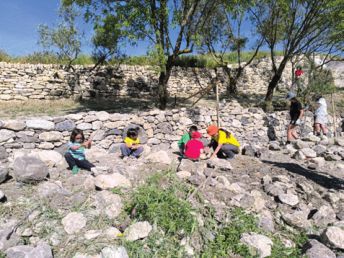
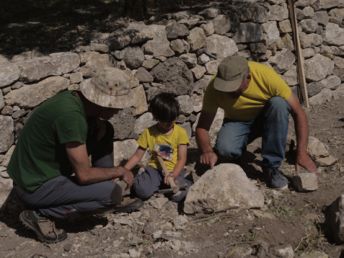
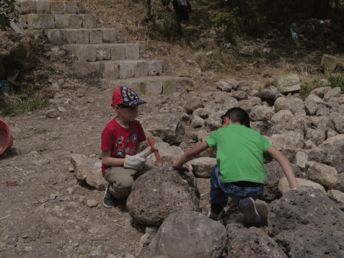
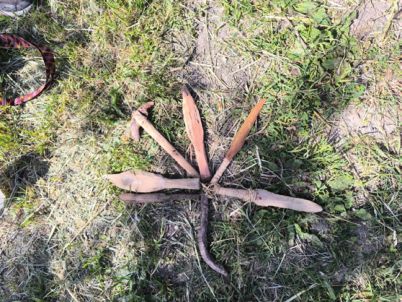
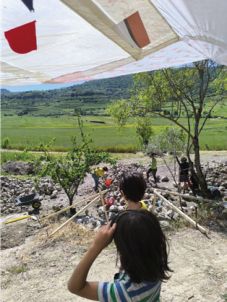
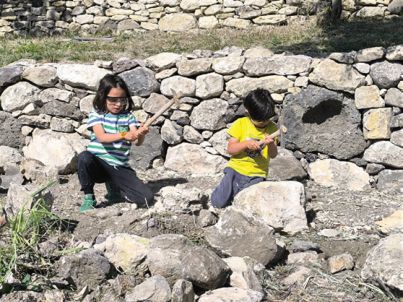
We next strolled through the orchard and identified plants, both wild and cultivated. We paused and looked at them - were they fresh (the wild plants), or thirsty (some abandoned vines). I asked the children if they were thirsty. (“Yes!”, they all said). I had with me a bottle of water, but no cups! (here, the mothers made a running dash to bring their drinking bottles but that was not the point); I wanted them to cup their hands, so that I could pour water into their ‘cups’ as they stooped to drink, and quench their thirst. This was necessary in order to next identify how we help plants to drink water (“From the rain!”, they said). But how exactly do the plants capture rainwater? We looked at thin blades of grass against the sky to imagine how their shapes allow drops to slide down their stalks and into the ground. But today was warm and sunny with no rain, the ground around the vines was hard-baked. I poured some water around a vine trunk, and we watched it washed away. What could we do to help these vines drink some water? Perhaps the plants needed some sort of cup like we made with our hands when we drank? How could we make this for them? We walked around and saw furrows that Antonio had prepared for vegetables, that would hold water from a hose nearby. Then the children identified stones on the ground placed in circles to create ‘cups’, or basins around other plants. They eagerly began spotting more stone circles around tended vines standing over them for a better look. When we returned to the starting point, they once more noticed the ‘thirsty ‘, untended vines.
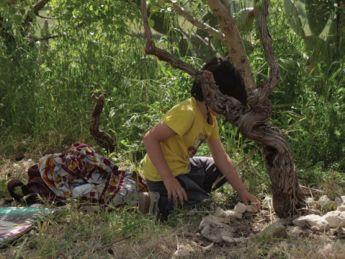
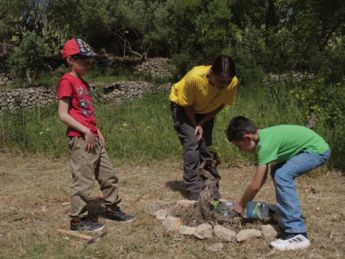
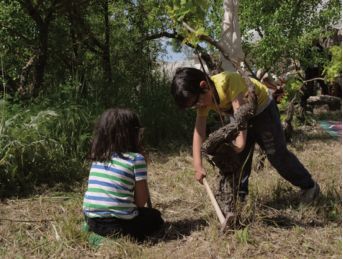
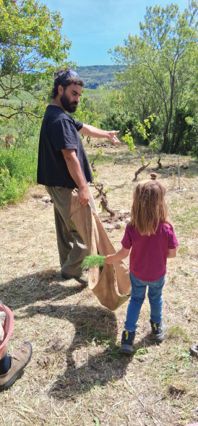
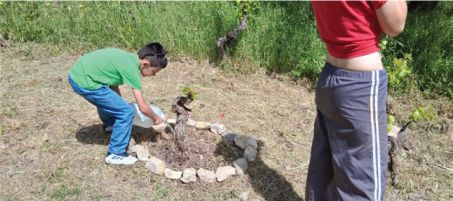
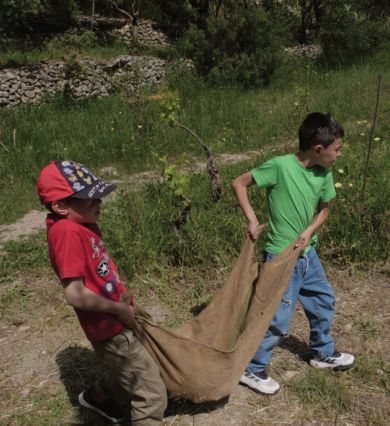
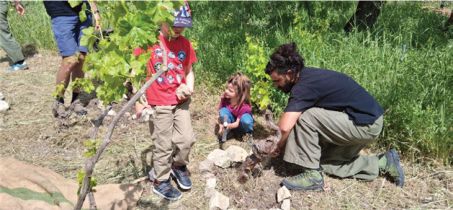
Taking initiative, they immediately knew what to do. They picked up mallets from a heap (pre-arranged on the ground nearby) and began digging the earth around the vines. Working together some dug, others carried stones from a pre-prepared heap. Each child had a go at both activities as they chose, changing spontaneously when they wanted to switch. They laid stone circles around each plant with hardly any prompting. Those who finished first were directed to fill bottles from a water-tank, and ran backwards and forwards to water the basins they had made around their vines. They then continued together, again without prompting, to fix more circles, around the rest of the untended vines.
Since they could work independently, a tiered teaching approach helped shyer children receive one-on-one mentoring from Antonio, who kneeled beside them, explaining slowly and in detail, and encouraging them to do what the other children were excitedly doing (it seemed fun!). Antonio devised a sling out of a sack and together he carried a load of stones with a six-year-old girl. (She proudly held up her end, heavy with stones.) She could now continue by herself to arrange and water her stone circle around the vine.
When all the children completed their tasks, they were encouraged to sit on a rug under a canopy and rest. Before leaving, we went over what we had done; We had cupped our hands to drink water; we had made stone circle-like ‘cups’ around thirsty plants so that they too could drink. We looked around once more at the orchard landscape surrounded by dry-stone terraces. I shaped a wide-open hug with my arms, to identify the scale of these walls – that hold water for all the orchard plants. The sound of the stonemasons chiselling enhanced the understanding of patience.
A follow-up sequence of lessons and other games, including sound elements can be added to such field-lessons: chimes and instruments (or sticks and stones) can be used for listening to different sounds; gathering, sorting, stacking and building a stone wall together and then narrate their experience; drawing pictures, singing, planting, tending their plants growth, are all possible derivative activities. It is important however, that teachers collectively engage in dry-stone walling and integrate first-hand experiences across their classes. In this orchard, the example of ‘farming’-scale drystone, using smaller stones rather than ones for large stonewalling shows that farming drystone is easier for beginners and smaller hands. The more reflective collective elements however need to be worked subjectively into group dynamics. As a last thought, it was concerning to observe a couple of children that refused to drink water out of their cupped hands, refusing to even let water pour onto their hands. It is possible that our developed world has rationalized for today’s children, the operational chain of experiencing water, subjecting it into a cleaning liquid (water to drink is separated, and enters their mouth directly from a straw in a bottle; all other water is for washing hands, or bathing but not ingesting. Conscientious, quick showers to save water deprive senses further). This leads not only to sensory deprivation in young children, but may ultimately sever their physical connection with water in nature.
References
- Catapoti, D., & Relaki, M. (2020). Why the Neolithic is (r)evolutionary. Journal of Material Culture, 1–20. https://journals.sagepub.com/home/mcu
- Kosta, K. (2025). 'Without Detriment To Head and Hand'. Politis newspaper, Parthyro. https://www.kyriakicosta.com/without-detriment-to
- Koutsellini-Ioannidou, M. (2006). Διαφοροποίηση διδασκαλίας-μάθησης σε τάξεις μικτής ικανότητας: φιλοσοφία και έννοια, προσεγγίσεις και εφαρμογές. Εκδώσεις Πεδίο.
- Salas, M. A., et al. (2010). VIPP: Visualisation in Participatory Programmes. How to Facilitate and Visualise Participatory Group Processes. Southbound, Penang.
- Vasquez Hadjilyra, P. (2026, April 27). «Γιατί το νέο σχέδιο της κυβέρνησης αφορά μόνο τη μισή Κύπρο;» (Why does the new government plan refer to only half of Cyprus?). Politis newspaper. https://www.politis.com.cy/apopseis/1001011/giati-to-neo-skhedio-tis-kivernisis-afora-mono-ti-misi-kypro-tis-penelope-baskes-xatzilyra
Notes
- Dry-stone art and craft in the Republic of Cyprus are inscribed as UNESCO intangible heritage since 2018 but with barely any other government protection or programming beyond their inscription. The status of heritage in the north is mired in the politics or non-recognition of the runaway state of the TRNC.
- Without detriment to is a legal term that ensures one party will not enter into any agreements or actions that could harm, negatively impact, or disadvantage the other party. While pretty straight forward legally, it can become abused as political arm twisting.
- AQUACHROM ECO, by Vivechrom, water-based primer, paints and varnish.
- The European Dry-stone Network association was created in 2018 in awareness of the need to protect, restore and promote the European dry-stone culture. The association aims to create a Europe-wide cultural route and obtain the “Cultural Route of the Council of Europe” certification.
- The biennale 2025 publication was banned for ‘not adhering to the official political narrative’, for being written in both dialects, and for addressing abandoned villages which were not caused by the Turkish invasion of 1974, but which were a result of a politically brokered population exchange, when the Cyprus Government agreed to the removal Turkish Cypriot citizens of the Republic of Cyprus villages and towns in the south (presenting this officially as their ‘choice’ to go). Whereas almost 20% of the Turkish speaking Cypriots were bus-ed over to the illegal unrecognised north island territory, captured by Turkey. Turkey invaded during a failed ultra-right, Greek-Cypriot-led coup to topple the president, which was aided by the collaboration of Greek Junta military officers.
- Maria Angelica Salas, ITLA member and one of our staunch supporters and mentors.
Rights and permissions
Open Access. This article is licensed under a Creative Commons CC BY-SA 4.0 license, which permits use, sharing, adaptation, distribution and reproduction in any medium or format, as long as you give appropriate credit to the original author(s) and the source and indicate if changes were made.
About this article
Cite this article
Floridou, S. (2026). What if we were children: Education Diaries of drystone-adapted activities for three- to sixteen-year-old children. International Terraced Landscapes Alliance Journal, 4(1), 60–85. https://doi.org/10.5281/zenodo.23440571
- Published
- October 2026
- Issue
- Volume 4, Number 1
- Journal
- International Terraced Landscapes Alliance Journal, ISSN 2754-7639 (Online)
- Archive
- Zenodo record 23440571
- terrace pedagogy
- drystone heritage
- Cyprus
- children and landscape
- participatory methods