The DSW School Project: Pupils experience dry-stone masonry during Wachau excursions, Austria
Affiliations
- 1 Landimpulse Austria / Dry-Stone Wall School Austria, Krems, Austria
International Terraced Landscapes Alliance Journal volume 4, issue 1, pp. 12–17 (2026) · Cite this article
- 0 views
- 0 downloads
- DOI10.5281/zenodo.23440561

Abstract
Pupils from the UNESCO schools in Krems and Melk spend a morning at the historic Red Gate above Spitz, learning the basic moves of dry-stone masonry from the trainers of the Austrian dry-stone wall school. The excursion is organised by the Wachau World Heritage Communities Association and sets earthy handicraft beside cultural heritage and scenery. The report places the school project alongside the fifteen or so other days a year on which the school brings children to the craft.
Keywords
- dry-stone wall school
- school excursions
- Wachau
- UNESCO World Heritage
- children's workshops
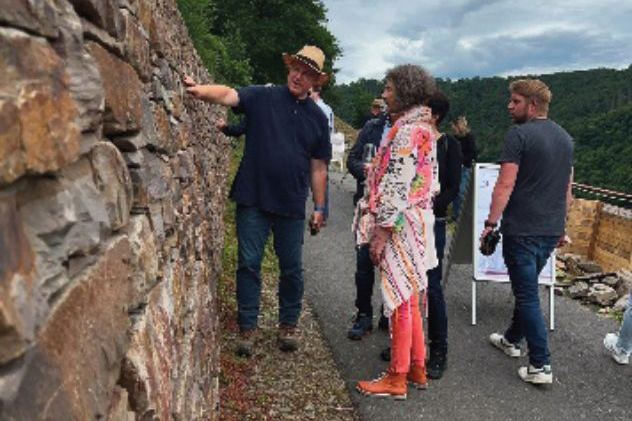
Pupils from the UNESCO schools in Krems and Melk learn the basic concepts of drystone masonry at the “Red Gate” in Spitz in spring. The excursion, organised by the Wachau World Heritage Communities Association, is perfect for the last weeks of school. Teachers and students alike are happy about the variety that combines earthy handicraft with historical cultural heritage and scenic beauty.
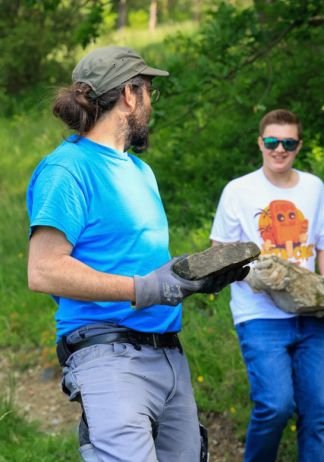
The students hike in Spitz to the vineyards at the historic “Red Gate”. A wonderful view greets you together with the professionals of the dry-stone masonry school. For three hours, the young people practice the movements of artfully assembling the stones under skilful guidance. The Landimpulse association runs the dry-stone masonry school and has been offering courses on the subject in Austria for around 20 years. Similar to the courses of the beekeeping school of Landimpulse, the range of experiences for schools on the part of the dry-stone masonry school is to be expanded in Austria in the next few years.
“Dry-stone walls are the oldest and most sustainable construction method used by humans and, as such, are intangible cultural heritage of UNESCO in Austria. The Wachau with its special terraced cultural landscape has been a UNESCO World Heritage Site since 2000. With the school project, we want to familiarize children and young people with the trade,” says Rainer Vogler from Landimpulse, describing his goals. “Wherever it makes sense and is possible, regional natural stone should be used for construction. Energy consumption is low, and the crevices of the walls are the most diverse habitat for over 100 animal and 500 plant species. Stone is 100% natural and recyclable. The earlier children learn these connections and understand how to lay stones with their own hands, the more sustainable building will develop in the coming years.”
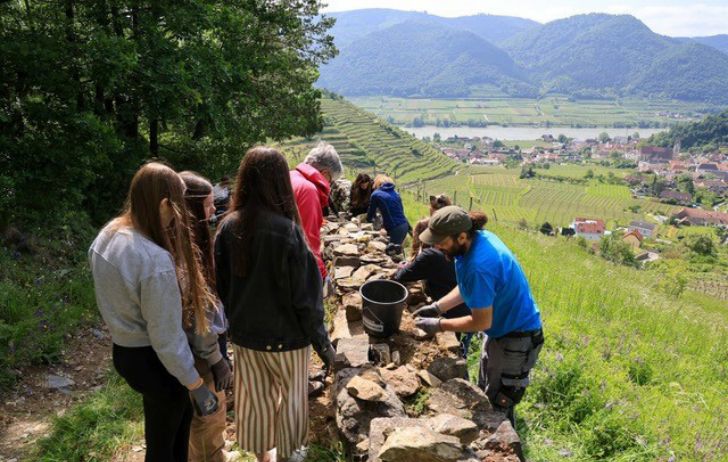
At the same time, the students discover the treasures of the Wachau. “After the dry-stone walls, the classes continue cycling through the Wachau. Medieval churches, Roman relics, the history of viticulture, the diversity of dry grasslands and alluvial forest are waiting to be discovered,” says World Heritage Manager Ingeborg Hödl, promoting the varied programme for the school classes.
The Wachau World Heritage Communities support the project. It goes without saying that the snack package contains only regional delicacies, including Wachauer Laberl, grape juice and apricot jam. The range of school workshops on dry-stone walls will be expanded in 2026 and can also take place in other regions depending on available resources.
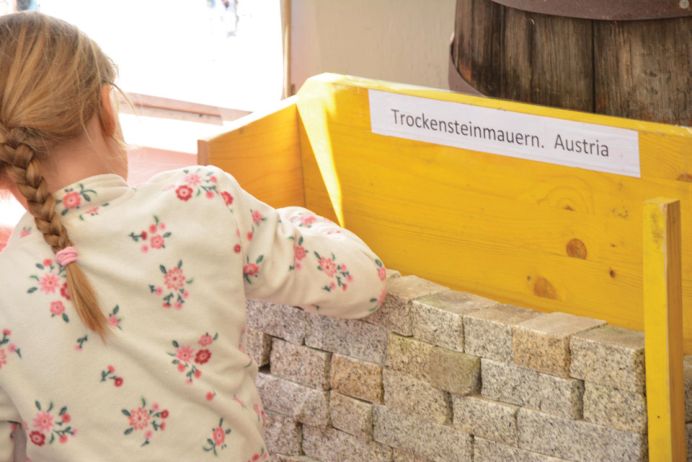
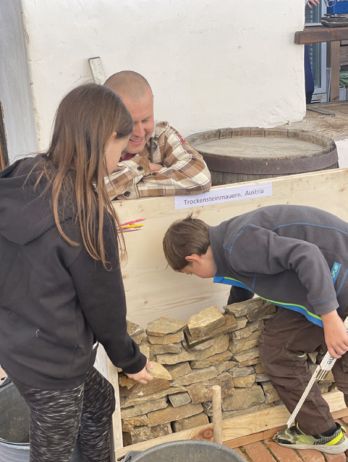
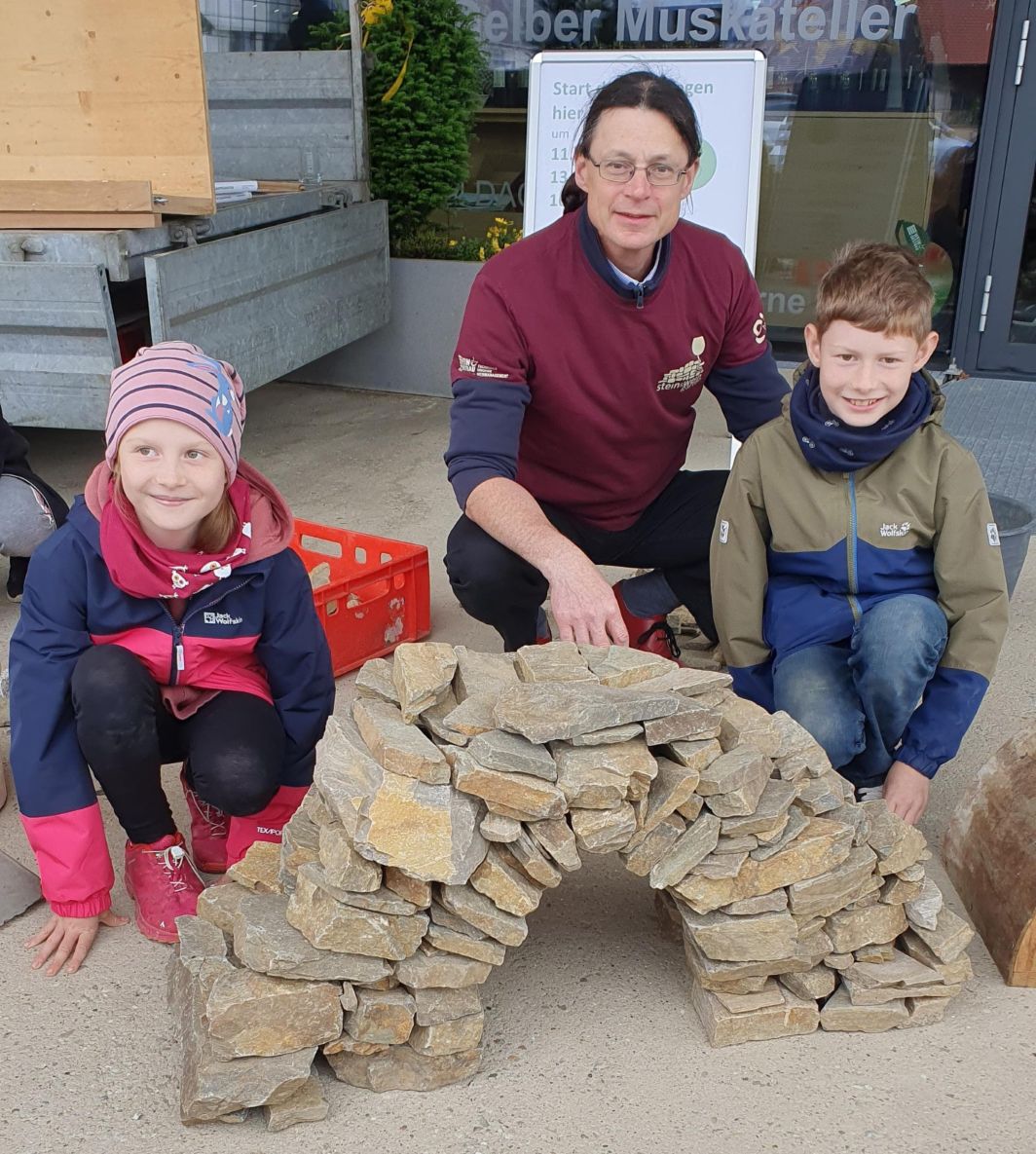
Children experience dry stone walls
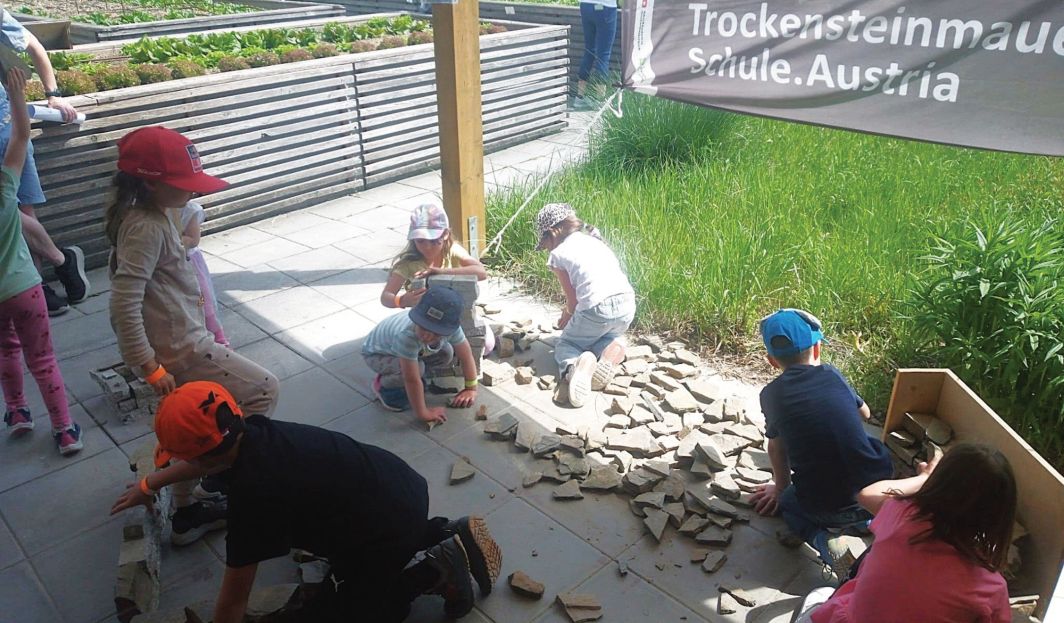
“I had to be 82 years old to get to know this old craft. It shows young people and children what we were able to do in the past and how to build sustainably,” says a course participant and former Kellermeister at dry stone masonry at the beginning of July last year. This is exactly what the dry-stone wall school does: for around 15 days, children and school classes experience the intangible cultural heritage of dry stone walls at the Garten Tulln, at craft markets, at holiday games and on Wachau excursions.
Rights and permissions
Open Access. This article is licensed under a Creative Commons CC BY-SA 4.0 license, which permits use, sharing, adaptation, distribution and reproduction in any medium or format, as long as you give appropriate credit to the original author(s) and the source and indicate if changes were made.
About this article
Cite this article
Vogler, R. (2026). The DSW School Project: Pupils experience dry-stone masonry during Wachau excursions, Austria. International Terraced Landscapes Alliance Journal, 4(1), 12–17. https://doi.org/10.5281/zenodo.23440561
- Published
- October 2026
- Issue
- Volume 4, Number 1
- Journal
- International Terraced Landscapes Alliance Journal, ISSN 2754-7639 (Online)
- Archive
- Zenodo record 23440561
- dry-stone wall school
- school excursions
- Wachau
- UNESCO World Heritage
- children's workshops