Information about the Kinderwingert Training Course
Affiliations
- 1 Municipality of Winningen, Moselle, Germany
International Terraced Landscapes Alliance Journal volume 4, issue 1, pp. 18–25 (2026) · Cite this article
- 3 views
- 0 downloads
- DOI10.5281/zenodo.23440563
Abstract
The Kinderwingert brings children of seven to twelve into the vineyard: each adopts a vine, keeps a journal of it and works through five sessions across the growing season, ending with the harvest and a diploma. The report covers the training course at the Moselle Rural Service Centre in Bernkastel-Kues, where organisers of established projects met those planning new ones, and gathers the practical advice they exchanged, together with an account of the 2026 season in Winningen.
Keywords
- Kinderwingert
- viticulture education
- Moselle
- children and nature
- cultural landscape
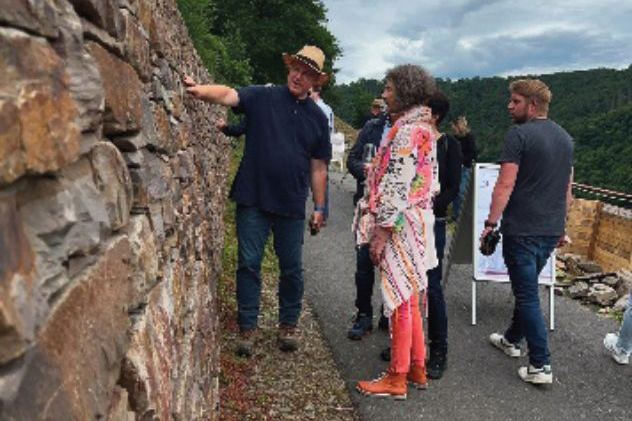
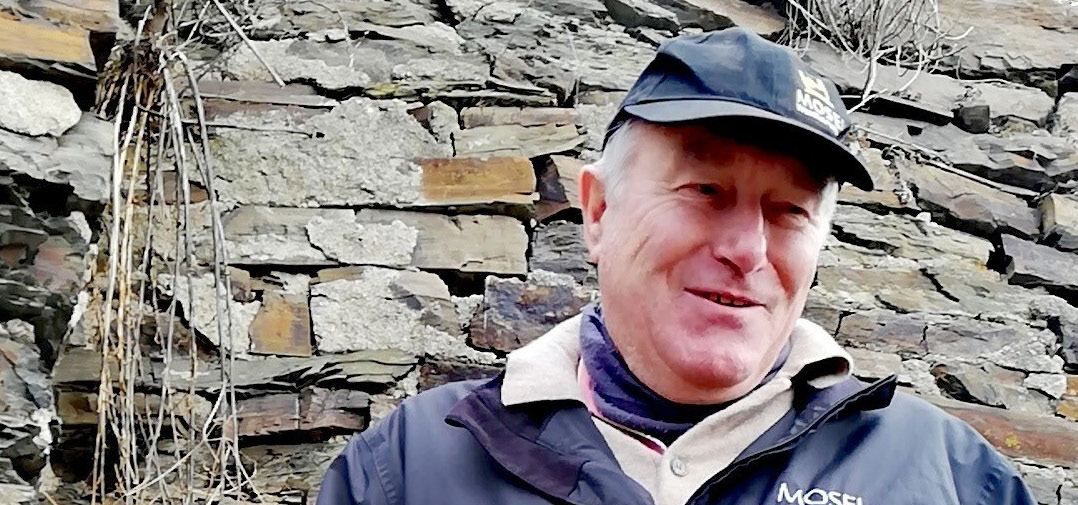
In January, the Moselle Rural Service Centre (DLR) in Bernkastel-Kues hosted a training course for people interested in the Kinderwingert project. The first Kinderwingert project on the Moselle was launched in 2011 by Marlene Bollig and Stefan Hermen in Trittenheim. However, the original idea for the Kinderwingert programme came from the Rheinhessen wine region. In 2004, Barbara Reif – a Culture and Wine Ambassador, qualified educationalist and master cooper – initiated the first Kinderwingert project in Nierstein. She was the keynote speaker at the training event, which took place in the rotunda of the “Steillagenzentrum” in Bernkastel-Kues.
More than 20 participants demonstrated the growing interest in the Kinderwingert project on the Moselle and its promising future. At present, Kinderwingert have been established in Saarburg, Trier, Traben-Trarbach and Trittenheim. Participants from Piesport, Reil, Leiwen, Maring-Noviand, Oberemmel, Schweich, Brauneberg and Winningen also attended the training course in Bernkastel-Kues with the aim of launching their own projects.
The Kinderwingert is an educational project developed by the Culture and Wine Ambassadors of Rhineland-Palatinate, who own the rights to the logo and the overall educational concept. Its aim is to introduce children to the natural and cultural landscape of their home region, which has been shaped by viticulture for centuries. Through practical activities, children experience the region’s traditions and culture at first hand while developing a greater appreciation of nature, fruit growing and the environment. They also learn that, under appropriate guidance and supervision, they can carry out many simple vineyard tasks themselves.
Who takes part in the Kinderwingert?
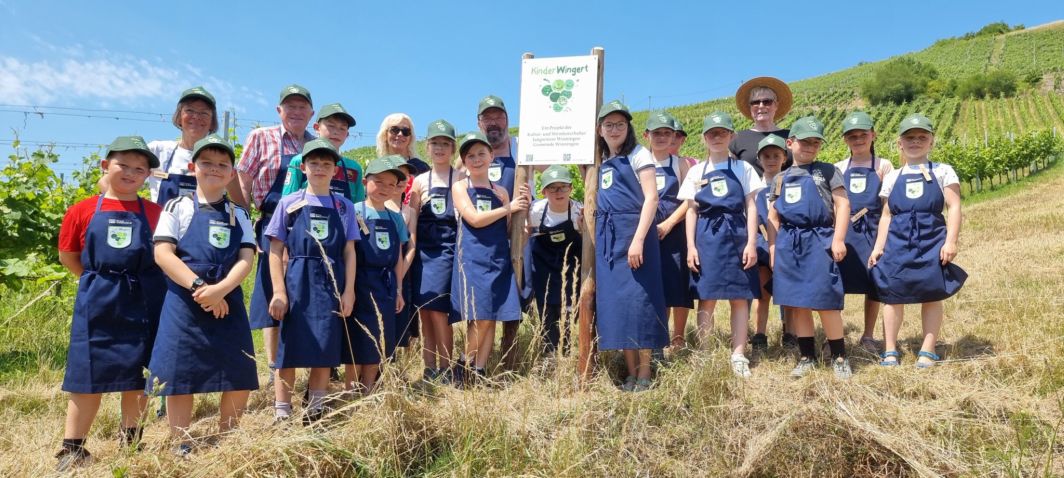
The programme is designed for children between the ages of seven and twelve who have basic reading and writing skills. For new projects, experienced Culture and Wine Ambassadors recommend limiting the group to a maximum of 15 children. The children are always at the centre of the project. Parents and grandparents are welcome to attend but should remain in the background, allowing the children to make their own discoveries and experiences.
Each child adopts a vine, which they care for throughout the growing season. This encourages a sense of responsibility for nature while helping them understand the seasonal cycle of vineyard work. Each vine is labelled with the child’s name.
Every participant keeps a personal Wingertsbuch (Vineyard Journal), which includes worksheets, information sheets and practical instructions. Children are encouraged to personalise their journals with drawings, notes, photographs and pressed plants, making each journal a unique record of their experiences. Project organisers must obtain written parental consent before children can participate. Permission should also be obtained for photographs, videos and social media posts featuring the children. These permissions are best included in the registration form.
Email is the preferred means of communication with parents. They are regularly encouraged to visit the vineyard with their children between official meeting days so that the children can observe the growth and development of their own vines. Invitations to upcoming sessions, together with information about the equipment and materials required, are also sent by email.
Five events during the growing season
Kinderwingert sessions are usually held on Saturday afternoons, beginning at 1:00 p.m. The programme consists of five events spread throughout the growing season. Topics include winter pruning and tying down the canes, soil, vines and climate, canopy management, and quality-enhancing vineyard practices such as leaf removal around the grape clusters and cluster thinning. The final session is devoted to the grape harvest.
Harvest day is undoubtedly the highlight for the children. They harvest grapes from their own vines and press them to produce fresh grape juice (must). The season concludes with a small celebration, during which the children receive their Kinderwingert diplomas in recognition of their participation.
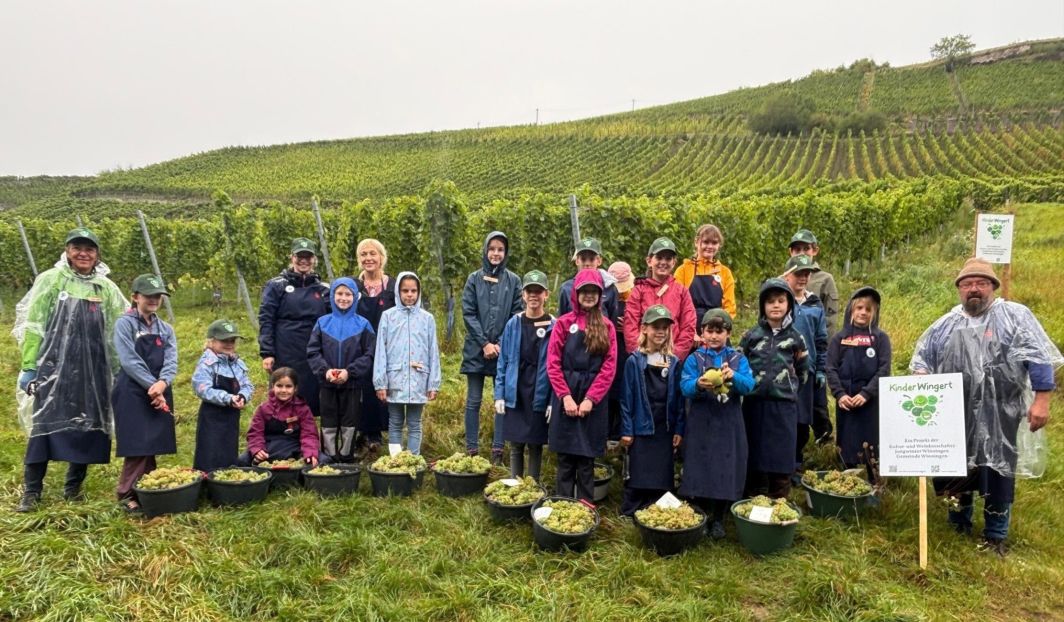
Parents are charged a participation fee of €10 per child for each event to help cover expenses. Many Kinderwingert projects also receive financial or practical support from local businesses, wineries and other sponsors.
The training course organised by DLR Mosel provided an excellent opportunity for networking and exchanging ideas between organisers who already run Kinderwingert projects and those planning to establish one in the coming year. The shared goal is to inspire children to appreciate viticulture, nature and the cultural landscape of the Moselle. The Culture and Wine Ambassadors’ website provides an overview of all existing Kinderwingert projects in Rhineland-Palatinate. Martina Engelmann-Hermen from DLR Mosel confirmed that the Steep Slope Centre in Bernkastel-Kues will continue to serve as a meeting place and platform for future Kinderwingert activities. Organisers also receive support with public relations and media work from Moselwein e.V., which also covered the costs of Barbara Reif’s presentation at the training event.
Other practical tips
Recommended educational brochures
The Kinderwingert in Winningen in 2026
How have this year’s Kinderwingert sessions progressed? At the first meeting in February, each child was assigned two vines to care for. Each vine was marked with a slate label bearing the child’s name. The children first learned how to prune the vines correctly before tying the fruiting canes securely to the trellis wires.
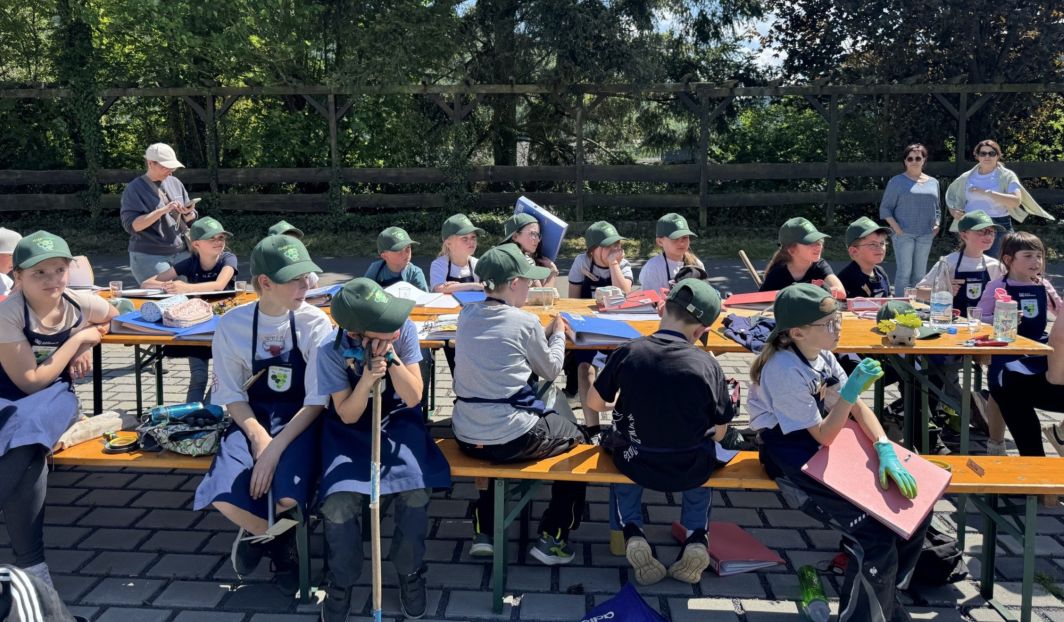
During the second meeting, the children received a worksheet illustrating the different stages of vine development. They recorded the current growth stage of their own vines by counting shoots and leaves and observing other visible changes. As water shoots and double shoots developed, they learned about the first essential canopy management tasks of the season. They also loosened the soil around their vines and removed weeds to improve air circulation and provide the vines with better growing conditions.
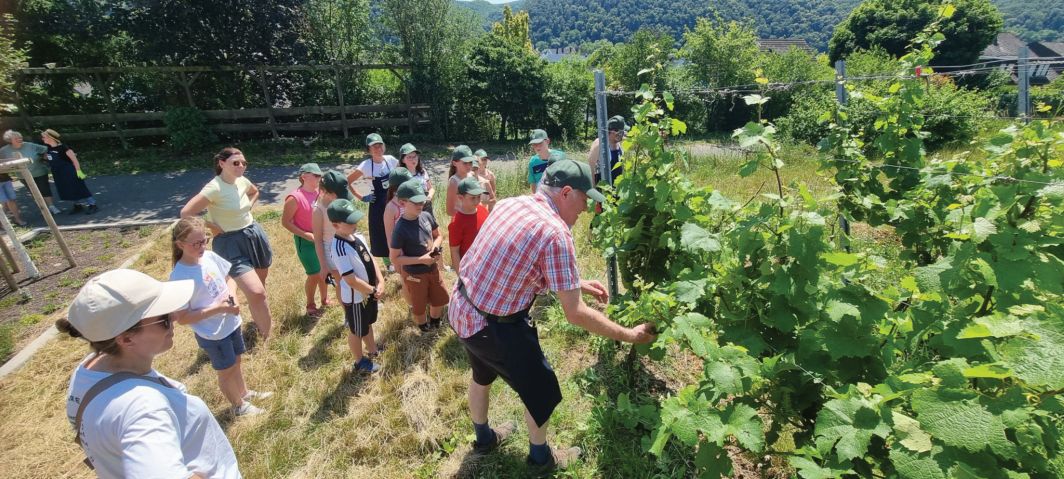
The third meeting took place during the summer in very hot weather. Summer is one of the busiest periods in the vineyard. As grapevines are climbing plants, they continue to grow vigorously throughout the season and must be carefully trained along the trellis system. The children gently positioned the new shoots between the trellis wires, taking care not to damage them. They also removed leaves around the grape clusters to improve ventilation and sunlight exposure and removed unwanted water shoots from the vine trunks.
As temperatures exceeded 30 °C, the group moved to the cool cellar of the Winningen Wine and Local History Museum. There, the children admired historic wine presses and wooden barrels while learning about the traditional work of coopers and cellar masters. Afterwards, they enjoyed a refreshing sparkling grape juice.
The afternoon concluded with a small exhibition featuring different grapevine varieties and a quiz about the rich flora and fauna found in and around the vineyards. Each Kinderwingert session ends with a group discussion, giving the children an opportunity to talk about what they enjoyed most, what they found particularly exciting and what they had learned during the day.
Finally, everyone recites the traditional Kinderwingert rhyme together:
The sun is shining, the rain is laughing, the vine grows day and night. We help and remain happy – In the Kinderwingert anyway!
The fourth Kinderwingert meeting was held on Saturday, 15 August 2026.
Further Information Culture and Wine Ambassadors (Rheinhessen): http://kultur-und-weinbotschafter.de/rheinhessen/angebote/fuer-kinder Culture and Wine Ambassadors (Moselle): http://kultur-und-weinbotschafter.de/angebote-an-der-mosel/fuer-kids-kinderwingert
Rights and permissions
Open Access. This article is licensed under a Creative Commons CC BY-SA 4.0 license, which permits use, sharing, adaptation, distribution and reproduction in any medium or format, as long as you give appropriate credit to the original author(s) and the source and indicate if changes were made.
About this article
Cite this article
Knebel, G. (2026). Information about the Kinderwingert Training Course. International Terraced Landscapes Alliance Journal, 4(1), 18–25. https://doi.org/10.5281/zenodo.23440563
- Published
- October 2026
- Issue
- Volume 4, Number 1
- Journal
- International Terraced Landscapes Alliance Journal, ISSN 2754-7639 (Online)
- Archive
- Zenodo record 23440563
- Kinderwingert
- viticulture education
- Moselle
- children and nature
- cultural landscape