Innovative perspectives for transformation of terraced landscapes
Affiliations
- 1 International Terraced Landscapes Alliance (ITLA); Centre for Agroecology, Water and Resilience (CAWR), Coventry University, United Kingdom
- 2 Centre for Agroecology, Water and Resilience (CAWR), Coventry University, United Kingdom
The Journal of Terraced Landscapes volume 2, issue 1, pp. 4–7 (2026) · Cite this article
It took us some time until we decided to resume the edition of our Journal of Terraced Landscapes. We present here the first number of Volume 2, the peer reviewed Journal of ITLA. Since our editor in chief Lucka Azman Momirski passed away more than one year ago we have collected several peer reviewed scientific papers which do not belong to one special theme, as we had published before. Vol 1 Nr 1 was dealing with terraced landscapes inventories and Vol 1 Nr 2 presented a perspective of women in terraced landscapes. This time we expose the articles who give us valuable knowledge inviting all of us to continue these topics, to develop further reflections and studies as this is the method of science – not to have a result but new insights for understanding and to commit to the transformation of our rural ways of life. The order of the papers was decided on by looking into the territorial scope – from a smaller scale of terraced valleys in Germany and in Peru, then follows the nationwide study of terraced landscapes in Switzerland and finally we include a reflection of architecture and terraces in the mediterranean region as a contribution to consider the value of the landscape for our habitat design.
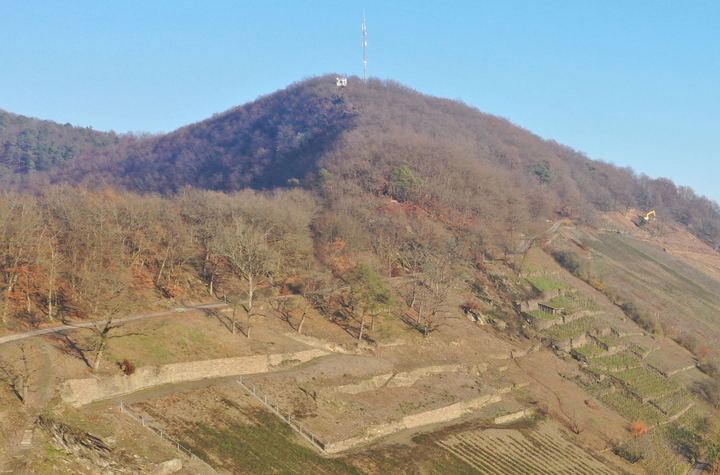
The first article by Boewingloh and Stumm describes with much detail the process of land consolidation of steep slope vineyards in the Lahn Valley (Middle Rhine) and emphasises the participation of the local villagers in the planning process and the reshaping of the abandoned terraced landscapes. An important element of the land consolidation process is to look back into the history of the rural life in this valley and to find out the extent of vineyards and the importance of viticulture in the rural society centuries ago. This model project interviewed elder citizens and analysed the forest cover to find out large range of dry-stone walls hidden underneath. Together with the citizens they cleared the overgrown fields and forests, contracted dry-stone wallers to protect the slopes, started new vineyards on the gained areas and built compensation areas as part of the land transformation regulations. As a result, hiking trails were created and secured, wine tourism was enhanced and a citizen’s vineyard locally managed was established.
The focus of the article by M. Salas on nomenclature of terrace technology in the Andes is on the local Andean knowledge inherited since prehispanic times. The specific knowledge on soils, stones, water and plants is expressed in the language transmitted by wise elders, who reflect on the reciprocity of labour and knowledge in the social organisation of terrace agriculture. Colca Valley has a high diversity of corn varieties, which characterise the food culture of the communities. The author collects a variety of testimonies of men and women from 3 videos published by DESCO in 2014 and shows us a local soil classification, which can contribute to revise the external soil classifications and to offer relevant answers to very localized slope and terrace agriculture. We find new insights in the recognition of Pachamama (Mother Earth) as a living being, which needs to be protected and respected to be able to give us the diversity of food towards food sovereignty.
Going into a wider geographic scope we appreciate the detailed study by Liechti, Marmet and Schneider of the progress of an inventory of terraced landscapes of Switzerland based on detailed cartography and surveillance. ITLA started after the last ITLA Congress on the Canary Islands even before COVID with the task to organise inventories of terraced landscapes for each region. A working group started with criteria to define the state of the terraces in specific regions and its characteristics. We published Vol 1 Nr 1 with first results and a proposal by Lucka Azman on the importance and perspective of inventories as a future task for ITLA members worldwide. This previous issue included also approaches for the acknowledgement of terraced landscapes in Galicia and Canary Islands (Spain), the efforts to recover terraces in the stone village of Salamiou in Cyprus and the policies of maintenance of Tanada rice terraces in Japan. We presented and published a critical view about the limited inventory of Andenes in Peru from 2013 showing a discrepancy between the official inventory pointing out 350 T has as the total area of terraced landscapes (80% still in use) and our review estimating approximately 1 million has of terraced fields with 70% abandoned terraces. The Swiss inventory is an important approximation to identify areas for maintenance and recovery of agricultural terraces mostly for wine but also for other food crops. We get a national picture of terraced landscapes differentiating the areas even for each canton. As the authors conclude it requires to go deeper with field visits and involving the local people to get even a more complete map of terraces to be able to undertake the transformation of the landscape. The inventories are not only ways to understand the landscape and its history, but they are also concrete instruments to work with the people for the strengthening of the local identity and traditions as a means for transformation.
Architect G. Pasquale from Pantelleria develops a focus on Italy and the Mediterranean region. She emphasises an architectural design with an active use of historical and cultural heritage. Terraced landscapes must be kept alive with living people and their local identity based on the stones in the landscape. Contemporary architecture must find a major connection with the terraces and using the stones as its essence. And she shows us examples of architectural design offering us the need for consciousness of architects and local peoples about their identity as mountain people living with stones. Another perspective of transformation at a much wider general range.
One of the oldest, but also most efficient, adaptations of humans to harsh living conditions is the terracing of steep mountain slopes in different climatic zones on all continents. Research and scientific studies on terraced landscapes have intensified in recent decades. Our Journal of Terraced Landscapes (JOTL) aims to contribute to these and focus on current, neglected and stimulating topics. We look for studies with insights and practical ways of valuing the knowledge for the transformation of the terraced landscapes as heritage of our ancestor’s innovative knowledge and skills. In the future volumes we invite our readers and their networks to present scientific articles on Soils, Stones, Water, Biodiversity which let us experience the ingenuity of the terrace guardians since the neolithic revolution.
January 2026
Rights and permissions
Open Access. This article is licensed under a Creative Commons CC BY 4.0 license, which permits use, sharing, adaptation, distribution and reproduction in any medium or format, as long as you give appropriate credit to the original author(s) and the source and indicate if changes were made.
About this article
Cite this article
Tillmann, T., & Salas, M. (2026). Innovative perspectives for transformation of terraced landscapes. The Journal of Terraced Landscapes, 2(1), 4–7.
- Published
- January 2026
- Issue
- Volume 2, Number 1
- Journal
- The Journal of Terraced Landscapes, ISSN 2754-7612 (Online)