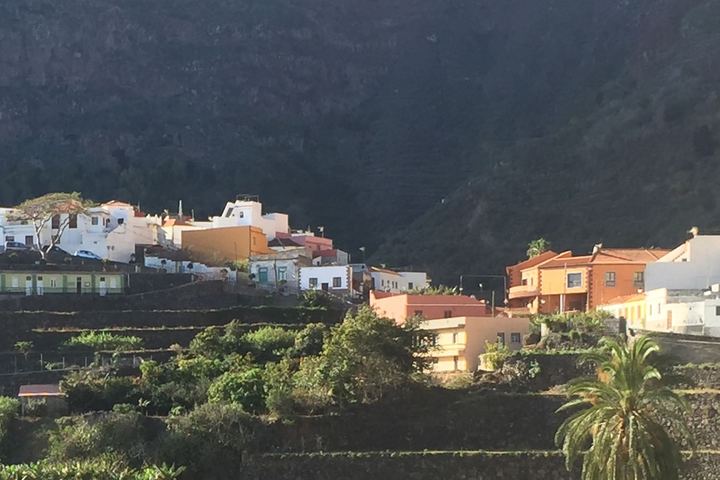
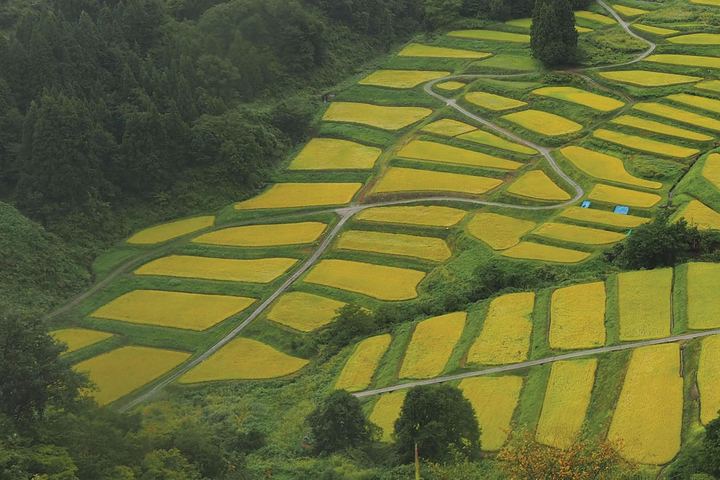
ITLA and Reenchanting Terraces in Peru
Affiliations
- 1 Ministry of Education, Paucartambo Province, Cusco
- 2 Center Bartolome de las Casas
- 3 ITLA Coordinator and Hon Research Fellow at CAWR, Coventry University
International Terraced Landscapes Alliance Journal volume 1, issue 2, pp. 16–35 (2020) · Cite this article
- 185 views
- 206 downloads
- DOI10.5281/zenodo.7341163
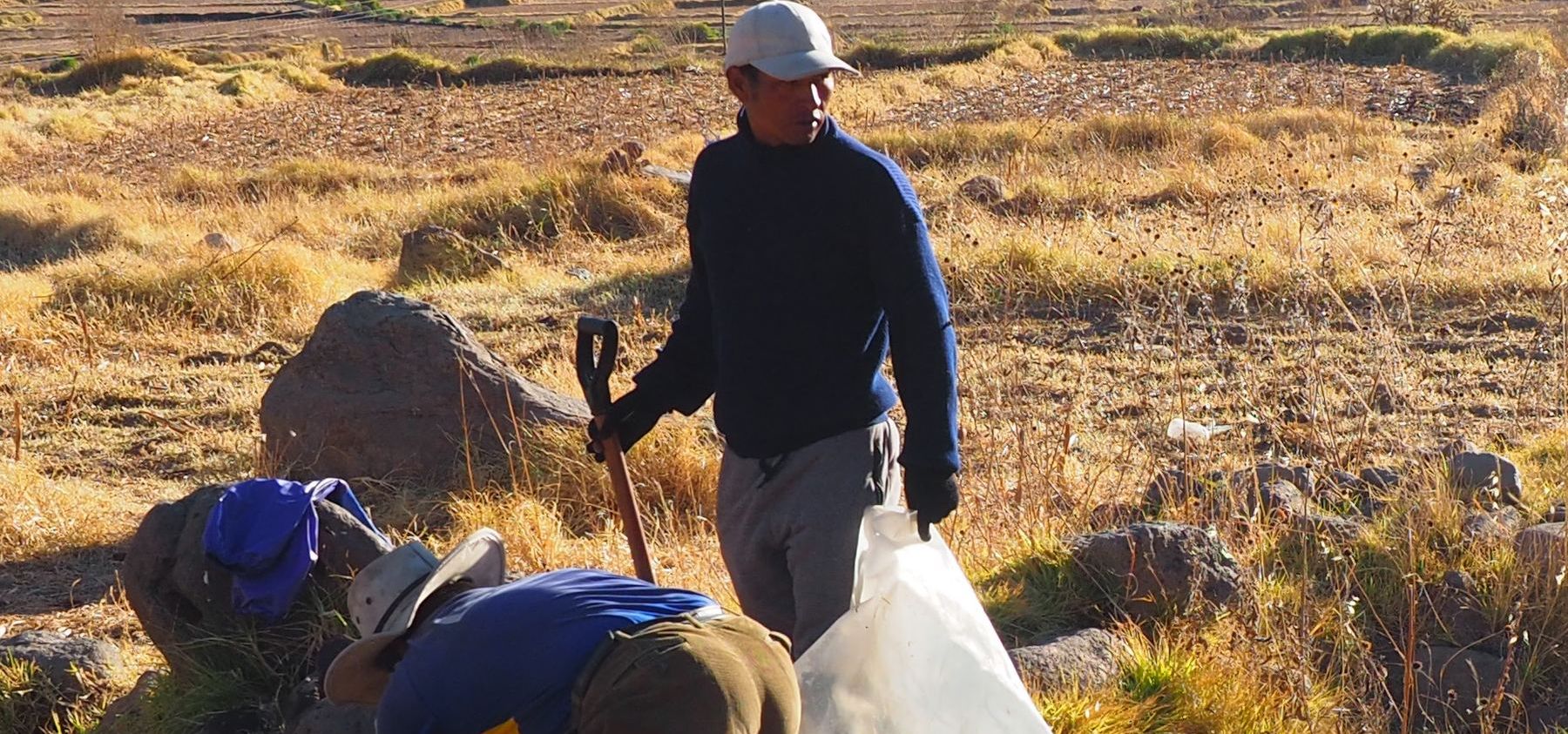
Abstract
In Peru there are currently about one million hectares of terraces of different characteristics that integrate Andean Amazonian territories (Agrorural 2021; Massón 1993). Of these, approximately 40% are in production thanks to the management of the peasant communities integrating life, water and territory. Peru is a very diverse tropical mountain country, ranging from one of the driest deserts in the world to the highest rainfall tropical forests. It is cultivated from sea level to over 4000 m above sea level and the terraces integrate the territory harmoniously, interrelating water and soil management especially in the Yunga and Quechua regions (2000 to 4000 masl) (Pulgar Vidal 1981).
We analyse the importance of the Andean terraces for the Buenvivir (Wellbeing) of the Andean communities based on the presentations by 25 activists, researchers and peasant farmers in five virtual conferences since November 2020 until May 2021 organised by ITLA Peru coordinated by the Center Bartolome de las Casas that led to review the political proposals of commercial production vs. the application of Andean peasant agroecology.
We practice an intercultural approach in field research during 2021 and propose it for the organisation of the International Seminar on Andean terraces in the context of modernity to be held in the first semester of 2022. We propose to rethink an alternative development from the mountain perspective by decolonising the mainstream concepts thought from the plains and the cities.
Keywords
- Andean terraced landscapes
- Peru
- agroecology
- intercultural approach
- ITLA Peru
1. Introduction: the Context of the International Terraced Landscapes Alliance
The Center Bartolomé de Las Casas, located in Cusco, the heart of the Andes, is a nexus of encounters between cultures, disciplines and worlds. Committed to marginalised peoples, it promotes the emergence of autonomous social actors in a democratic and intercultural society through research, education and the dissemination of knowledge. The construction of governance of natural resources, based on inclusion, sustainability, social justice, intercultural dialogue and gender equity. These institutional lines are expressed in the strategic axes - and the issue of terraces involves not only construction technology, but also the defence and management of water and territory, agro-ecological management for food sovereignty, an intercultural approach and prioritising the voices of women as part of a gender equity policy.
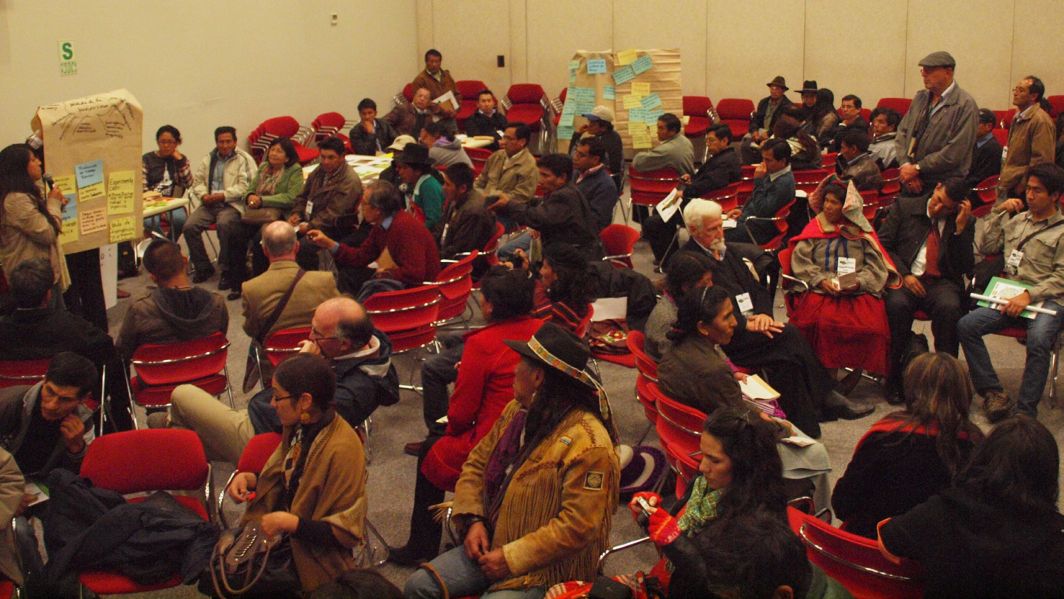
In 2014 the CBC and the International Terraced Landscapes Alliance (ITLA) organised the Second World Congress of Terraces in Cusco (Tillmann, Bueno de Mesquita, 2015) (Figure 1). The most important proposals formulated in the conclusions of the II ITLA Congress were: make terraced communities visible as food producers to the urban society; organise a network of terrace farmers; include Andean knowledge in university studies in natural and social sciences; in terms of governance, the recognition of terraces as a source and basis for small family and community agriculture for the production of organic and healthy quality food with rich biodiversity. It was also proposed that terraces be recognised in the respective laws on water resources, environmental and watershed management, and in rural development, cultural landscape, tourism and land-use planning policies. The last proposal to be mentioned here refers to the role of terraces in rainwater and groundwater harvesting as part of climate change adaptation strategies.
Studies on peasant communities show the wealth of forms of organisation and democratic management of resources developed in the Andes that are comparable to other forms of traditional social organisation in rural societies with terraces, such as the ethnic groups of the Red River Valley in China and Vietnam, the Ifugao in the Philippines, and the rice cultivators of Hindu tradition on the island of Bali in Indonesia. There is an organisational wealth of natural resource management that continues to exist but is threatened by modernisations that do not value smallholder farming in the world.
At the fourth congress in the Canary Islands in 2019 entitled “Reenchanting Terraces” we coordinated with Mourik Bueno de Mesquita and agreed to form the Peruvian Alliance of Andenes (ITLA Peru) following the recommendations of the 200 participants from the Second Congress in Cusco, among them more than 80 community members from the Andes, who asked to commit themselves as peasant families, as Andean communities and valleys to value and organise themselves to rebuild the abandoned terraces.
Due to the pandemic, the 5th World Congress in Bhutan in 2022, which was intended to broaden the horizons with the aim of decolonising the concepts and methods of the Eurocentric development policy for terraced landscapes, cannot take place. While we are waiting for the possibility to organise the 5th Congress from 2023 onwards, we are organising together with the CBC the International Terraces Seminar, one of several Seminars linked to the strategic axes of CBC to be held when it will be possible. The Seminar on Buenvivir in the Andenes will be organised in 2023 in the format of a knowledge, seeds and food fair, a cultural festival, debate workshops, policy proposals, strengthening of the ITLA Peru Alliance and exchange of experiences promoting an intercultural approach. It will have a communication strategy to influence regional and national policies.
2. Methodology: a Dialogic Process
Between November 2020 and May 2021, we organised 5 dialogues with a total of 25 farmers, activists and academics on 5 themes related to the Andenes: Territory and Landscapes, Infrastructure and Water, Agroecology and Agrobiodiversity, Food Sovereignty and Inventories of the Andenes. These were events whose results have clarified the bases of experiences from different perspectives for the International Seminar and contributed with knowledge and themes that we summarise here based on the transcripts to highlight the importance of the Andean terraces in the Peruvian Sierra to feed the people. At the same time, we talked with rural women from Quechua communities in Cusco about the impact of the pandemic of COVID 19 on their lives and the production of food to ensure the subsistence of their families.
3. Terraces: a View from the Apus and Not from the Plains or from the City
Through the discussions we have realised that the Andean terraces do not fit into the agroindustrial scheme that prioritises commoditisation, monoculture, the use of chemicals and pesticides/herbicides, and that seeks to export the harvests as part of a national policy. The Andean terraces are part of a peasant alternative that offers quality of life in the Andean countryside where the wise men and women are recognised and valued. The provincial people are despised in the cities where ignorance of the Andean nature that feeds them reign supreme. Policies and mainstream academics have traditionally described the Andean areas as marginal, poor, needing hard work and low productivity because they have looked at this mountain agriculture through the eyes of the plains (often Europeans from temperate climates) and from the perspective of agro-industry, the production of goods for the market. They thought that marginal populations were pushed up the slopes because there was no more room on the plains to grow edible plants. We had not realised that the terraced areas have great advantages over the plains: water harvesting and management, erosion control, solar energy capture, crops associated with healthy and tasty food, thanks to the cultivation of farms by peasant communities encouraging reciprocity.
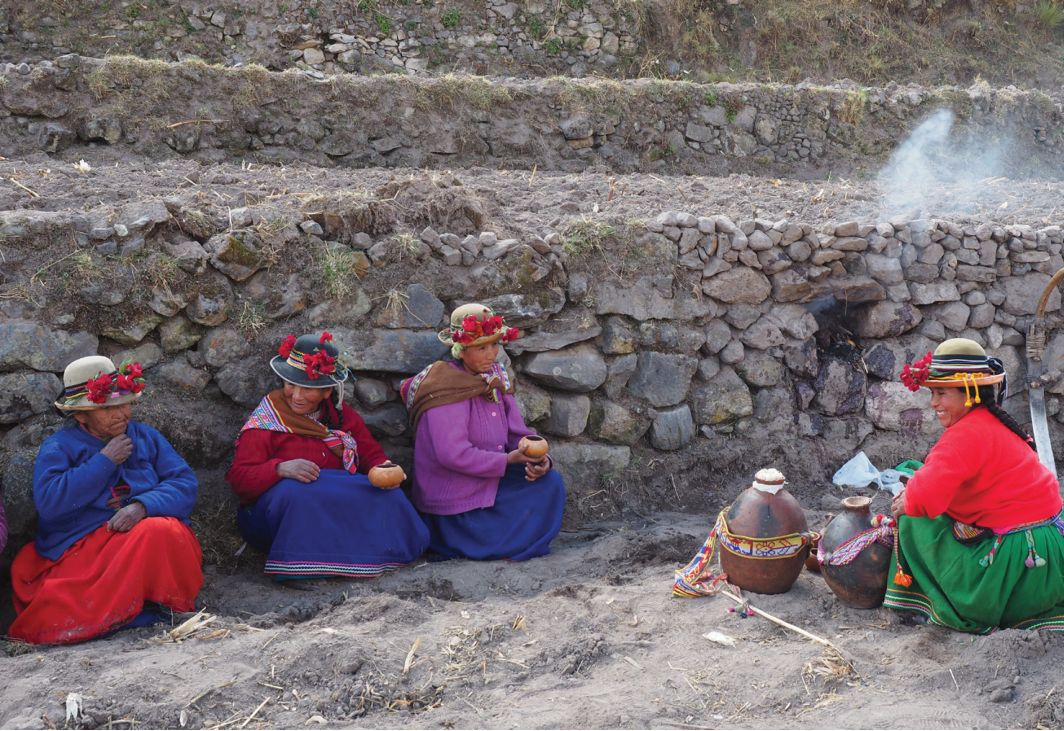
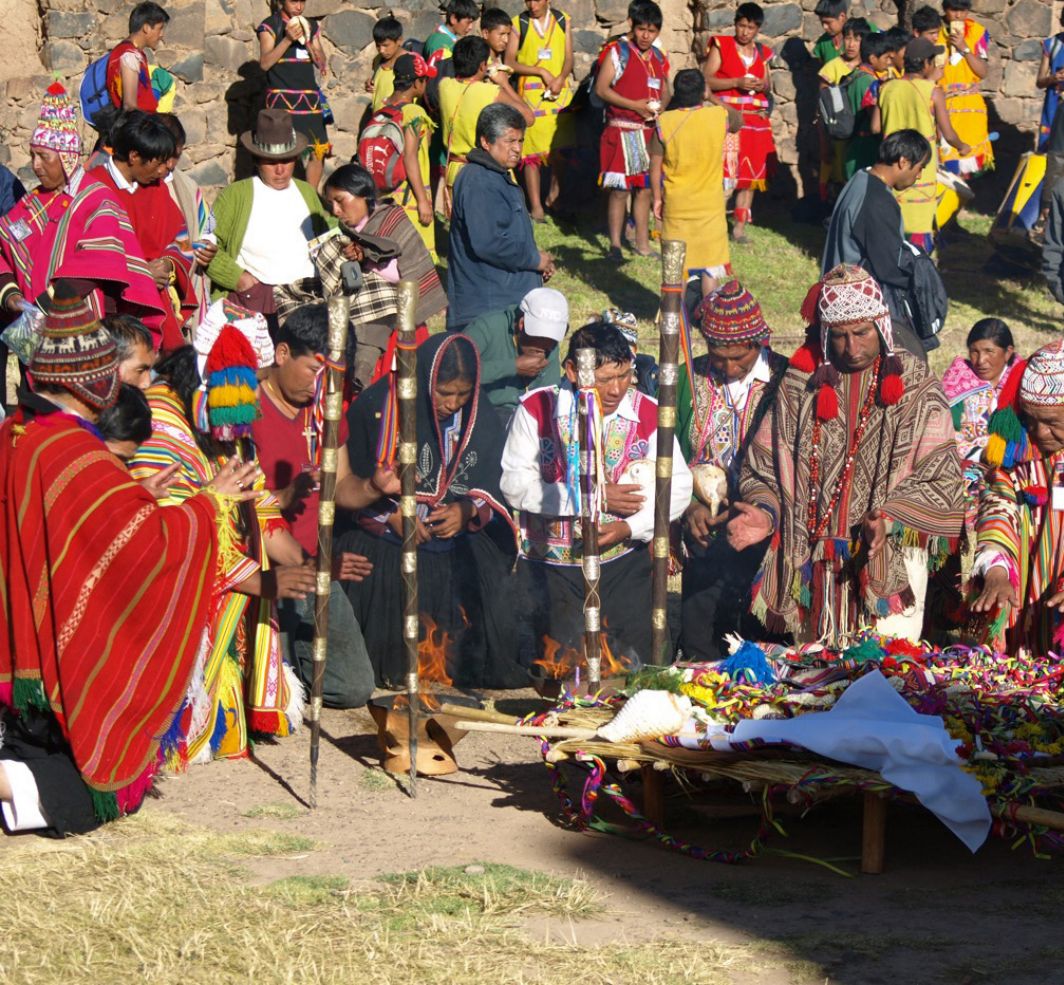
The terraces as part of the high slopes in the Andes are an expression of respect for the Apus (Mountain gods and goddesses) who provide water and protect the crops and seeds. For this reason they make an offering to the Apus and to Mother Earth (Pachamama) each sowing, asking for protection of the crops against drought, frost, hail and good life for the communities (Figure 2).
3.1. Terraced landscapes: a subsistence culture and economy
The diversity of agricultural systems in the Andes, including terraces, integrates the relationship between humans and nature with great harmony and sustainability. Terraced landscapes in particular, conceived by different civilisations on all continents of the world, looked to the mountains not as an obstacle but as a source of life to nourish their populations with a variety of foods. The future of terraces in Peru is threatened by a developmentalist globalisation that standardises agricultural societies denying the fine balance between land, water, climate and food production that have nurtured cultural diversity in the world.
The colonial conquest meant the rupture of a state system that fed millions of settlers and the administrators of the Inca empire. In less than 100 years, 90 % of the population disappeared due to disease and forced labour - the mita - in the mines and construction of Spanish administrative towns to satisfy the greed of the Spaniards. The consequence was the decline of food production and the abandonment of agricultural systems, especially the terraces and the loss of water sources. Although the demography has recovered in recent centuries, since the 1960s the rural highland communities suffered again the exodus of young men and women with migrations to the cities in search of work and a disregard for food production on the Andean terraces because it did not correspond to the urban models of commercial development in contrast to the subsistence economy.
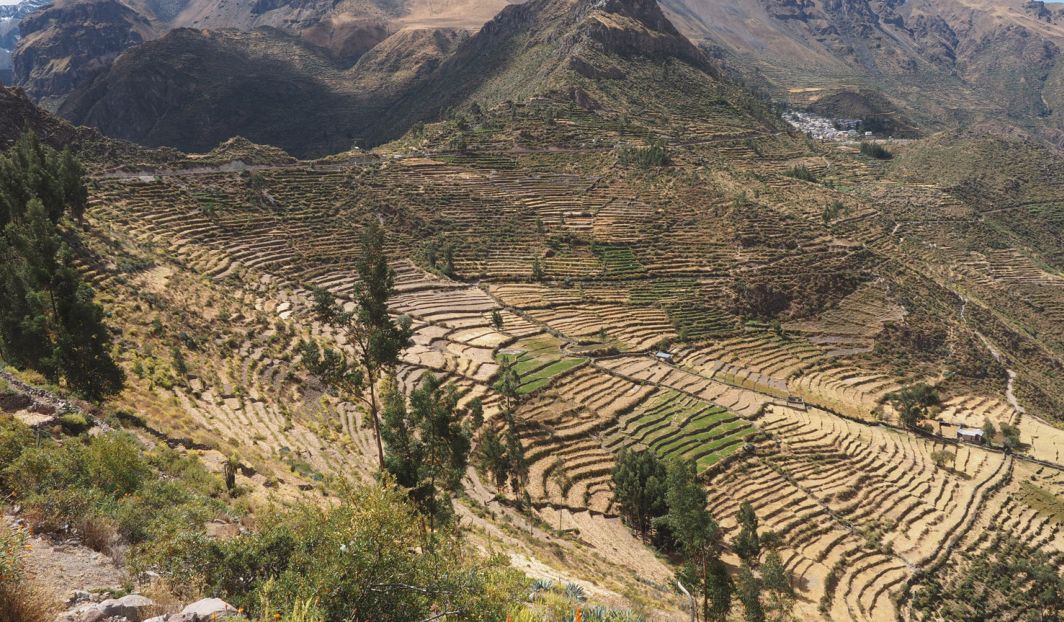
The inhabitants of the Andes were able to modulate the landscape (Figure 3) and varietal richness to acclimatise them to the new farmland. This resulted in an increase in agricultural and landscape biodiversity. This is the opposite of the new “reductionist” agriculture, which simplifies everything it touches, destroys the landscape, its inhabitants and the local agricultural wealth, creating a demographic and biological desert, the opposite of what the inhabitants of the Andes achieved (Treacy, 1989).
3.2. Water, Territory and the Climate Crisis: resourceful management of terraces
Water is fundamental to the existence of the terraces and to achieving harvests of various crops. The territory - the landscape - is domesticated by the inhabitants of each area, often ethnic and native groups, according to the conditions they encounter - the climate, the soils, the shape and relief of the mountains - and they shape it with plants and animals into an integral system of agricultural husbandry. Impressive works of art and hydraulic engineering, which have enabled the survival and self-sufficiency of generations, were created by ancient cultures from Caral almost 5,000 years ago with a later widespread and still visible diffusion by the Wari society more than 1000 years ago (Canziani, 2017). The Incas perfected the administration of the terraces and the storage and distribution of food.
These are among the most ingenious systems in human history, but despite this they currently face serious difficulties and threats to their survival. Some of them are: migration as a consequence of the modernisation and industrialisation of societies, water contamination by mining, the expropriation of water by users from outside the area (new irrigation areas, mining, drinking water from large cities), the use of agrochemical technologies that spoil the water, climate change that does not correspond to known historical conditions. The Andes were created for food production, the ancestors domesticated the mountains, and as a result of Andean knowledge they offer us a potential defence against the climate crisis by mitigating droughts, varying agro-ecological zones, taking advantage of warming and defending soils and crops.
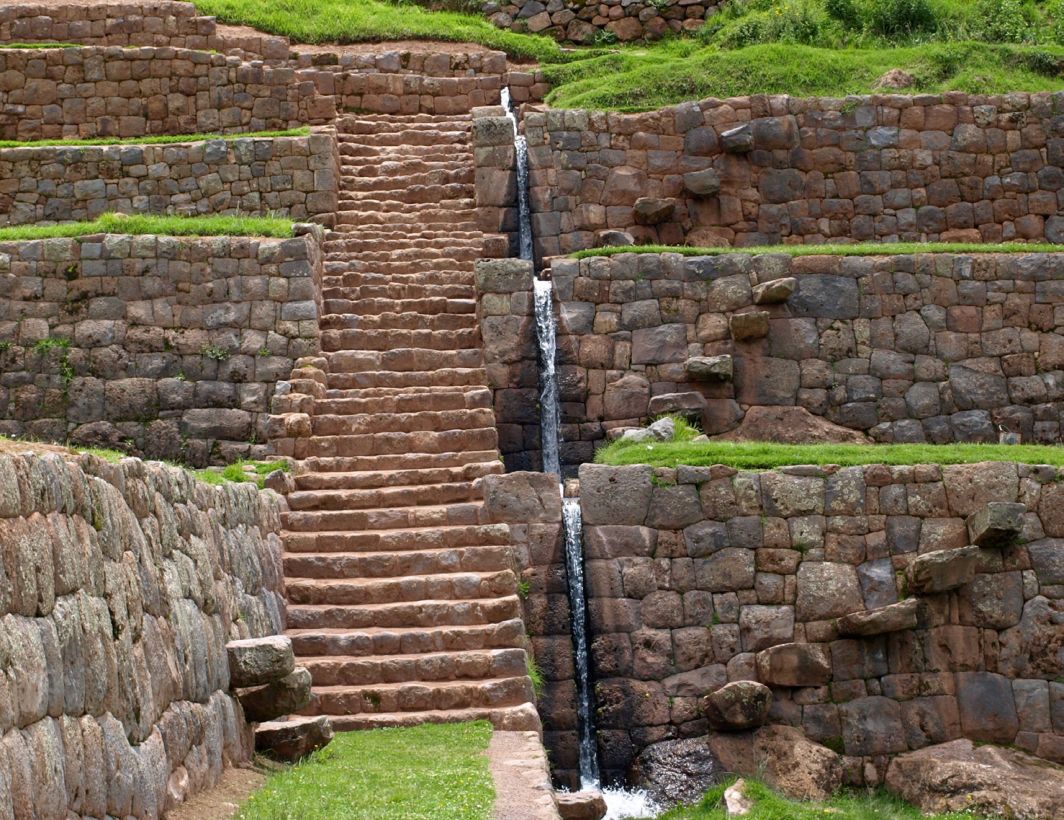
It is therefore very important to study the potential of these heritage systems (Figure 4) and the management of the territory, in order to propose actions on how to strengthen the terraced territories in the hands of the communities that have inherited the historical heritage of domestication and food breeding. The exchange of international experiences will provide knowledge to strengthen an international movement in favour of water users and to define technical, social and legal measures to defend water against threats.
3.3. Rehabilitation of terraces: wisdom of the stone builders
Several attempts at inventories of terraces in Peru have yielded contradictory data. The latest effort by Agrorural, with funding from the IDB, indicated the existence of 340,000 ha of terraces in 11 regions of Peru. The inventory data reveal that most of the terraces were built in the Yunga, Quechua and Suni areas between 2000 and 4000 meters above sea level. Reviewing the maps made in cabinet based on satellite images in the years 2012- 2014, by a consortium led by DESCO (Agrorural, 2021), we have found a difference of 30 % of identified terrace zones. Luis Massón (1993) mentioned the figure of 1 million ha of terraces in Peru 40 years ago. For example, for the Puno region, Díaz and Velásquez (1992) in the framework of the WaruWaru project identified 122,000 ha of terraces for the region of Puno, mostly abandoned, while Agrorural presents 23,000 ha for Puno with a minimum percentage of abandoned terraces (2,800 ha) (Tillmann et al., 2021). There is also an inventory blindness about the abandonment of extensive areas of terraces on the coast because they were left with the arrival of the Spanish and the rupture of the system of food transport between different regions organised by the Inca state with the principle of verticality (Murra, 2020; Tillmann et al., 2021).
There are multiple forms of construction, many variations of irrigation and drainage channels, different heights according to altitudes, agro-ecological zones, climate, relief and traditions. We find covers to protect tools and farmers against sun and rain, and in some regions altars to offer to the apus and the pachamama at the time of sowing and harvesting.
The construction of terraces combines engineering with knowledge of climate, plants, water management, relief and the art of construction that beautifies the landscape and protects it against avalanches and landslides. Today there are new experiences of terrace building schools all over Europe with mountains (the profession of the stone mason was recognised as a UNESCO World Heritage in 2019).
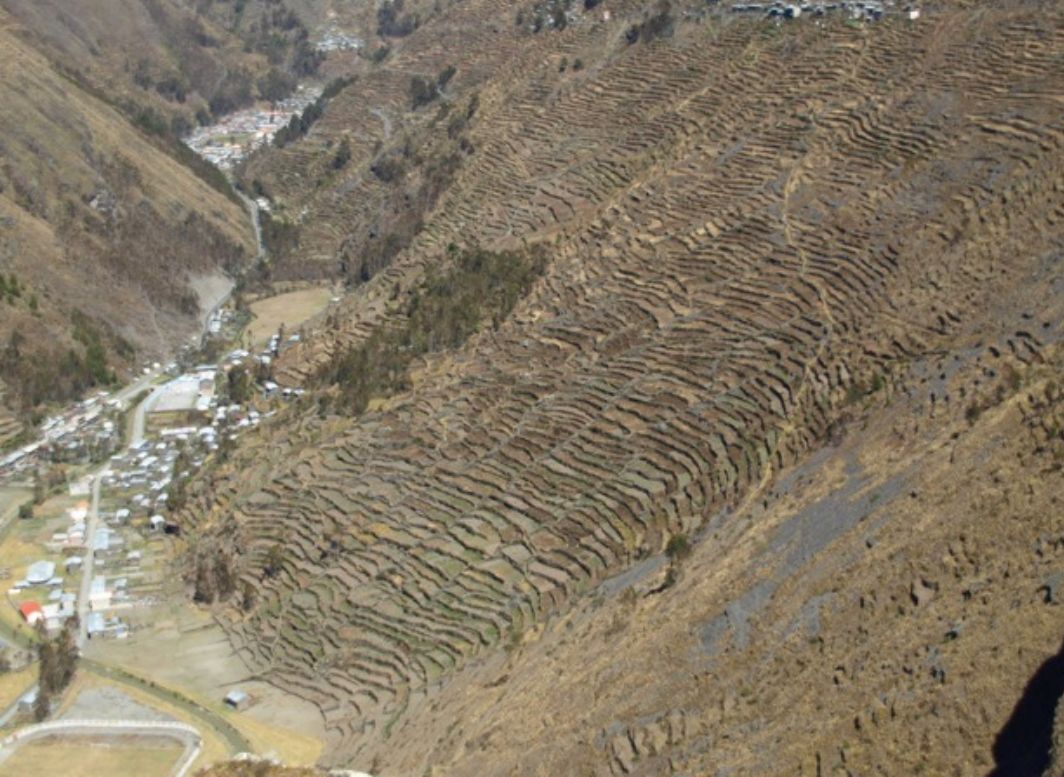
There is a division of labour in the construction and operation of the terraces. For their construction (Figure 5), there are qualified stonemasons known in their communal neighbourhoods, and there are the field mayors who oversee the irrigation and organise the cleaning of the ditches or infiltration ditches each year.
3.4. Traditional knowledge on agricultural terraces
The creation of “artificial microclimates”, smoothing the mosaic of natural microclimates by establishing an intelligent relationship between altitude, the vegetative cycle of crops, water requirements, and the control of available water used for agricultural production, finding a linear relationship between water flow and topography. This ensures larger, more concentrated and less fluctuating yields. Terraces are optimal systems for quality food production, and prove to be more productive than agro-industrial systems on flat land (Felipe Morales, 2021). Farmers take advantage of the benefits of terraces: water control for irrigation, solar heating of stones, suitable seeds and natural fertilisation techniques without poisons. The traditional knowledge of farming terraces can be extremely important in facing the two major challenges facing Andean agriculture today (Figure 6) : the climate crisis and the food crisis. The land-use change brought about by the management of agricultural terraces represents a great opportunity to address climate change mitigation and adaptation, as well as to strengthen food security strategies at local and national levels.
The problem of the disappearance of traditional knowledge linked to the abandonment of terraces, the migration of youth out of the communities, the disdain of urban society for peasants and manual labour, the denial of Quechua and Aymara cultural identities (where most of the terraces are located) and an education focused on modernity and the cities, and not on peasant life linked to respect for nature in the understanding of the dialogue between humans, nature and the deities (all considered living beings) continues to be a problem.
3.5. Agrobiodiversity and Food Sovereignty (seeds, food and organic agriculture)
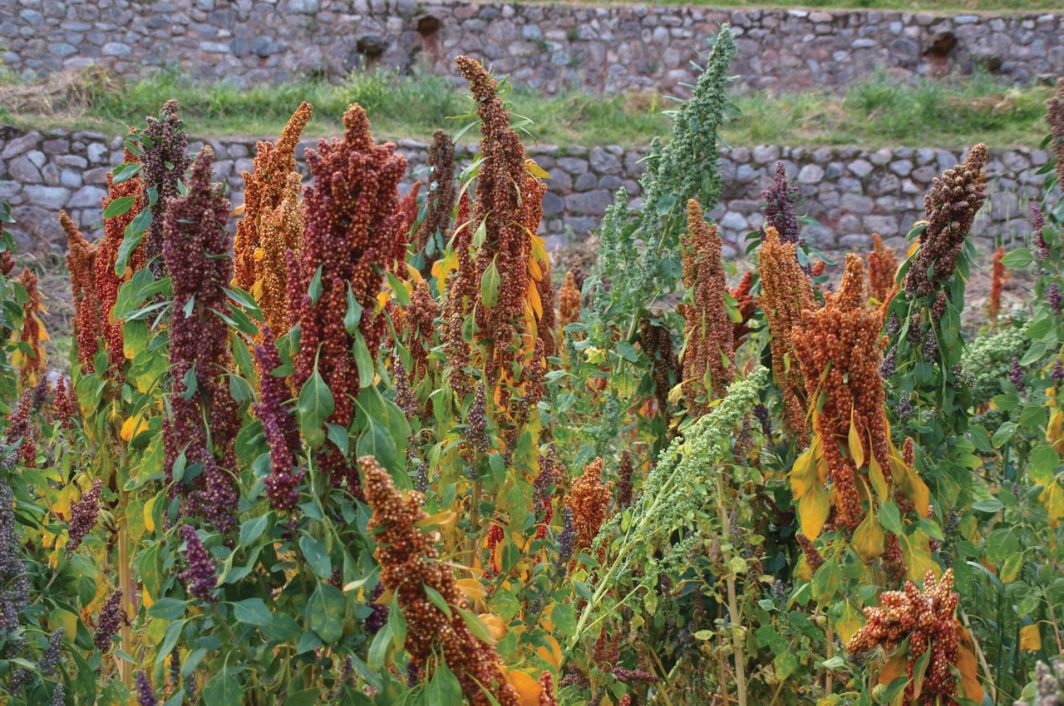
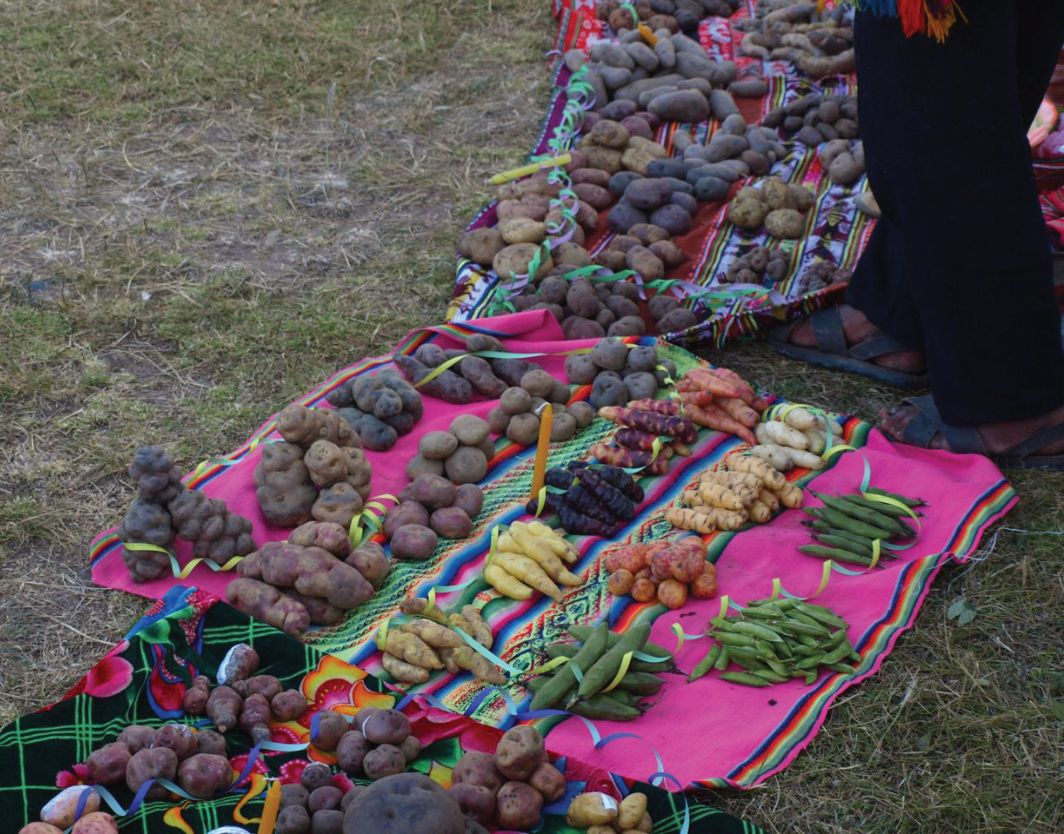
The Andes have been the cradle of domestication of food plants of great importance in the world, belonging to the eight Vavilov centres of origin of plants. Mario Tapia (2021), in his presentation at the 3rd conference in February 2021, names 30 species of Andean crops including tubers, grains, roots and fruit trees, among them potatoes (8 species of solanum tuberosum), maize (Zea Mays L.), quinoa (chenopodium quinoa), lupines (lupinus mutabilis), pumpkin (cucurbita maxima) and avocado (persea americana), which contribute widely to human nutrition in the world (Figure 7).
Crop management in Andenes was, and should continue to be, ecological and organic, since soil fertility is based on the good use of organic matter: guano, stubble, compost, etc. Likewise, by promoting crop diversity or agrobiodiversity, the presence of biological pest controllers is also promoted, not requiring the use of chemical pesticides. The Andenes were and should continue to be an efficient agricultural technology, constituting the pantry of healthy and nutritious food for peasant families.
Andean populations have lost control of their resources and food despite having family and communal lands that could produce abundant food. There are communities that have exchanged agricultural production for tourism or seasonal work, losing their food sovereignty. This must start with the recovery of their terraces, the control of water sources (against contamination and theft by extractive industries) and the conservation of the diversity of their local seeds, which are a treasure of humanity. These actions are part of an Andean cultural reaffirmation approach.
3.6. Social organisation for the use and management of terraces, plants and animals in different agro-ecological zones
For sowing, there is a tradition of reading the signs of the sky and of the flora and fauna, and there are the wise men and women who communicate with nature and the deities, who are widely recognised by their communities (Figure 8). And above all, the older women keep their own gene banks in the larder, and they also change and expand the varieties along the seed trails in the highlands.
There is a multiactivity of the farming families - there are many sources of income or of food and resources also through barter - but the basis is the management of their farms in different agro-ecological zones at different altitudes. The vertical management of the territory linked to the reading of the signs makes it possible to optimise the use of resources and to obtain sufficient harvests to feed the family and relatives for more than one year. Families that cultivate the bitter potato make chuño (dehydrated potato) and can store it for ten years or more as a safe food in times of drought. The terraces are part of the peasant agricultural system with optimal productivity due to their physical conditions and the human labours that keep them fertile. Farmers see the cause of droughts (simply called climate change) in the breakdown of traditional order, lack of respect for elders and traditions, social and domestic violence, mistreatment of the trinity between humans, nature and deities, and pollution by large industrial complexes (Tillmann, 1997).
3.7. Governance of terraced landscapes and human development. State policies, legislation and local rules
There are traditional laws of the communities - forms of land management and knowledge embodied in customary rules and rituals in the agricultural cycle - that are not considered or known from the outside. Looking at the state policy situation, the problems faced by the guardians of the terraces and their legal political potential, we must build possibilities for action to change policies and think about national and regional measures. We must take advantage of international legal conventions to defend the rights of communities for the common good.
Terraces are not marginal, but offer optimal conditions for the cultivation of quality and quantity of healthy food. Unfortunately in history they have been seen from the cities as second class compared to the plains, but the reality is different: they are the best production systems in the mountains thanks to a tradition of collaborative and non-individualistic work necessary to survive in the mountains. From history and from nature, a democratic and shared organisation is proposed to manage the territories in the Andes.
3.8. Perception and consequences of the COVID 19 pandemic
Since 15 April 2020, Peru has been in a state of emergency due to the presence of COVID 19. In the particular case of Peru and in the Andean area of Cusco, the panorama was the same as in all areas: panic, fear, extreme measures, compulsory isolation, among other actions were the ones that were generalised all over the world. But what happened in rural areas, in the high altitude areas, in the peasant communities of Cusco? In external observations, one could deduce at first glance that it was the same. However, in the first month, people who had left their communities in search of work in Lima or Arequipa began to return for almost the same reason, to try to survive the pandemic.
The first information on remigration could be obtained from educational sources, many children and their families began to return to their territorial roots, and reports came in that many of them had no work and had to return to their land to eat what they produced. This phenomenon resulted in the recovery of farmland, including abandoned terraces or terraces that had been used to grow crops for trade. Parents said “We need to eat and here we cannot work, in my community I have my land, my animals, my children can have food, it is better that they repeat the year, that is why we are going to go to Accha” (Father of a family, connectivity diagnosis, 2020).
During the meeting of Acomayo women, called Saywa warmi, we talked to some Acomayo leaders, who are not seen wearing masks while interacting with each other, and we asked them what they think about what we are experiencing: “Hinallataq kayta khawachkayku, ñuqaykuka qhallilla purishkayku, manan manchanachu, runakuaqa pura wachaykuchkanku wasi ukhupi, allinta mikhuyku, allinta upyayku ima, chaywantaya allinta kawsasayku” “That’s just the way we are living, we should not be afraid, eat well, drink plenty of fluids, stay in the house so that we can stay well” (LQM 20/06/2021). It is important to state that respect for the stranger is what makes them well, to take care of them as they should, not to look at them with fear but with wisdom, will make all this happen and will not affect people.
4. Conclusions: Decolonising Concepts Towards the Re- Enchantment of the Andenes
In order to re-enchant the terraces (La Gomera, 2019) as part of a post-development paradigm shift (Kothari, 2019) ITLA members have proposed the following actions:
• Diversified organic food production on terraces by small-scale producers achieving healthy living conditions and wellbeing (ETC-Group, 2017). • Knowledge networks with a collective and intergenerational effort based on an ethic of respect for nature and revival of rural communities. • Dignified life - innovating Buenvivir alternatives in the countryside and not copying urban models (Gudynas, 2016). • Knowledge laboratories and landscape observatories creating spaces for reflection and experimentation with different traditions of knowledge while respecting diversity and a vision of the future. • Offer alternatives for academic training in Andean agroecology to orientate new professionals towards the accompaniment of local initiatives. • Inventory of practical solutions based on Andean traditions and cosmovision and an agroecological perspective for the benefit of nature and human beings. • Pay special attention to the knowledge of rural Andean women, often expressed in Quechua or Aymara, as original proposals for local policies. • Promote the dialogue of knowledge between knowledge systems, linking elders with scientists with the aim of re-enchanting life on the terraces (Salas, 2021). • More “more grain, less straw”: Establish channels of communication between all actors in order to implement action from the bottom up, without bureaucratic obstacles.
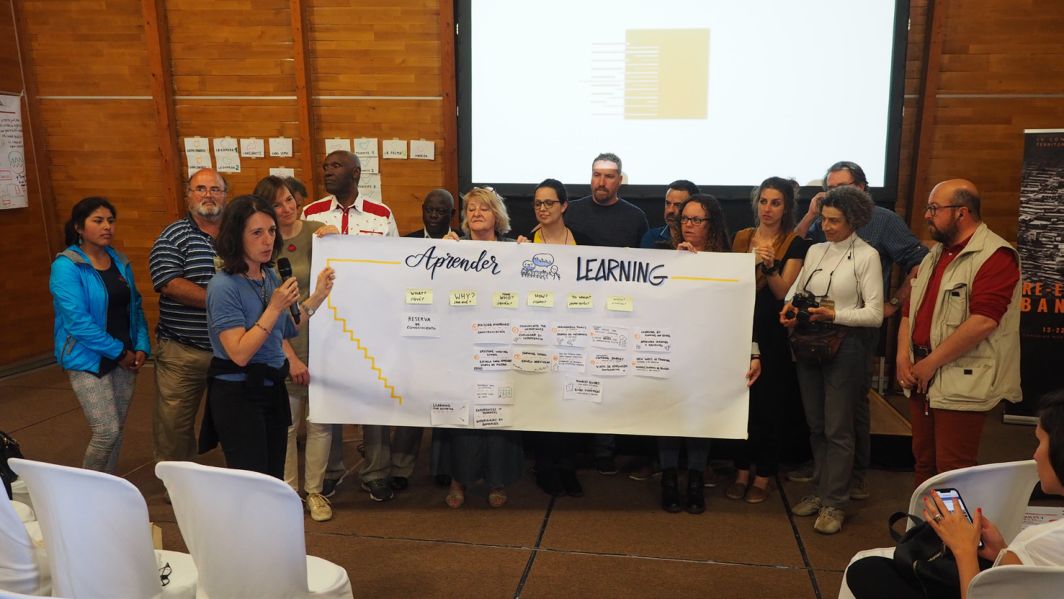
Proposed learning actions (Figure 9):
• Documentation of the terraced landscapes through inventories with photographs (see world collection). Learning to exist by collecting the experiences of the inhabitants of the terraces and mapping the wisdom of the terraces. • Communicating the importance of the terraces to locals and outsiders (exhibitions, brochures, publications in newspapers and magazines). • Information points on the terraces (exhibitions, information boards near the terraces, viewpoints with information boards, local museums). • Training of intercultural facilitators enhancing Andean voices. • Learning by playing and doing (local initiatives for adults and for children). • Dry stone wall building school to maintain and restore the walls of the terraces. • Terrace farming school based on the teachings of modern agro-ecology (Pimbert, 2021). • Adding the subject of terraces (Andean farming systems) to the school curriculum in terraced landscape areas. • Cooperative learning journey - fostering social learning processes strengthening the future of the commons. • New ways of thinking - learning to be creative and disseminating it, forming networks and alliances - decolonising conventional concepts of commercial development. • Terrace guides for tourists and locals, which reclaim the wisdom of elders and incorporate innovative ideas. • Promoting the inter-learning of terrace builders and terrace guardians. • These proposals of the 4th World Congress (Ažman et al., 2020) and the lines
of action of the Padova Manifesto (Alberti, 2016) are guiding us to propose and implement the National Terrace Project in Peru with an intercultural approach, dialogue of knowledge and participatory action research from the International Terrace Seminar in March 2023.
References
- Agrorural (2021) Andenes para la vida. Inventario y caracterización de andenes en los andes tropicales del Perú. Cusco: CBC-Agrorural.
- Alberti, F.; Dal Pozzo, A.; Murtas, D.; Salas, M.A.; Tillmann, T. (eds.) (2018) Terraced landscapes: choosing the future. Proceedings of the Third World Meeting of ITLA. Venice: Veneto Region.
- Ažman, L.; Matteini, T.; Pimbert, M. (2020) Key issues in terraced landscapes (TLs). La Gomera: ITLA.
- Canziani Amico, J. (2017) Ciudad y territorio en los Andes: contribuciones a la historia del urbanismo prehispánico. Lima: Fondo editorial PUCP.
- ETC-Group (2017) Who Will Feed Us? The Peasant Food Web vs. the Industrial Food Chain. Val David, Canada: ETC.
- Gudynas, E. (2016) Beyond varieties of development: disputes and alternatives. in Third World Quarterly, 37:4, 721—732, DOI: 10.1080/01436597.2015.1126504.
- Izquierdo, J. (2019) La ciudad agropolitana. La aldea cosmopolita Oviedo: KRK Ediciones.
- Kolmans, E. (2021) Agroecología, andenes y agrobiodiversidad. Manuscript. Cusco: CBC.
- Kothari, A.; Salleh, A.; Escobar, A.; Demaria, F.; Acosta, A. (2019) Pluriverse. A post-development dictionary. New Delhi: Tulika Books.
- Massón, L. (1993) Contribución al conocimiento de los andenes. Arequipa Sepia V.
- Murra, J. (2020) Reciprocity and Redistribution in Andean Civilizations. The 1969 Lewis Henry Morgan Lectures. Chicago: HAU Books.
- Pimbert, M.P.; Moeller, N.I.; Singh, J.; Anderson, C.R. (2021) Agroecology. In Oxford Research Encyclopedia of Anthropology. Oxford: Oxford University Press. https://doi.org/10.1093/acrefore/9780190854584.013.298.
- Pulgar Vidal, J. (1981) Geografía del Perú. Las ocho regiones naturales del Perú. 8th edition. Lima: Editorial Universo.
- Salas, M.; Tillmann, T. (2021) Conversando nos entendemos. Manual - Métodos de la Investigación Acción Participativa para transformar y reencantar la realidad. Cusco: ITLA - CBC.
- Tillmann, T. (1997) Las estrellas no mienten: agricultura y ecología subjetiva andina en Jauja, Perú. Quito: Abyayala.
- Tillmann, T.; Bueno de Mesquitá, M. (2015) II Congreso Internacional de Terrazas. Encuentro de culturas y saberes de Terrazas del mundo. Cusco: CBC-JICA.
- Tillmann, T.; Novo, J.; Epiquién, M. (2020) Inventories of terraced landscapes in Perú, The Journal of Terraced Landscapes, V 1, N 1.
- Treacy, J. M. (1989) Agricultural Terraces in Peru's Colca Valley: Promises and Problems of an Ancient Technology. London: Routledge.
Rights and permissions
Open Access. This article is licensed under a Creative Commons CC BY 4.0 license, which permits use, sharing, adaptation, distribution and reproduction in any medium or format, as long as you give appropriate credit to the original author(s) and the source and indicate if changes were made.
About this article
Cite this article
Santisteban, G., Béjar, J. V., & Tillmann, T. (2020). ITLA and Reenchanting Terraces in Peru. International Terraced Landscapes Alliance Journal, 1(2), 16–35. https://doi.org/10.5281/zenodo.7341163
- Published
- December 2020
- Issue
- Volume 1, Number 2
- Journal
- International Terraced Landscapes Alliance Journal, ISSN 2754-7639 (Online)
- Archive
- Zenodo record 7341163
- Andean terraced landscapes
- Peru
- agroecology
- intercultural approach
- ITLA Peru