
Solace in a Time of Covid (with a nod to Gabriel Garcia Marquez)
Affiliations
- 1 Faculty, School of Public Policy and Administration, Walden University
The Art of Terraced Landscapes volume 2, issue 1, pp. 18–25 (2021) · Cite this article
- 171 views
- 524 downloads
- DOI10.5281/zenodo.7298337

Abstract
¨Solace in a Time of Covid¨ (with a nod to Gabriel Garcia Marquez) by Bethe Hagens takes us to Maine, USA. In her hilltop garden, she has spent more than six years patiently clearing rubbish, creating soil and planning her dream garden with stone terraces and a great variety of edible plants and free-growing flowers. Her vision is a permanent area where plants, insects, animals and people live in community.
Keywords
- The Art of terraced Landscapes Journal
I grew up in a mountain subdivision, typical of 1950s Hollywood suburbs. I imagined terraces not as planting, drainage, or water conservation strategies, but as elegant patios where the rich and famous drank wine and secretly kissed. Heather Peters’ thoughts on terraced horticulture in emails we exchanged just days before her death provoked an earthquake in my understanding.
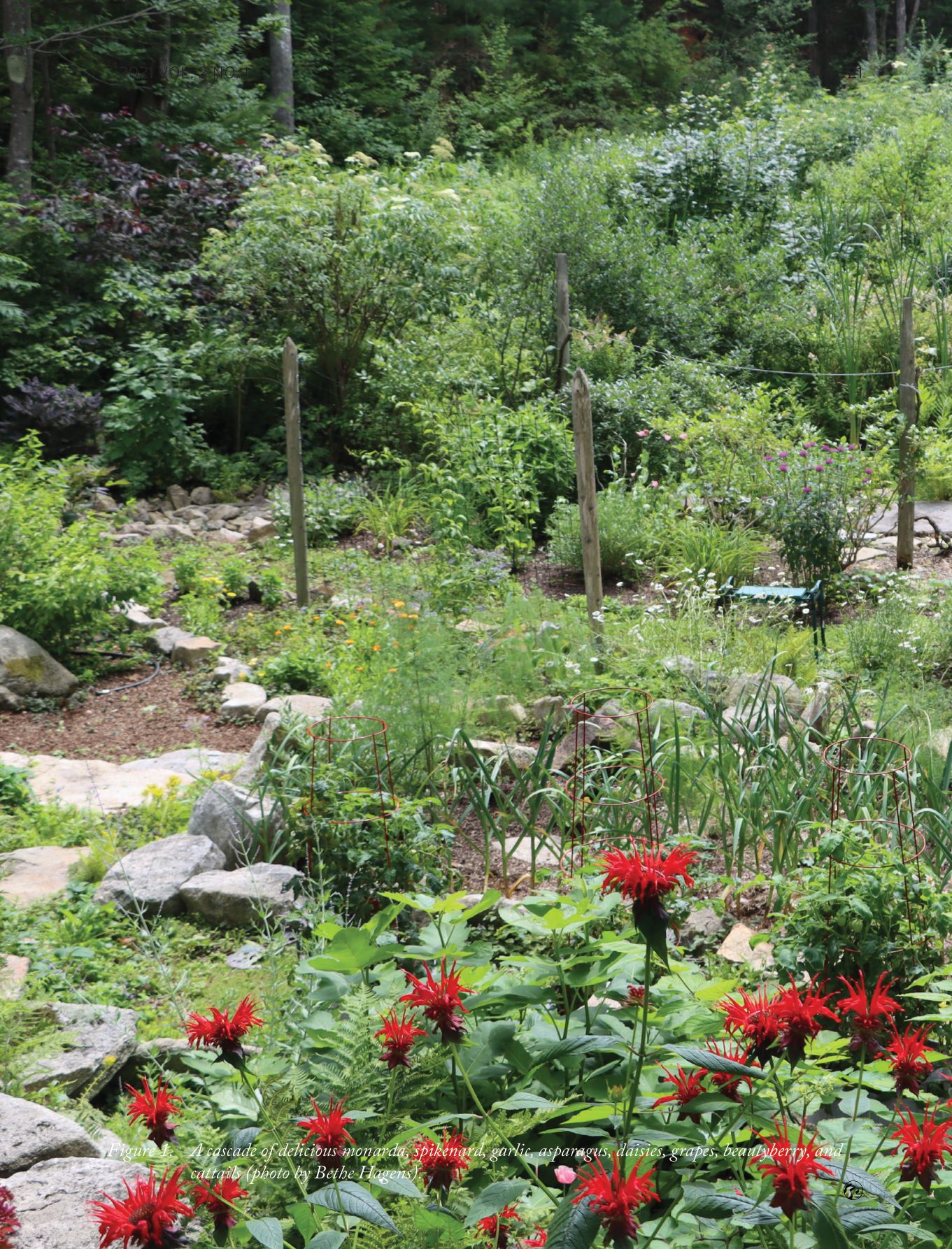
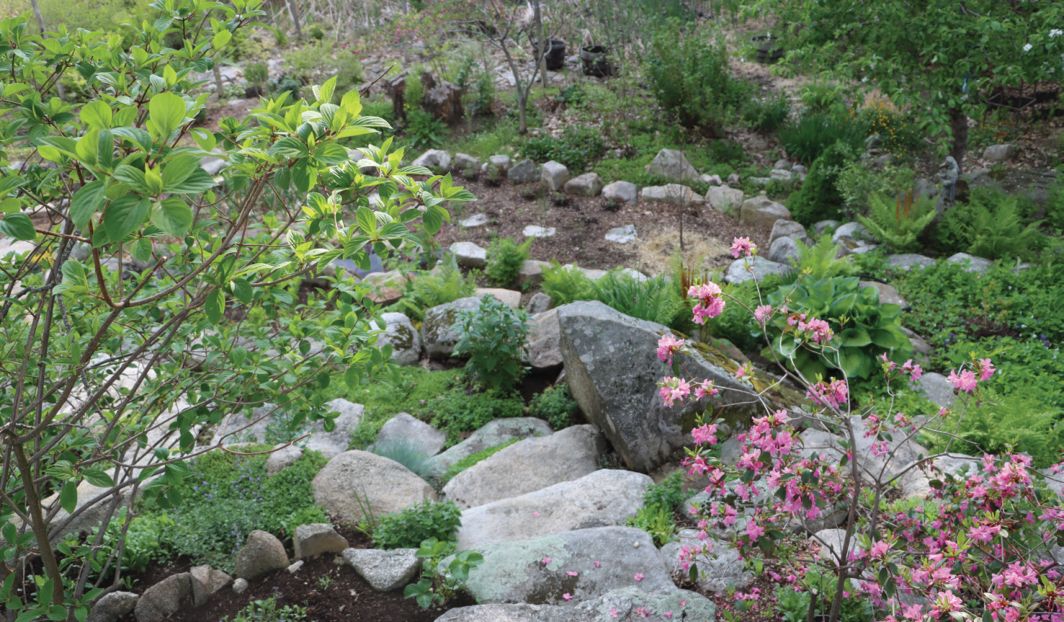
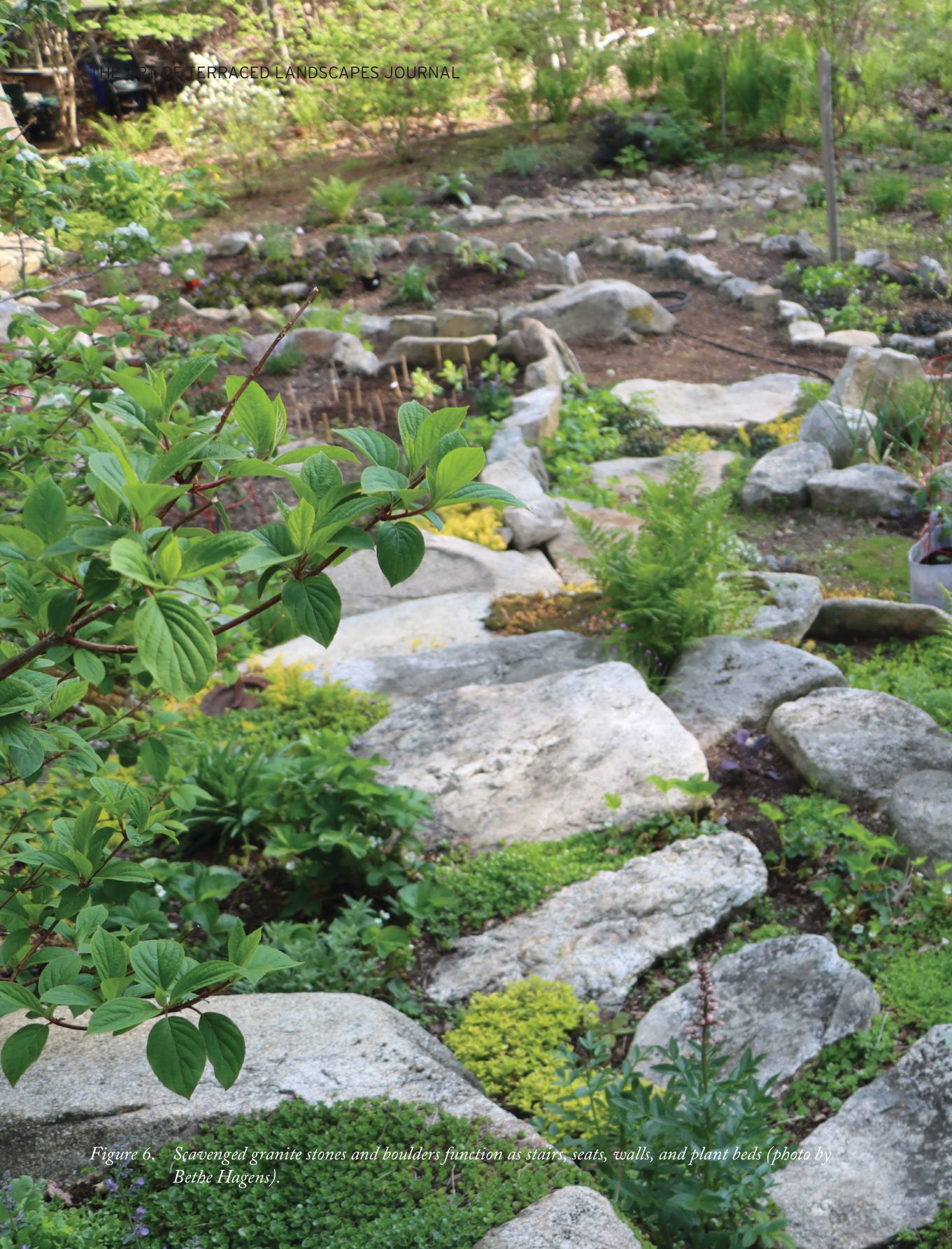
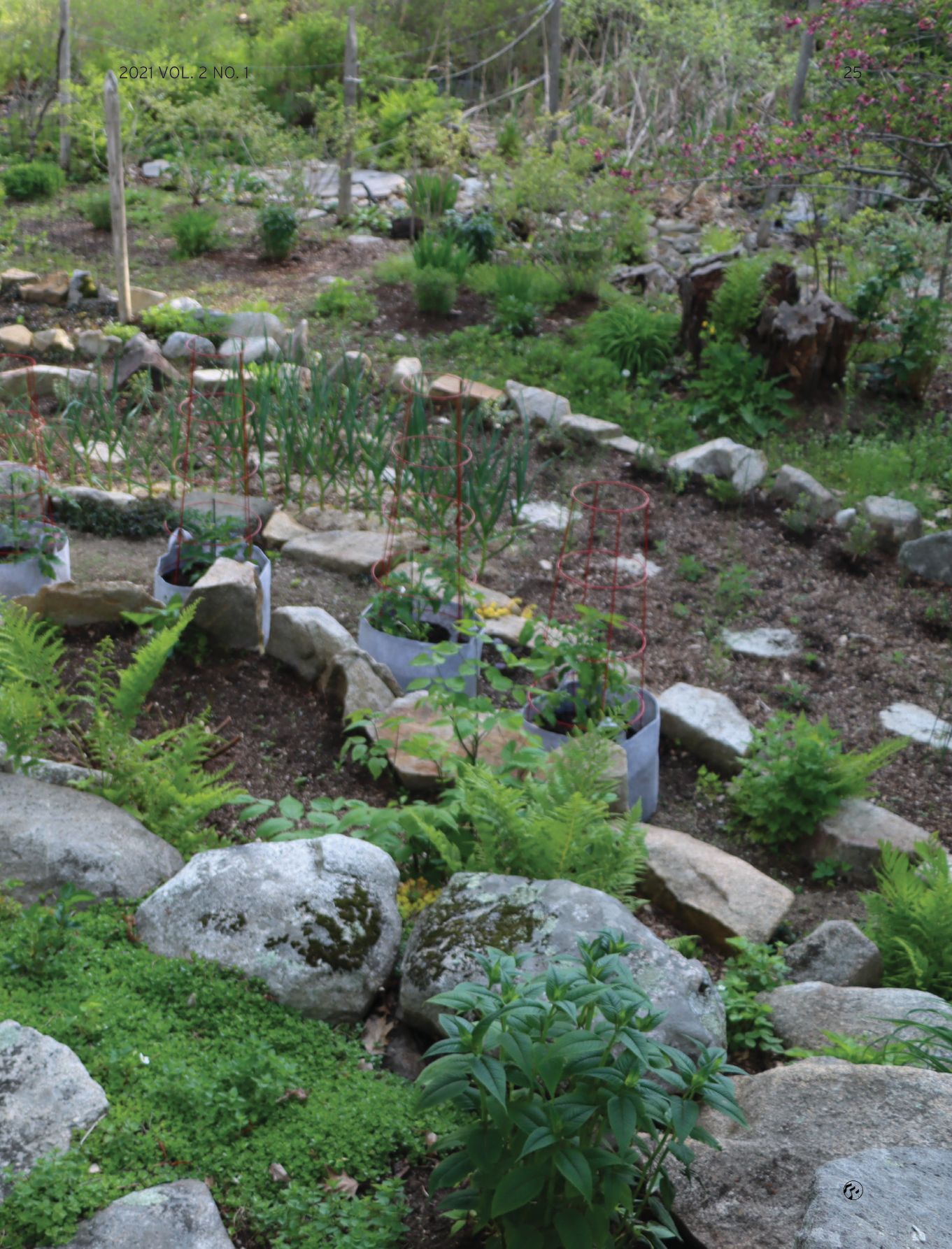
The forty feet down hill from the back of our home, which sits at the top of a granite ledge in Maine, is home to what I call our terraced “granite garden.” It’s oriented just about southwest and is 1/3 acre in size. About 95% of our crops are edible perennials. Much of this space had once been field and forest with seasonal wetlands but was ultimately the victim of both “toss ‘er out the back door” syndrome and a broken culvert that devastated the oak and maple trees. After six years removing glass, trash, and polluted soil, we brought in very high-quality planting soil and scavenged granite boulders to add to those we uncovered. Bennett Steele managed the design and construction of the “bed and path layout” of my dreams and taught me to move and place huge boulders, plant the garden as I imagined it, and to trust the process.
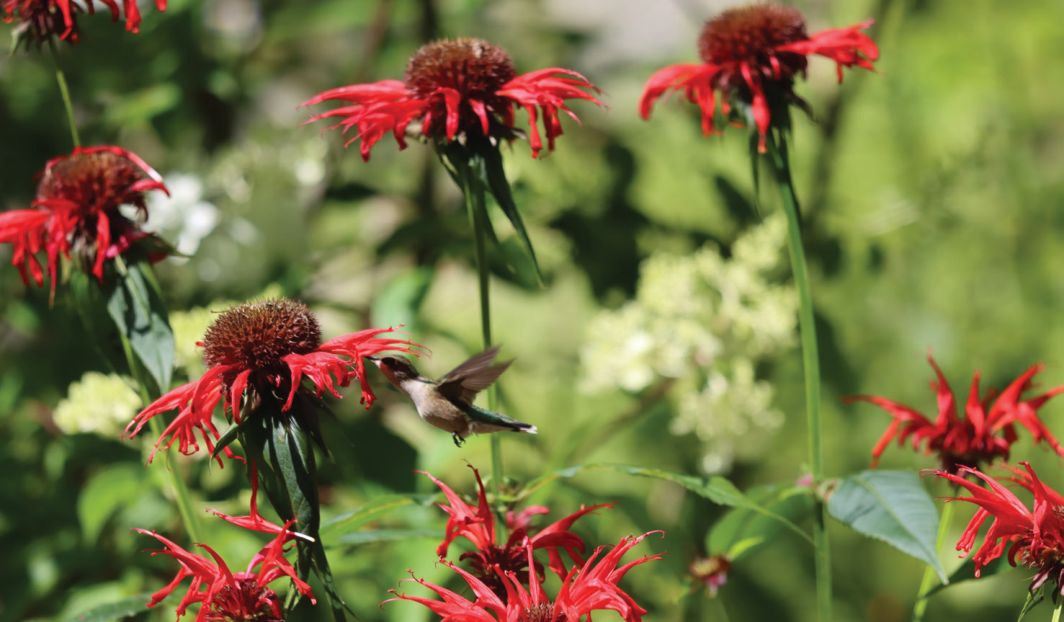
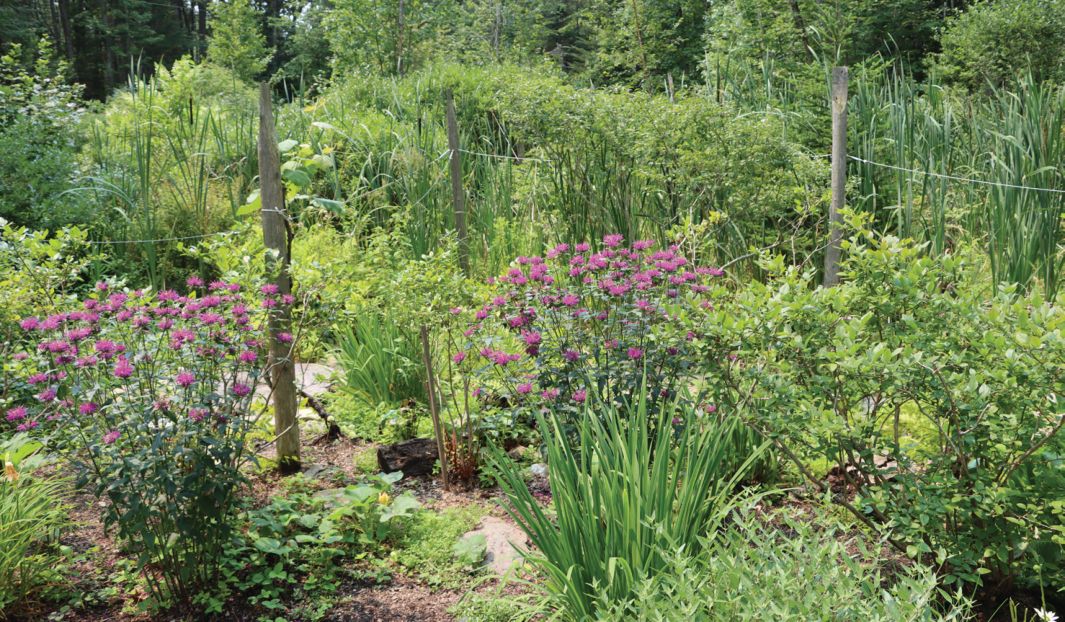
I made the choice of an all-edible-perennials garden once I learned that hostas are a Japanese delicacy . . . . . that bee balm flowers are perhaps as irresistible to pollinators as they are to me. I started collecting what I thought of as “granny’s books” on flower hors d’oeuvres and desserts. The great grandmother of a Native American friend here in Maine once told me that with every new moon comes a new perennial plant to survive on. I asked her what they were, but she wouldn’t tell me. “Figure it out yourself.” The essence of our garden is that plants grow everywhere—in between the stair steps, in the wetlands, in “designated planting beds,” and even in “gravel-and-compost paths.” These spaces are now almost indistinguishable from each other. This blurring is for me the essence of our garden: effective and conservative water management, allowing plants to mingle at least somewhat at will.
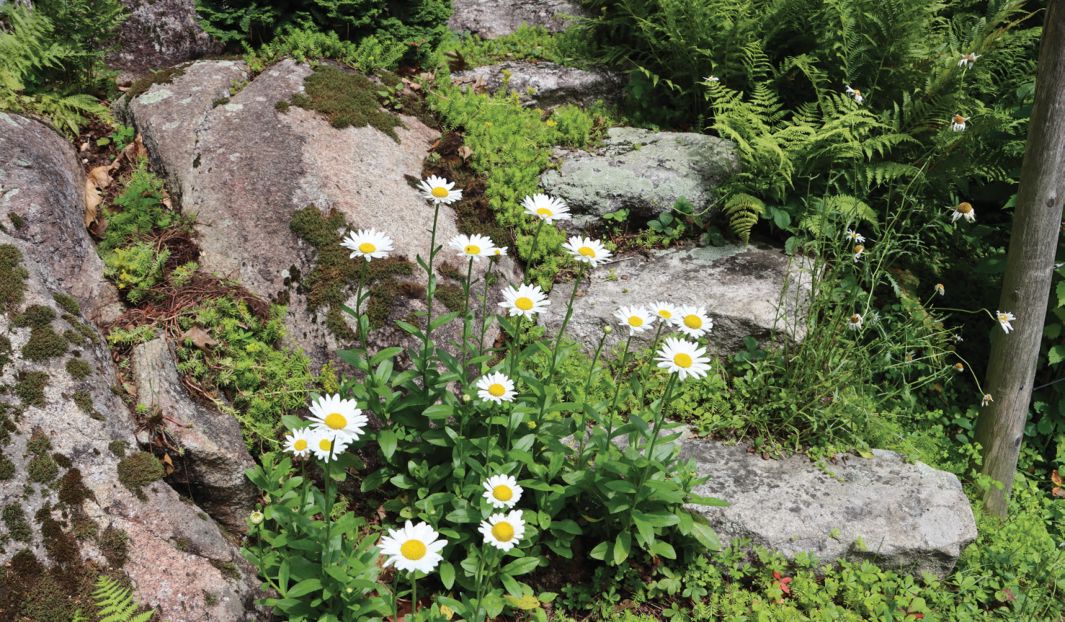
When I celebrate the daisies, cabbages, and strawberries that are thriving in paths, I celebrate Wangaari Maathai, Kenyan activist and Nobel Laureate, who believed every inch of soil should be “clothed” with plants! Smooth granite boulders that edge the more formal and aesthetically arranged beds allow me to weed sitting comfortably. The stones absorb sunlight, provide minor filtering and slow-release watering, assure stability for large deep-rooted plants, and blur aesthetic distinctions between path and bed. My planting choices (in a perfect world!) keep water flowing gently down through the terraces and culminate in a wide, two-foot-high swale at the garden’s lower edge.
Beyond is almost an acre of wetlands with scattered “islands” of wild elderberry, pussy willow, blackberry, raspberry, swamp rose, and cattails. Grapes grow on wires from the swale to several of these islands. The surrounding forests have almost doubled in size since I began planting in 2014. It is ironic that as science debates minimizing solar radiation, we plant to maximize pockets and even little spatterings of sunlight not only throughout a day but by season. Loss of territory is changing human/animal communication, and our taste buds are co-evolving across species! Mammals here are rapidly learning to love food we love. How do we develop shared communal terracing?
Rights and permissions
Open Access. This article is licensed under a Creative Commons CC BY 4.0 license, which permits use, sharing, adaptation, distribution and reproduction in any medium or format, as long as you give appropriate credit to the original author(s) and the source and indicate if changes were made.
About this article
Cite this article
Hagens, B. (2021). Solace in a Time of Covid (with a nod to Gabriel Garcia Marquez). The Art of Terraced Landscapes, 2(1), 18–25. https://doi.org/10.5281/zenodo.7298337
- Published
- October 2021
- Issue
- Volume 2, Number 1
- Journal
- The Art of Terraced Landscapes, ISSN 2754-7620 (Online)
- Archive
- Zenodo record 7298337
- The Art of terraced Landscapes Journal

