
History of a Hillside
Affiliations
- 1 Independent author, France
The Art of Terraced Landscapes volume 2, issue 1, pp. 6–17 (2021) · Cite this article
- 162 views
- 471 downloads
- DOI10.5281/zenodo.7298238

Abstract
¨History of a Hillside¨ by Louisa Jones takes us to a terraced hillside in south-eastern France. She and her husband bought two parcels of seven hectares in 1975. One part was badly damaged by agrochemicals, the other lay fallow for five decades. Louise and Bernard enrich the diversity of ecosystems in the hills, create visual rhythms with stone walls and pass on a local heritage, a place of joy and well-being.
Keywords
- The Art of terraced Landscapes Journal
Southern flank of the central massif area.
I come from Atlantic Canada, where my family were naturalists and caregivers but not gardeners. The freedoms and job opportunities of the nineteen-sixties took me first to Seattle, then Avignon, where I joined forces with a young Frenchman. We were both literature professors by then. In 1975, we bought a terraced hillside in south-eastern France, about seven hectares. Half of it had been sterilized with chemicals, the other half abandoned for fifty years.
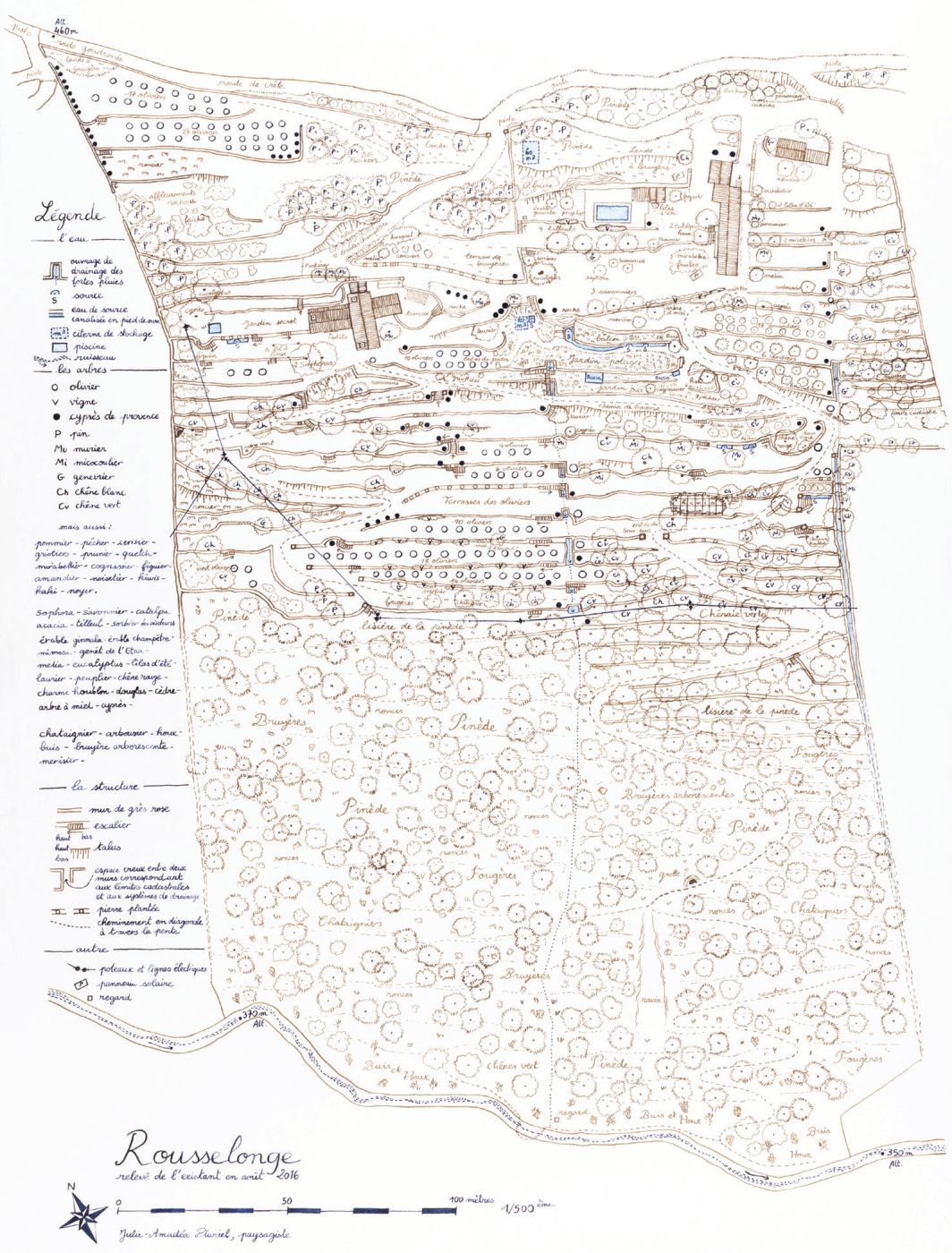
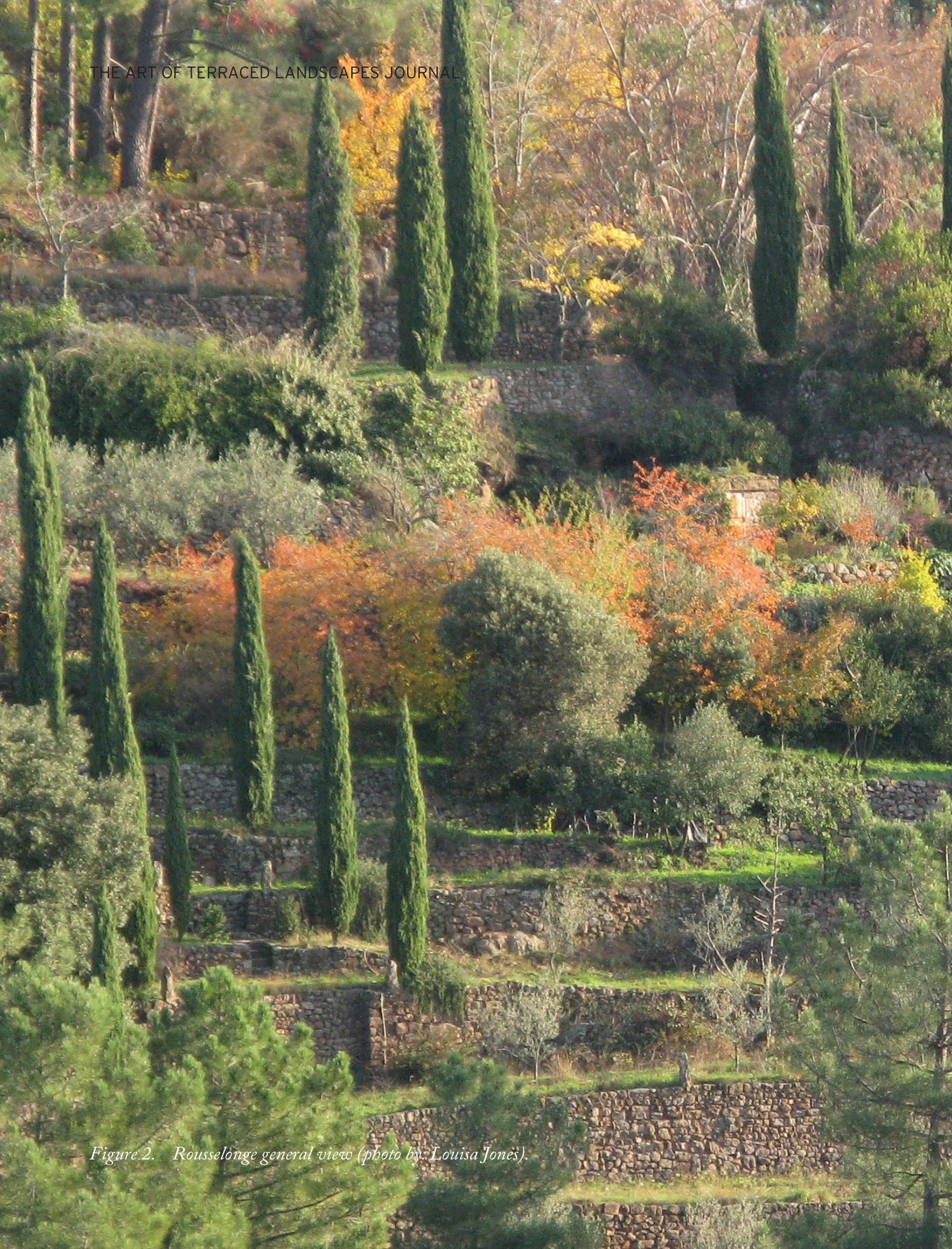
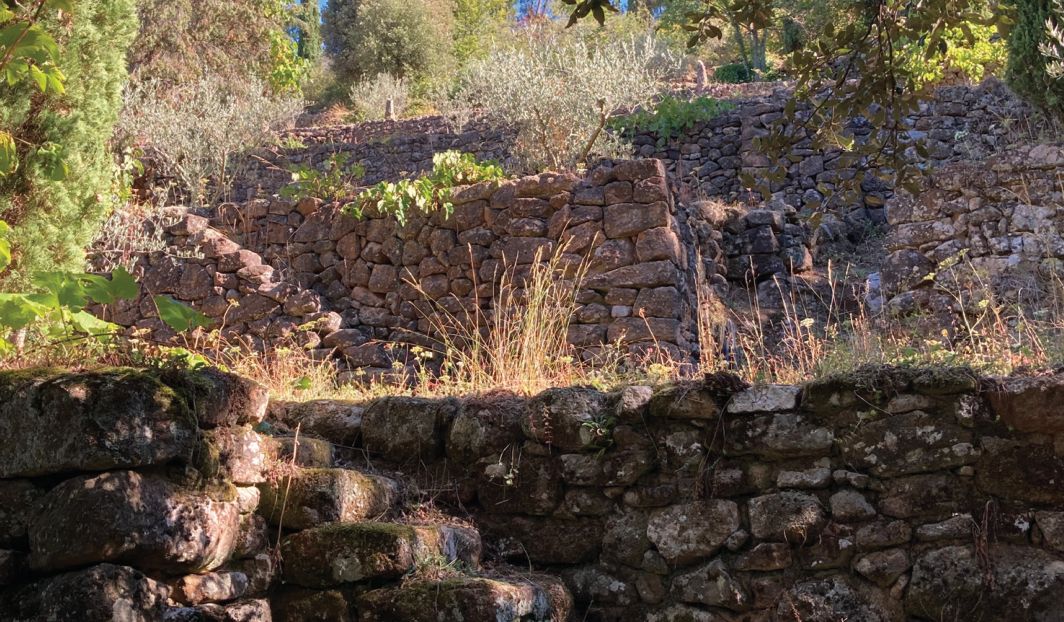
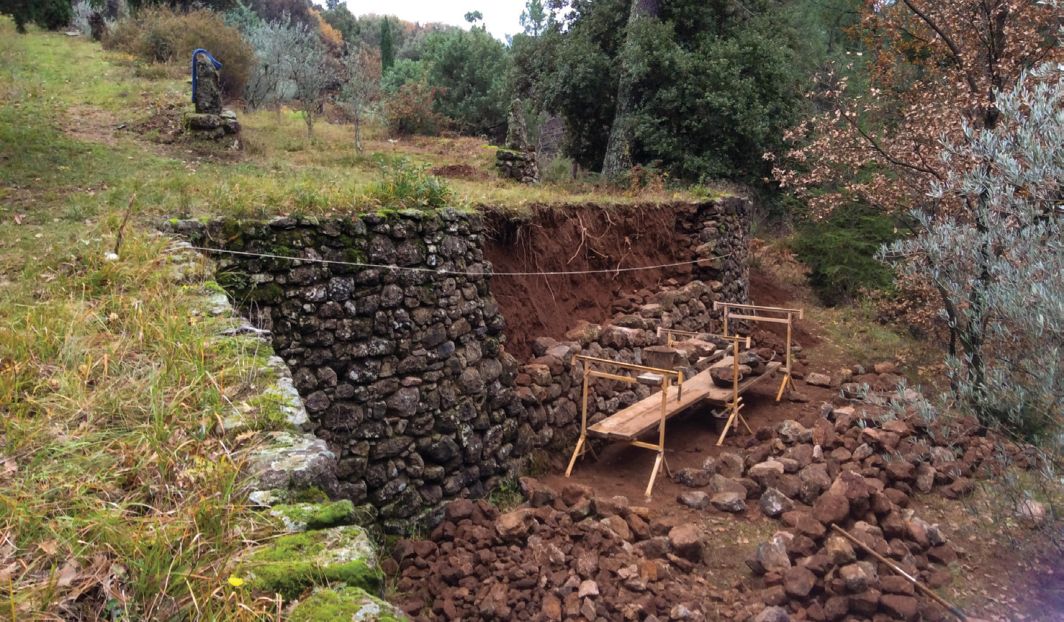
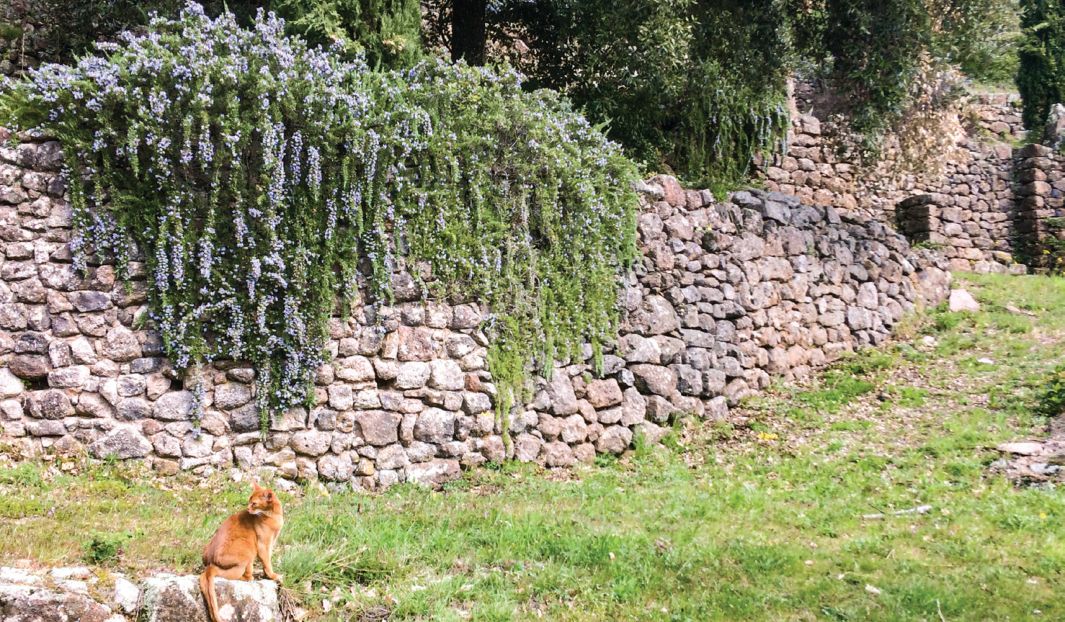
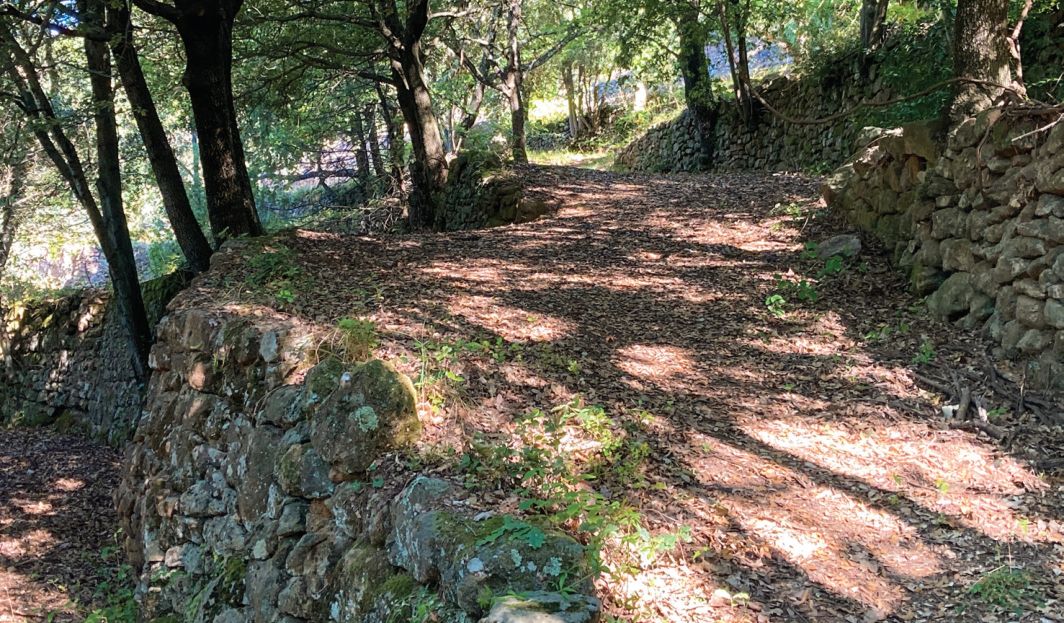
We began to clear away brambles and encroaching pine woods and my partner, Bernard Dupont, learned drystone building from the many locals who practice this art. Decades later, he figured he had rebuilt about four kilometers of wall! (but he might have been exaggerating…) We were very lucky: our land has south-east exposure, several springs, high sandstone walls with deep soil. Someone—in the twenties?--created a sort of ring road gently sloping about half way down the hill and back up, probably to make access easier for a tractor?
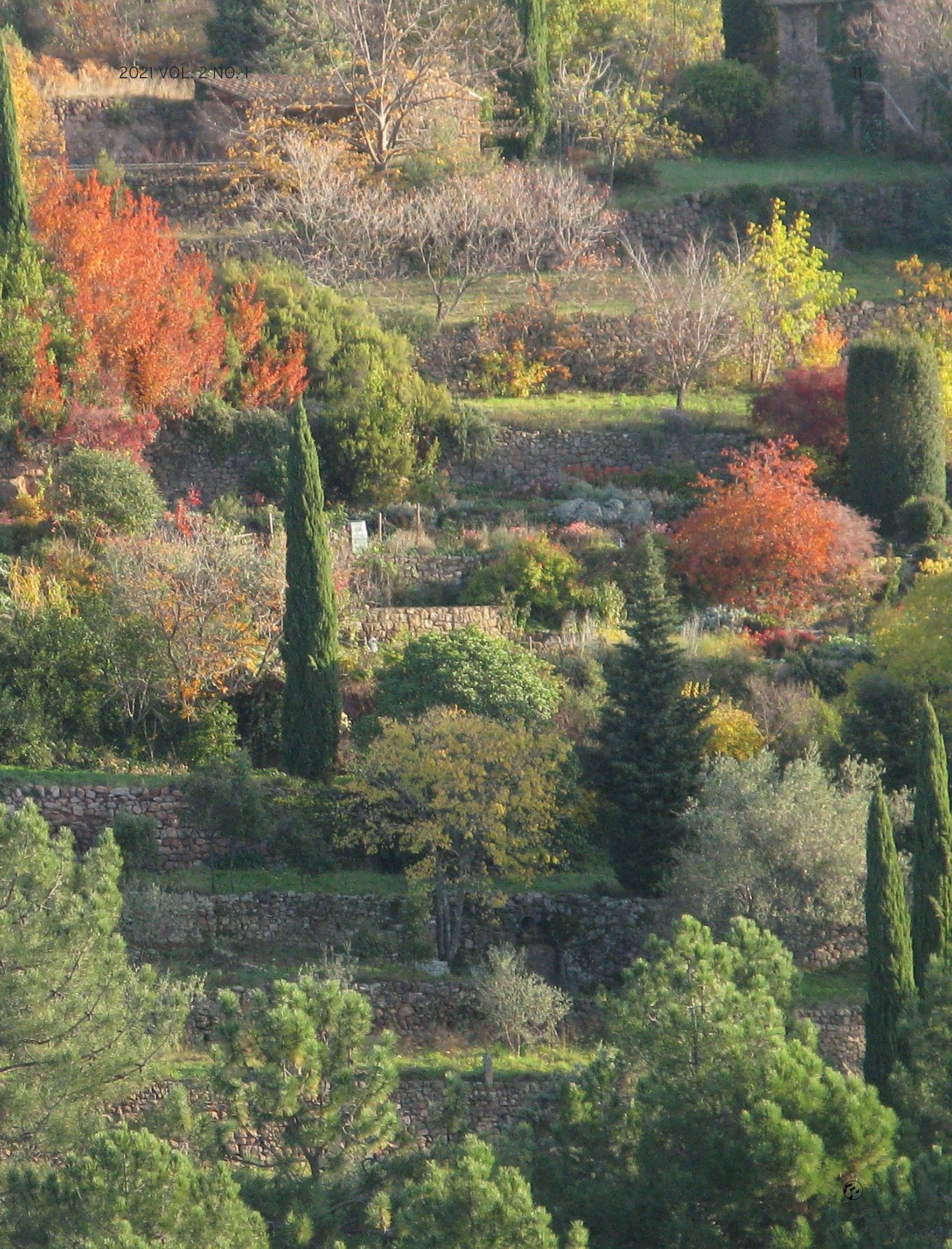
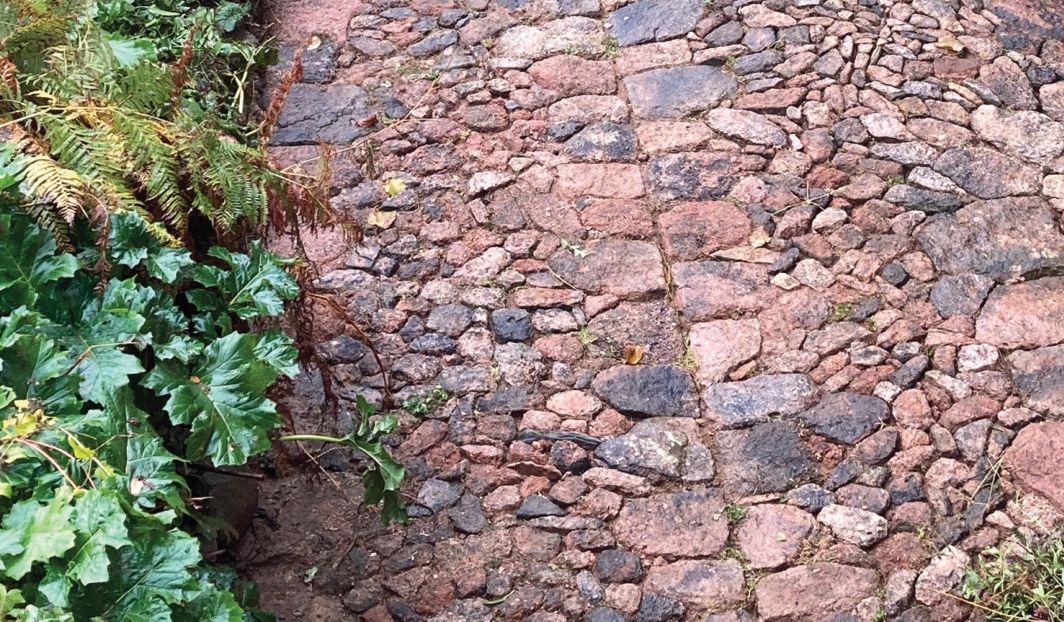
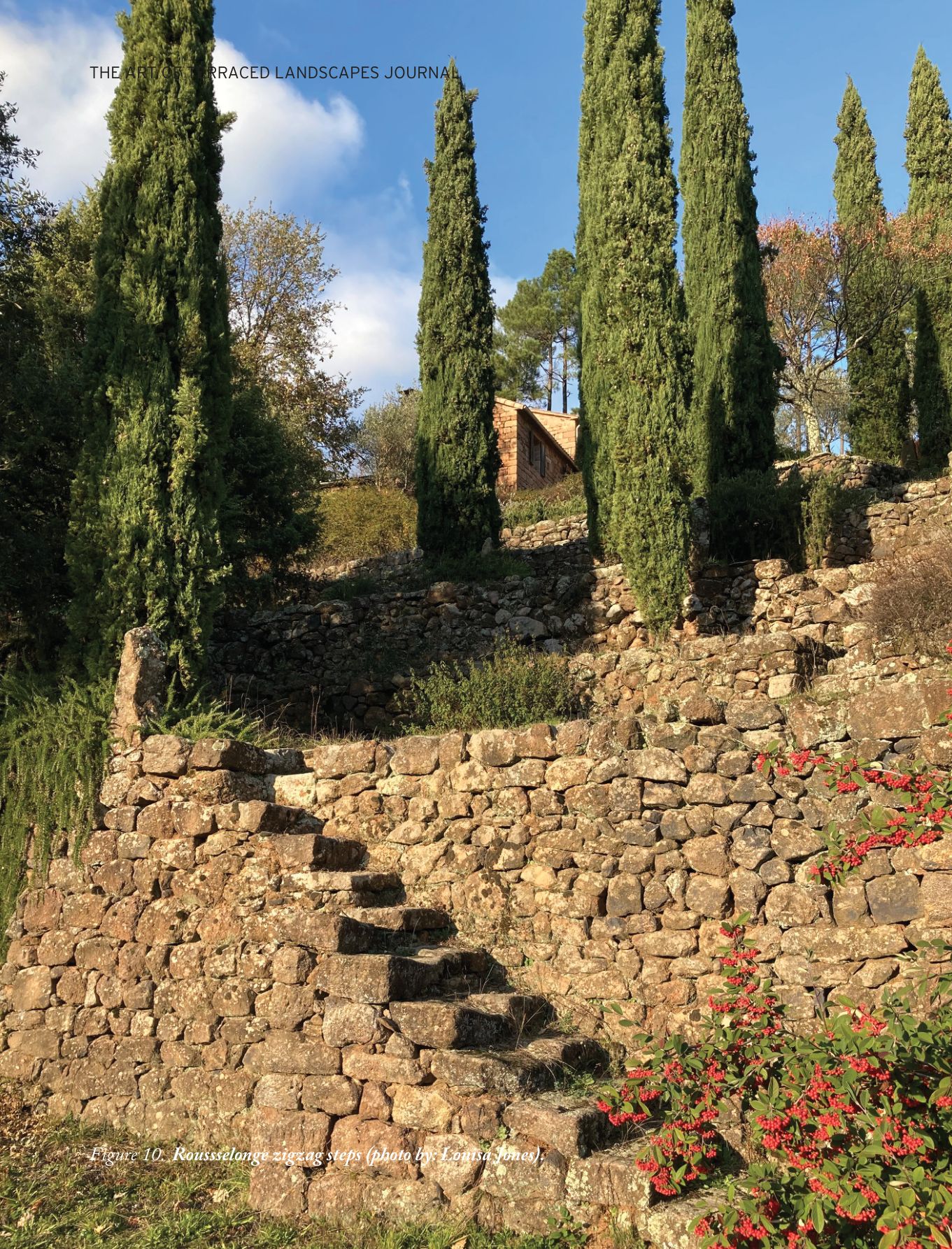
Today this means you can walk through the wooded, shady western part, out through the several terraces of olive trees, and back up through terraces of fruit trees and vegetable gardens without having to change levels by climbing on little steps built into the rock. These exist also, in some cases quite broad and comfortable. Property lines on this hillside are marked by deep drainage ditches. Bernard built little bridges over the ditch separating our two halves, for the passage of his own little tractor, while keeping open the drainage capacity. This has created a lovely visual rhythm seen from below. The bottom half of the property has reverted to woodlands: a large grouping of oaks (green and pubescent) and pines (maritime and black) but we keep paths open to the stream below.
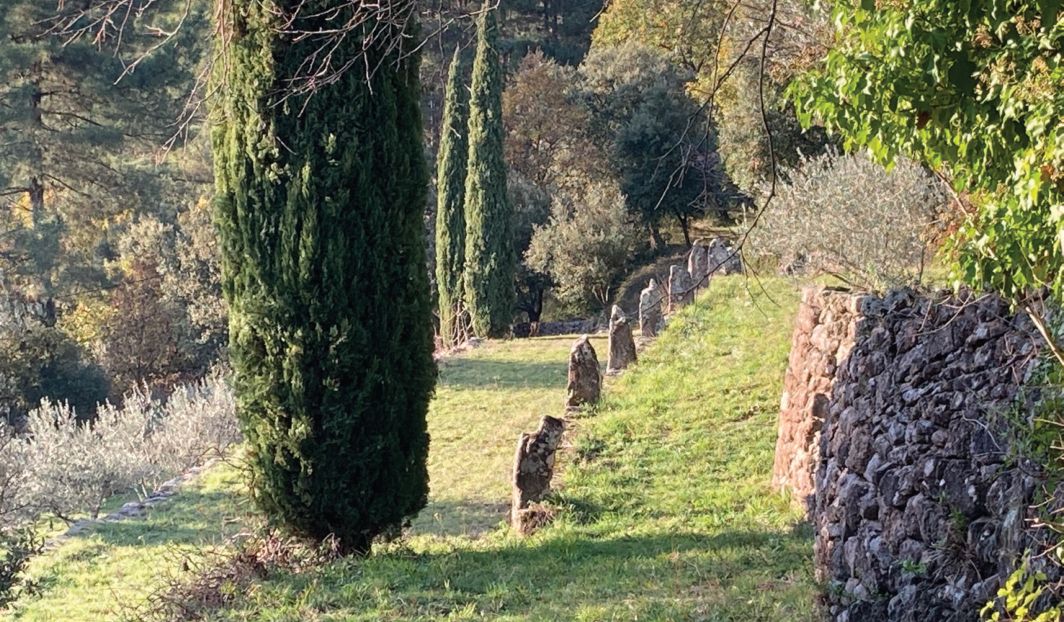
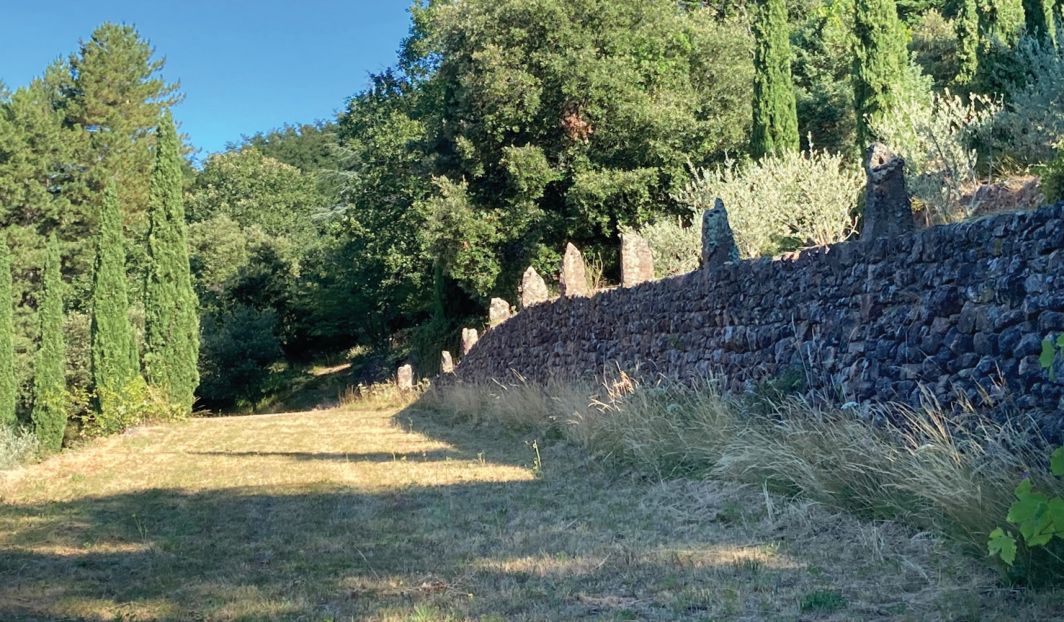
Once the whole hillside was cultivated, mostly with chestnut trees. Bernard found in this lower section many upright stones which he brought up and placed at strategic junctions to mark passages. In one case, he managed to combine two narrow terraces to create a large one, backed by a crescent shaped wall marked with upright stones—his main attempt at land art. I began to garden mostly in and around the former potagers, and on terraces too small or narrow for the tractor. We planted many trees and shrubs in the 1980s: olive rootsprouts from what was already here but also rarer species like the evodia, beloved by bees. Ceanothus does particulary well here. Most of our plantings have had wildlife in mind. Enriching the existing ecosystems was not an explicit aim at the start but turns out to be what we did.
Bernard died in 2014, and I converted the second house into a residence for people working on creative projects having to do with nature, ecology, gardens etc. I found people locally who were willing to help me maintain this hillside with a view to enriching and protecting its biodiversity. The main job now, apart from mowing (many sections only once or twice a year) is removing unwanted seedlings of Viburnum tinus, Celtis, oaks, and koelreuteria (which I introduced).
Since 2019, I have entered a partnership with the local Nature Conservancy who will inherit it when I pass on. The aim has never been to impress but simply to create a place of shared wellbeing. The Conservancy is particularly interested because there are so many different ecosystems here, from top (pinewoods evolving to oak, maple and acacia) to bottom (the ravine). Mediterranean and mountain climates meet here, wild thyme and heather, olives and birch. And many wild orchids, more every year… My own main activity has been writing books about French gardens, particularly in the Mediterranean, and the most recent one has just been published: Le Jardin ensauvagé, (Actes Sud). I hope there will be an English language edition before too long.
Rights and permissions
Open Access. This article is licensed under a Creative Commons CC BY 4.0 license, which permits use, sharing, adaptation, distribution and reproduction in any medium or format, as long as you give appropriate credit to the original author(s) and the source and indicate if changes were made.
About this article
Cite this article
Jones, L. (2021). History of a Hillside. The Art of Terraced Landscapes, 2(1), 6–17. https://doi.org/10.5281/zenodo.7298238
- Published
- October 2021
- Issue
- Volume 2, Number 1
- Journal
- The Art of Terraced Landscapes, ISSN 2754-7620 (Online)
- Archive
- Zenodo record 7298238
- The Art of terraced Landscapes Journal

