The Current Situation and Efforts to Conserve Rice Terraces in Japan
Affiliations
- 1 Ministry of Agriculture, Forestry and Fisheries, Government of Japan,
The Journal of Terraced Landscapes volume 1, issue 1, pp. 72–85 (2020) · Cite this article
- 177 views
- 191 downloads
- DOI10.5281/zenodo.5833613
Abstract
Rice terraces, or “Tanada”, are a rural landscape synonymous with Japan. However, the rice terraces have been devastated due to the decline and obsolescence of farmers in Japan. To overcome this situation, the Law for the Conservation and Revitalisation of Rice Terraces was passed in June 2019. This report presents the current situation and problems of rice terraces in Japan, as well as the Japanese government’s main support measures for the conservation and revitalisation of rice terraces.
Keywords
- rice terrace
- Tanada
- hilly and mountainous area
- direct payment
- Tanada cards
The bill for the revitalisation of the rice terrace region was unanimously passed by the Japanese Diet in June 2019 and came into force in August 2019. This is the first time in Japanese history that a law for the conservation of rice terraces and the revitalisation of the rice terrace region has been approved. In this regard, the approval of the law is a milestone for all those involved in the conservation of rice terraces throughout the country. This report presents the current situation of rice terraces in Japan and the measures taken by the Ministry of Agriculture, Forestry and Fisheries (MAFF) of the Japanese government to conserve rice terraces in Japan.
2. Present Situation of Rice Terraces in Japan
2.1. Estimation of the area of terraced rice fields
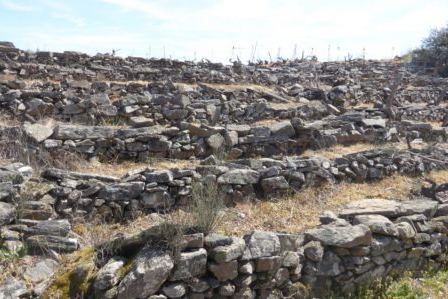
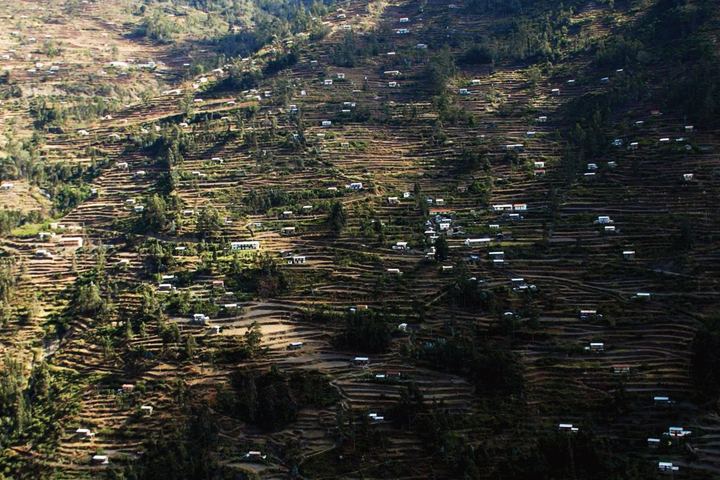
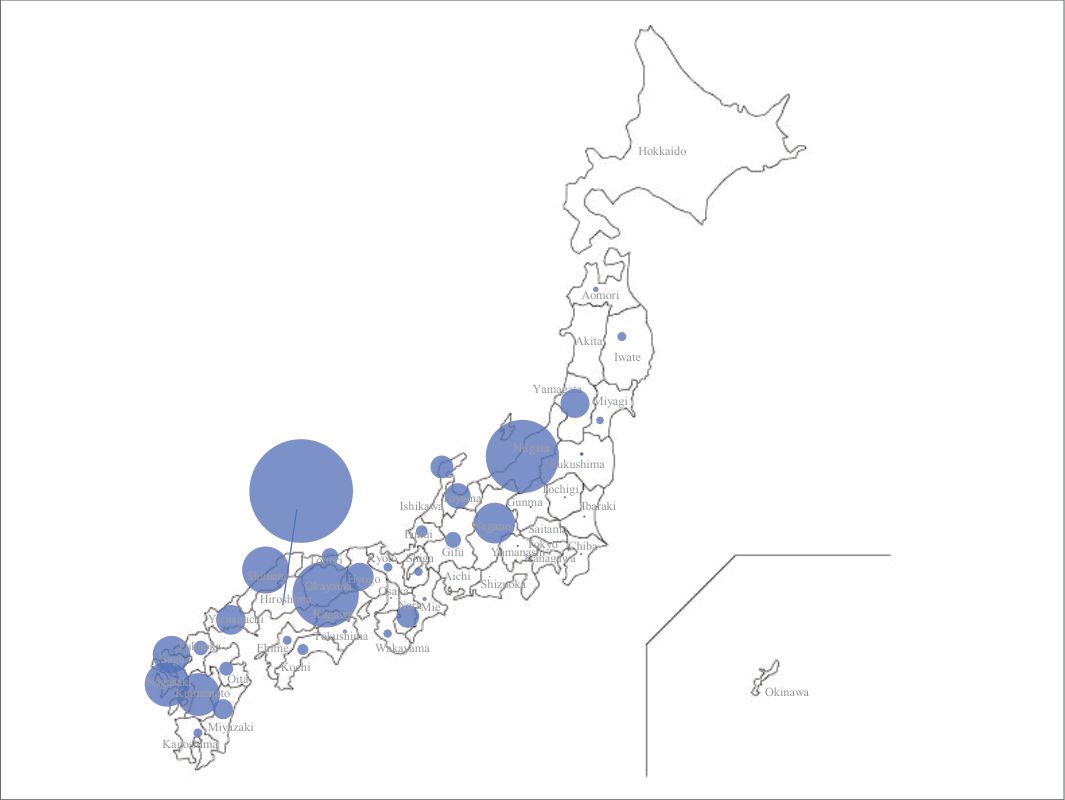
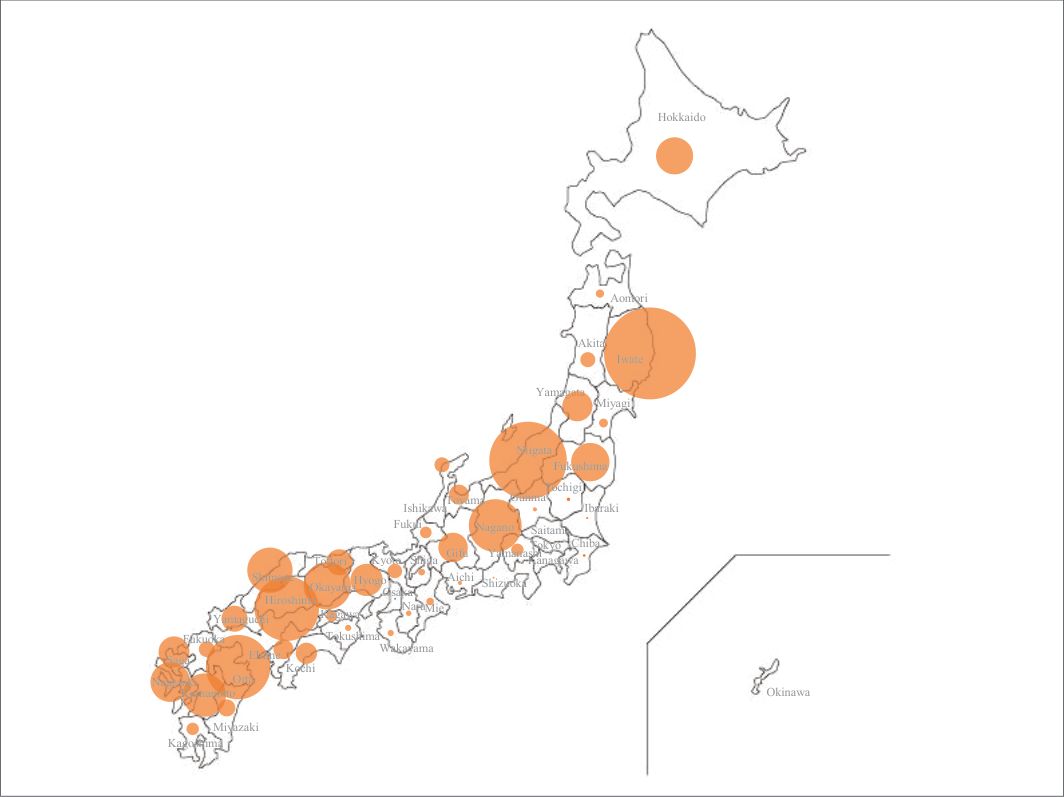
According to the 2005 Agriculture and Forestry Census (the only official survey of terraced rice fields conducted by the Japanese government), the area of terraced rice fields in Japan is 138,000 ha and the number of sites is 54,000 (Figure 1). Terraced rice fields account for about 3% of the agricultural land in Japan (4.7 million ha). Unfortunately, the survey of terraced rice fields has not been carried out so far due to the revision of the Census. In this survey, terraced rice fields are defined as “paddy fields on slope established along contour lines”.
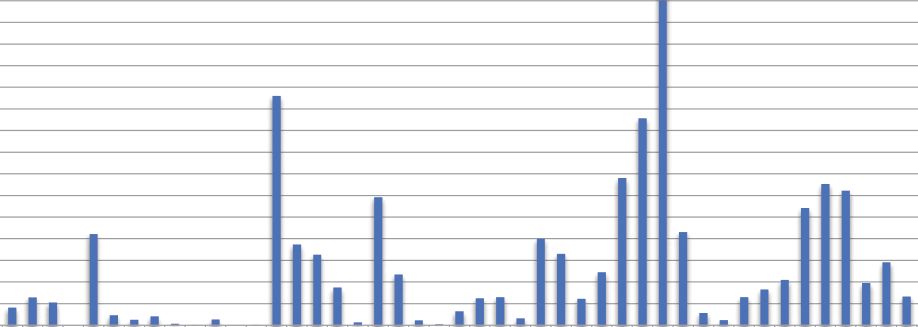
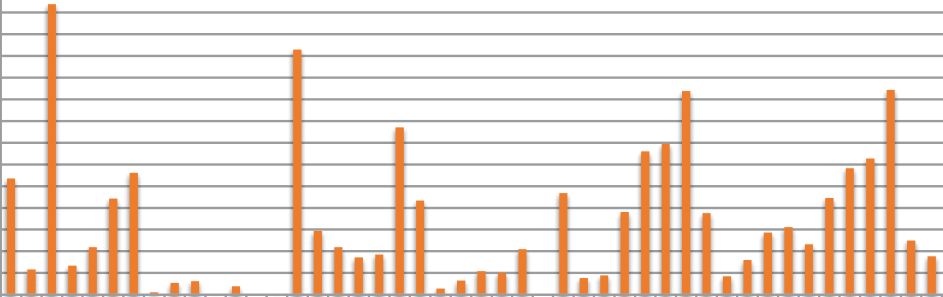
There is another survey that we can use to estimate the current area of terraced rice fields (Figure 2). The support program called “The Direct Payment Program for Farmers in Hill and Mountain Areas” is one of the important measures implemented by the Japanese government since 2000 to support the continuation of agricultural production in hill and mountain areas where agricultural production conditions are unfavourable. Under this program, the amount of payment is determined according to the degree of slope. ¥21,000 yen ($200) per 0.1 ha is paid for rice fields with a slope of 1/20 or more. The total area of rice field paid ¥21,000 yen is about 150,000 ha in 2019. If the rice fields with a slope of 1/20 and above are considered as terraced rice fields, this figure can serve as an estimate of the total area of terraced rice fields in Japan. However, this figure does not include the areas that do not meet the criteria of the direct payment program for certain reasons, such as carrying out the required activities. Based on the above two data, the area of terraced rice fields in Japan can currently be estimated at about 200,000 hectares.
2.2 The current situation in hilly and mountainous areas
Data on hilly and mountainous areas can be helpful in understanding the situation around rice terraces. Figure 3 shows that the population in hilly and mountainous areas is continuously decreasing. From 2005 to 2015, the population has decreased by about 10% (1.47 million people). The rate of ageing in the hillly and mountain areas is about 10 % higher than the national average, and the ageing is progressing about 15 to 20 years.
In addition, the rate of abandoned agricultural land was 16.7% in 2015, about 5% higher than the national average of 12.1%. Most terraced rice fields are located in hilly and mountainous areas. Terrace rice fields are under less favourable conditions than other rice fields in hilly and mountainous areas. This is because the cultivation area of each rice terrace field is so small that large agricultural machinery cannot be used. In this sense , it can be assumed that the situation of the rice terraces is even more difficult than the above data.
2.3 Public opinion on rice terraces
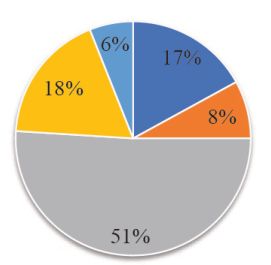
MAFF conducted a nationwide opinion survey on rice terraces in 2019, in which 1,102 people aged 20 and above participated. The result is shown in Figure 4. 76% of respondents answered that rice terraces should be preserved in the future, and 18% answered: “Rice terraces should be preserved, but it is inevitable they will be abandoned.” This survey has made it clear that many Japanese are aware of the value and importance of rice terraces.
2.4 Positive trend for rice terraces
The situation of rice terraces is expected to worsen in the future. However, a positive trend has emerged in recent years. For example, interest in living in the countryside has increased, especially among young people living in the cities. The non-profit organization (NPO) Furusato Kaiki Shien Center (Return to Countryside Support Centre) is one of the organisations that support people who want to move to rural areas (Figure 5). The NPO was established in 2002 to support both urban residents who want to live in the countryside and local governments who are trying to revitalise rural areas. Its main activities are to organise seminars for urban residents to introduce them to suitable areas to move to, and to provide training and information on government policies and good examples of rural revitalisation to local government staff.
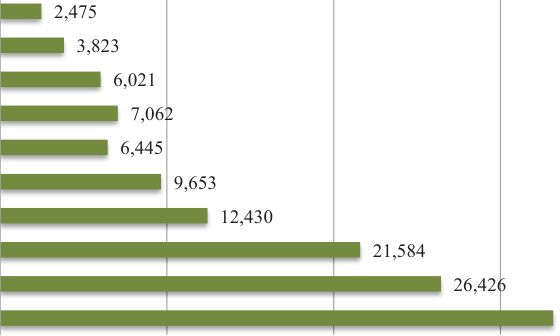
Due to people’s growing interest in rural migration, the number of NPO users has tripled to 33,000 in nine years. Moreover, in 2008, about 70% of them were aged 50 or older, while in 2017, 70% were younger than 50. This trend will be exacerbated by the spread of Covid-19. For the rice terrace regions, which are struggling with a shrinking population and ageing farmers, this trend is a great opportunity to attract new human resources.
Therefore, the situation around rice terraces is not only serious. Rice terraces have many attractions, such as beautiful scenery, rich natural environment, high quality crops and traditional culture. To take advantage of this trend for the preservation of rice terraces, it is important to use the frameworks listed below.
3. Efforts to Preserve Rice Terraces on the Part of Non-Governmental Initiatives
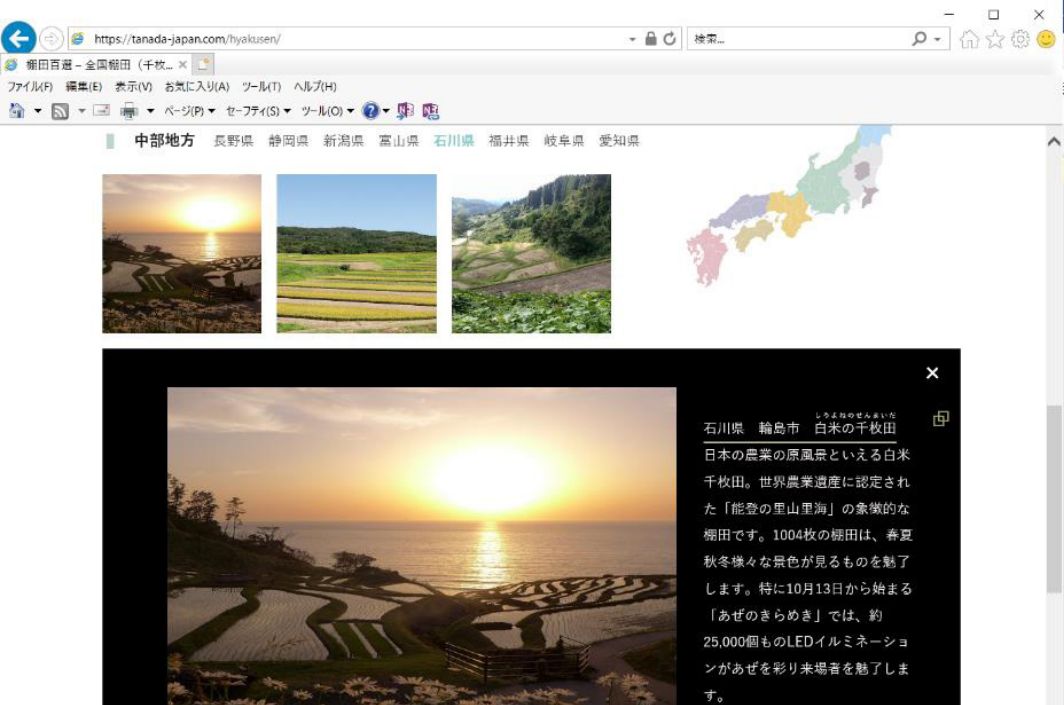
In the 1990s, as the number of abandoned rice terraces increased, momentum for the preservation of rice terraces emerged, and in 1995 the National Rice Terrace Council was established (Figure 6), mainly by communities with rice terraces across the country. In the same year, the first National Rice Terrace Summit was organised by the Council in the town of Yusuhara in Kochi Prefecture.
At the summit, farmers and local government officials from all over the country involved in rice terrace conservation meet to actively exchange opinions and information and, for example, present rice terrace conservation cases and share know-how. Since the first summit in 1995, the National Rice Terrace Summit has been held continuously every year, and the 25th summit has been held in Nagato City, Yamaguchi Prefecture in October 2019.
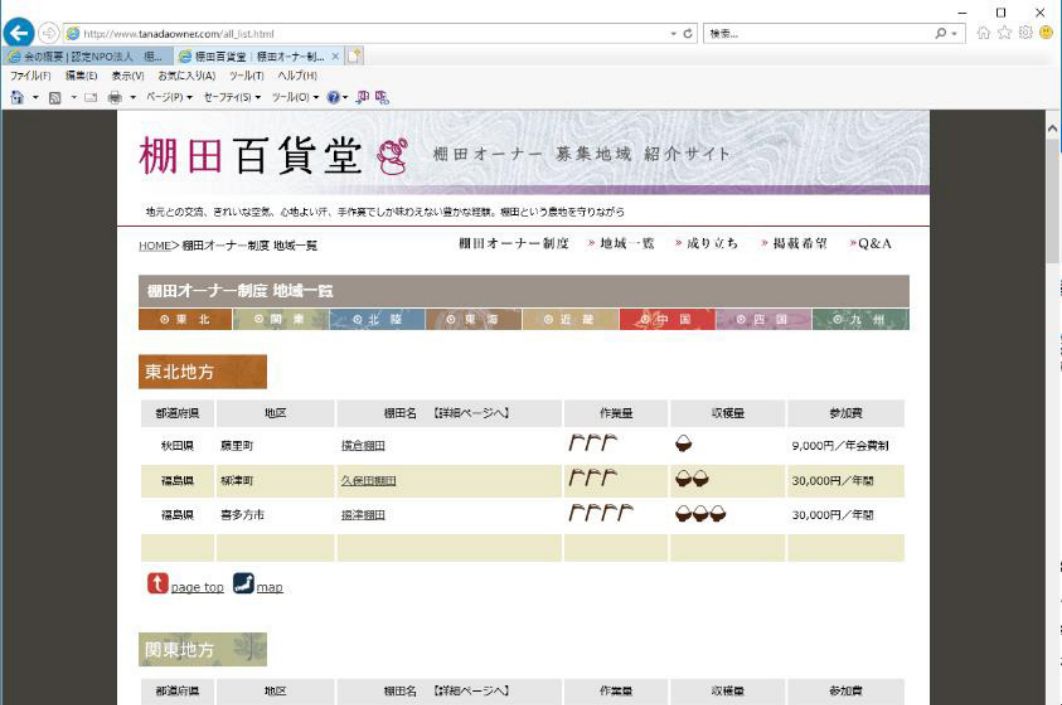
In addition, the NPO National Rice Terrace Network was founded in 1995 mainly by urban residents who saw a crisis in the face of the destruction of the rice terraces. Aiming to bring together rice terrace farmers in need of help and urban residents who want to support the conservation of rice terraces, the NPO conducts activities such as organising symposia and publishing books to communicate the attractiveness of rice terraces, holding events on agricultural experiences on rice terraces, introducing rice terraces to urban residents and businesses through the rice terrace ownership program, and supporting the sale of rice harvested from rice terrace fields. The rice terrace ownership program provides that people who pay a membership fee and become owners of a certain area of a rice terrace field can learn about farming activities under the guidance of a local farmer and receive the harvested products of the rice terrace (Figure 7).
4. Support Measures of the Japanese Government for Rice Terraces
In this section, I would like to provide information on the Japanese government’s main support measures for rice terraces.
4.1 The direct payment program for farmers in hilly and mountainous areas
As mentioned above, this program is the most important measure for the conservation of terraced rice fields. The program was introduced in 2000 with the aim of demonstrating the multi-functionality of agriculture (i.e. preventing flooding, preserving the natural environment, creating beautiful landscapes, maintaining cultural traditions, etc.) by preventing further abandonment of arable land. This program is the first fully-fledged incentive payment in Japan that relates to the EU direct payment scheme.
One of the biggest differences with the EU program is that payments are made to the agricultural community rather than to individual farmers. Since rice cultivation has traditionally been the mainstay of Japanese agriculture, irrigation water has to be managed by the whole community. For this reason, agriculture in Japan is communitybased. Based on this peculiarity of Japanese agriculture, the program was designed to pay to the community.
In order to receive payments, a community must establish a plan that specifies prescribed farmland conservation activities and be certified by the local government. Certified communities can receive payments according to the area of agricultural land on which conservation activities are carried out, and the payments can be used freely based on the community’s consent.
There are two types of payments: the basic payment and the additional payment. The unit price of the basic payment is based on the slope of the cultivated area. As mentioned earlier, for terraced rice fields with a slope of 1/20 and above, ¥21,000 yen ($200) is paid per 0.1 hectare. Additional payments are made for certain government-recommended activities, such as expanding community area or recruiting new labour (Figure 8).
As part of the enforcement of the new law mentioned above, a support measure was introduced to provide an additional payment of 10,000 yen ($95) per 0.1 hectare for rice terraces certified under the law in 2020. Including a basic payment, a total of 31,000 yen ($295) per 0.1 hectare will be paid for rice terraces under the current direct payment program.
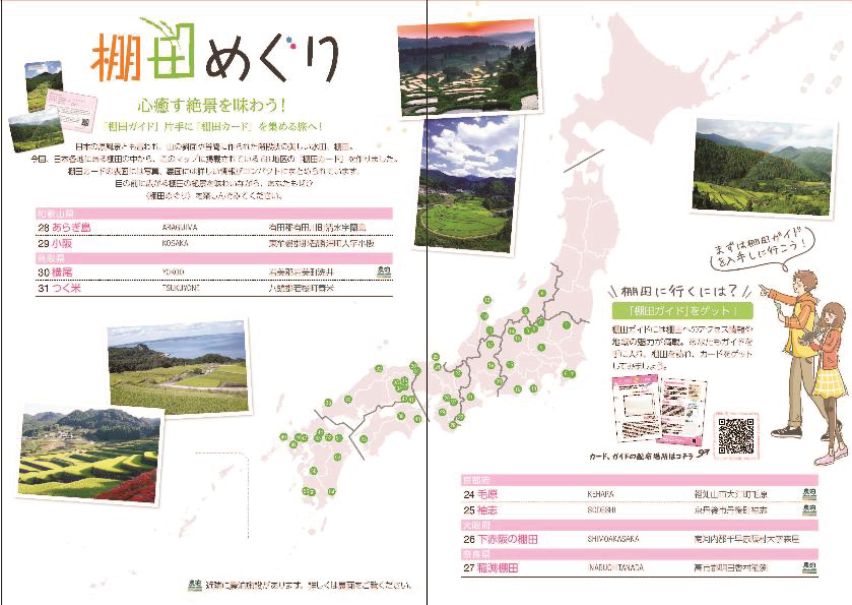
4.2 Raising public awareness of the attractiveness of rice terraces 4.2.1 Tanada (rice terraces) map project (Figure 9).
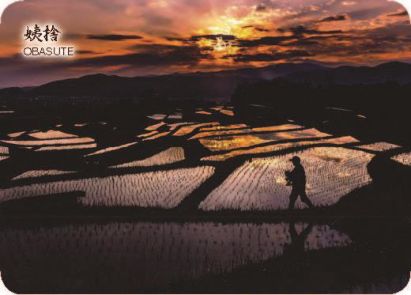
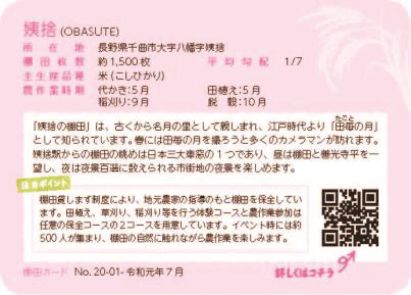
In 2018, MAFF and some prefectures jointly produced “rice terrace maps” of 50 rice terraces across the country so that not only those who know rice terraces but also those who do not know rice terraces can understand the charm of rice terraces. A rice terrace tour map has also been published. To get a rice terrace card, people need to visit the rice terraces and do certain activities, such as buying local agricultural products, participating in agriculture-related events and so on. In this way, the rice terrace card is used as a tool to attract people to the rice terraces.
4.2.2 Guide to the revitalisation of rice terraces
MAFF has also produced a guide to help all those involved in the conservation of rice terraces to make their rice terraces attractive. This guide presents 15 rice terraces where efforts are already well advanced. For example, a village whose existence was threatened by the earthquake was revitalised by using the rice terraces as a symbol of revival for migration; a case where many tourists were attracted by using the rice terraces extensively as a tourism resource; and a case where conservation of the rice terraces was successful through active participation in agricultural experience events, also presented for primary school students and urban dwellers.
In addition, there are other effective support measures for the conservation of rice terraces, such as the development of agricultural infrastructure and support for the prevention of crop damage by wildlife. Through the combination of these support measures, activities for the conservation and revitalisation of rice terraces are implemented in each region.
5. Conclusions
With the enforcement of the Law for the Conservation and Revitalisation of Rice Terraces, the rice terraces have gained attention and the government has started to take various promotional measures. The momentum to conserve the rice terraces is also increasing in the individual rice terrace regions. It is important not to end this trend temporarily, but to create a virtuous cycle that makes it sustainable. In this sense, bottom-up efforts starting from a regional base are essential.
The main cause of the destruction of rice terraces is the decline and ageing of farmers and the weakening of community functions in rural areas. These problems apply not only to the rice terrace regions, but to all of Japanese agriculture. The conservation and revitalisation of rice terraces is an important task that could help address the challenges facing Japanese agriculture.
References
- National Rice Terrace Council (2020) https://tanada-japan.com/ (in Japanese)
- National Rice Terrace Network (2020) https://tanada.or.jp/ (in Japanese)
- Revitalization of Rice Terrace Regions(2020) The Cabinet Office, the Government of Japan. https://www.kantei. go.jp/jp/singi/tiiki/tanada/index.html (in Japanese)
- Revitalization of Rice Terrace Regions (2020) The Ministry of Agriculture, Forestry and Fisheries. https://www. maff.go.jp/j/nousin/tanada/tanada.html (in Japanese)
- Tanada Card Project (2020) The Ministry of Agriculture, Forestry and Fisheries. https://www.nou-navi.maff.go.jp/tanadanikoi/ (in Japanese)
Rights and permissions
Open Access. This article is licensed under a Creative Commons CC BY 4.0 license, which permits use, sharing, adaptation, distribution and reproduction in any medium or format, as long as you give appropriate credit to the original author(s) and the source and indicate if changes were made.
About this article
Cite this article
Kuroda, Y. (2020). The Current Situation and Efforts to Conserve Rice Terraces in Japan. The Journal of Terraced Landscapes, 1(1), 72–85. https://doi.org/10.5281/zenodo.5833613
- Published
- October 2020
- Issue
- Volume 1, Number 1
- Journal
- The Journal of Terraced Landscapes, ISSN 2754-7612 (Online)
- Archive
- Zenodo record 5833613
- rice terrace
- Tanada
- hilly and mountainous area
- direct payment
- Tanada cards