Dolbitna Art School: The Stonemasons of Jeju Island
Affiliations
- 1 Dolbitna Art School
The Art of Terraced Landscapes volume 3, issue 1, pp. 1–36 (2025) · Cite this article
- 119 views
- 246 downloads
- DOI10.5281/zenodo.14914182
Abstract
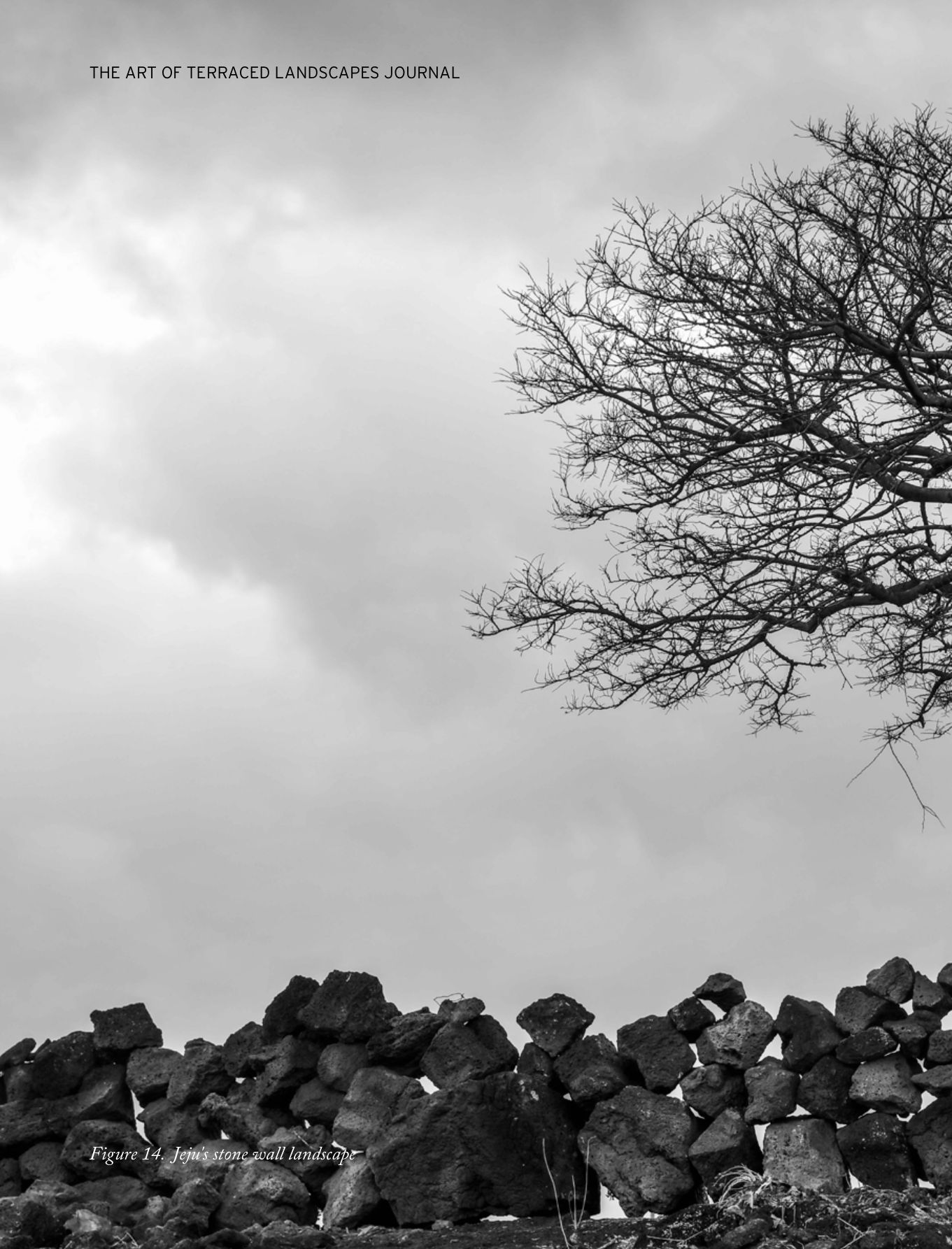
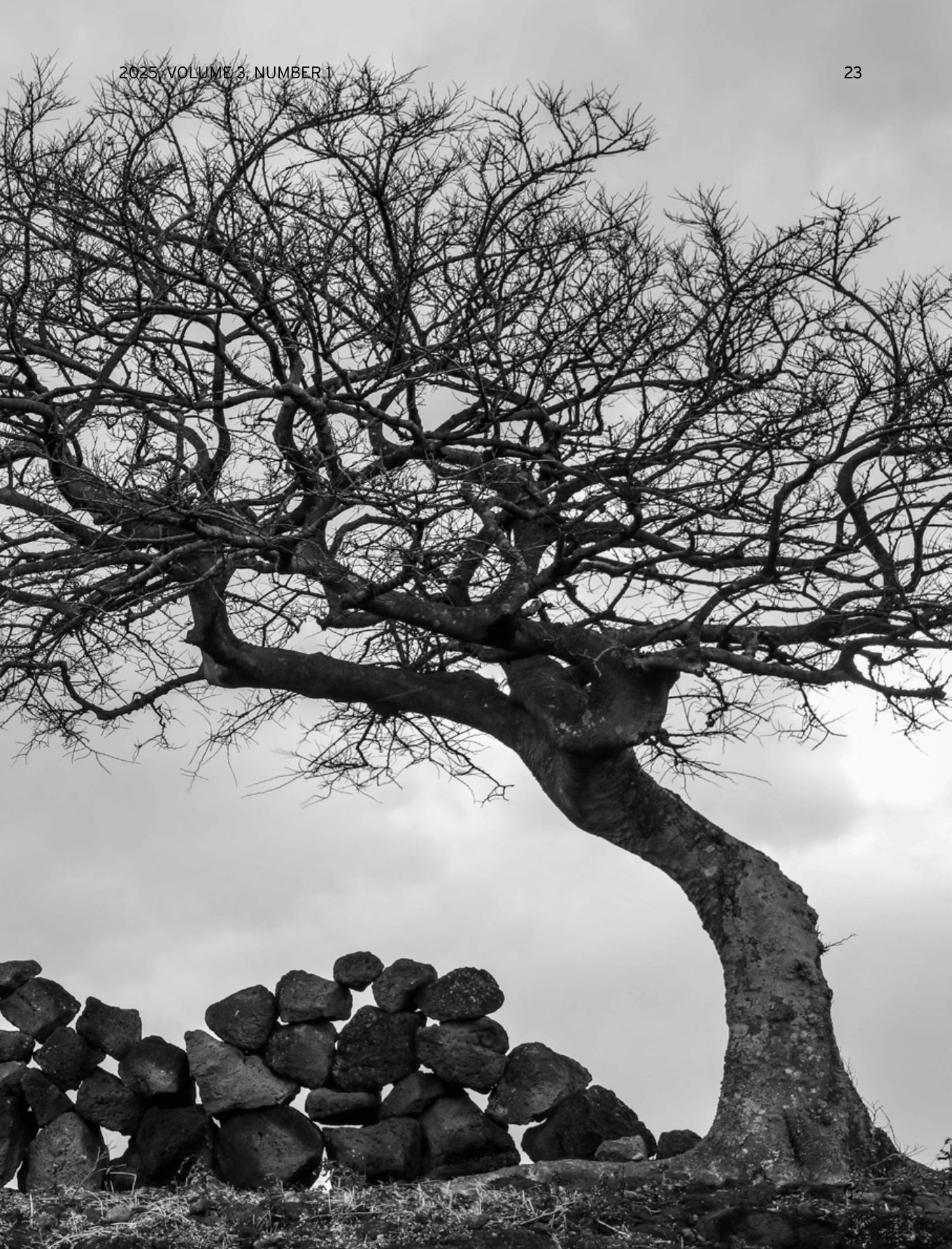
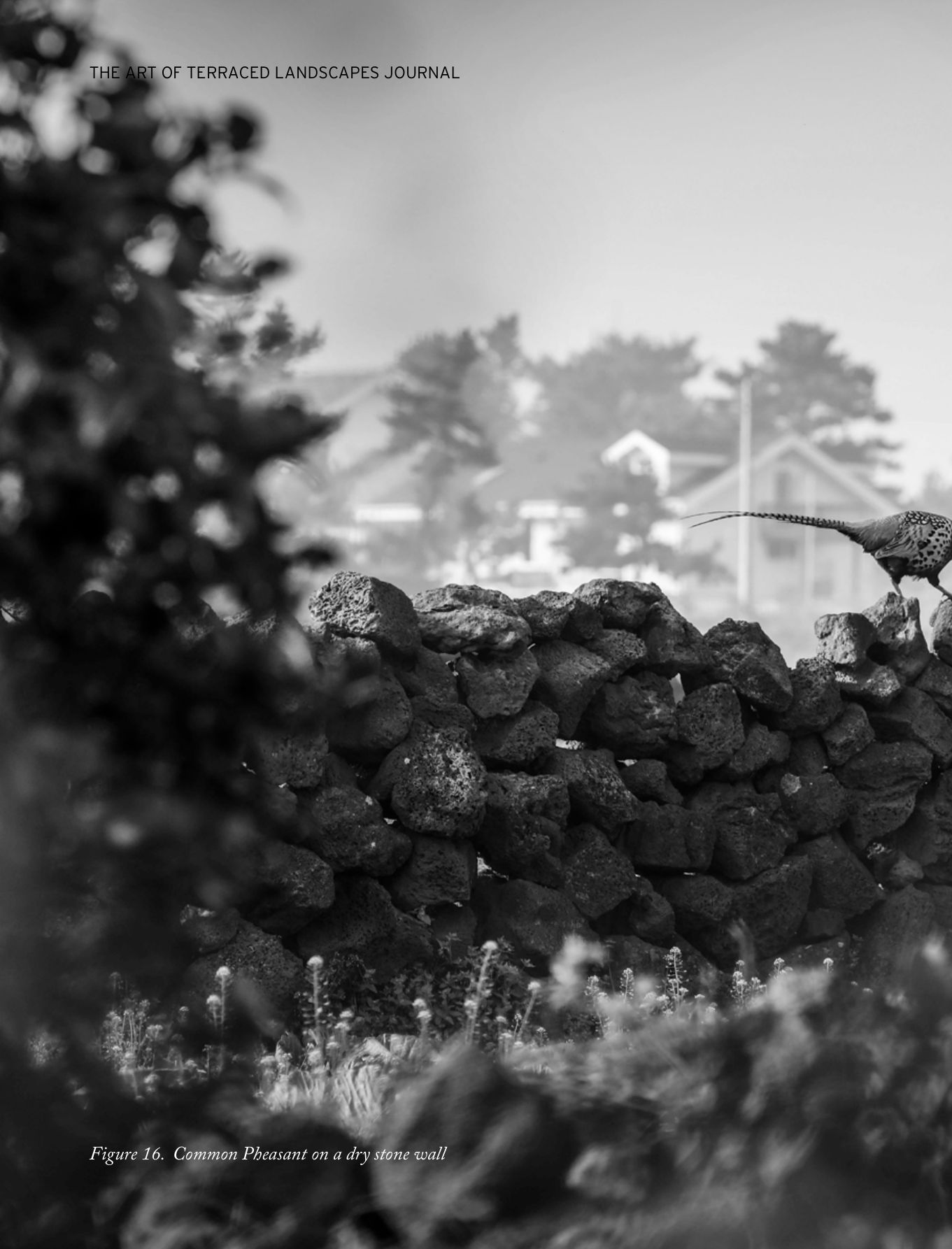
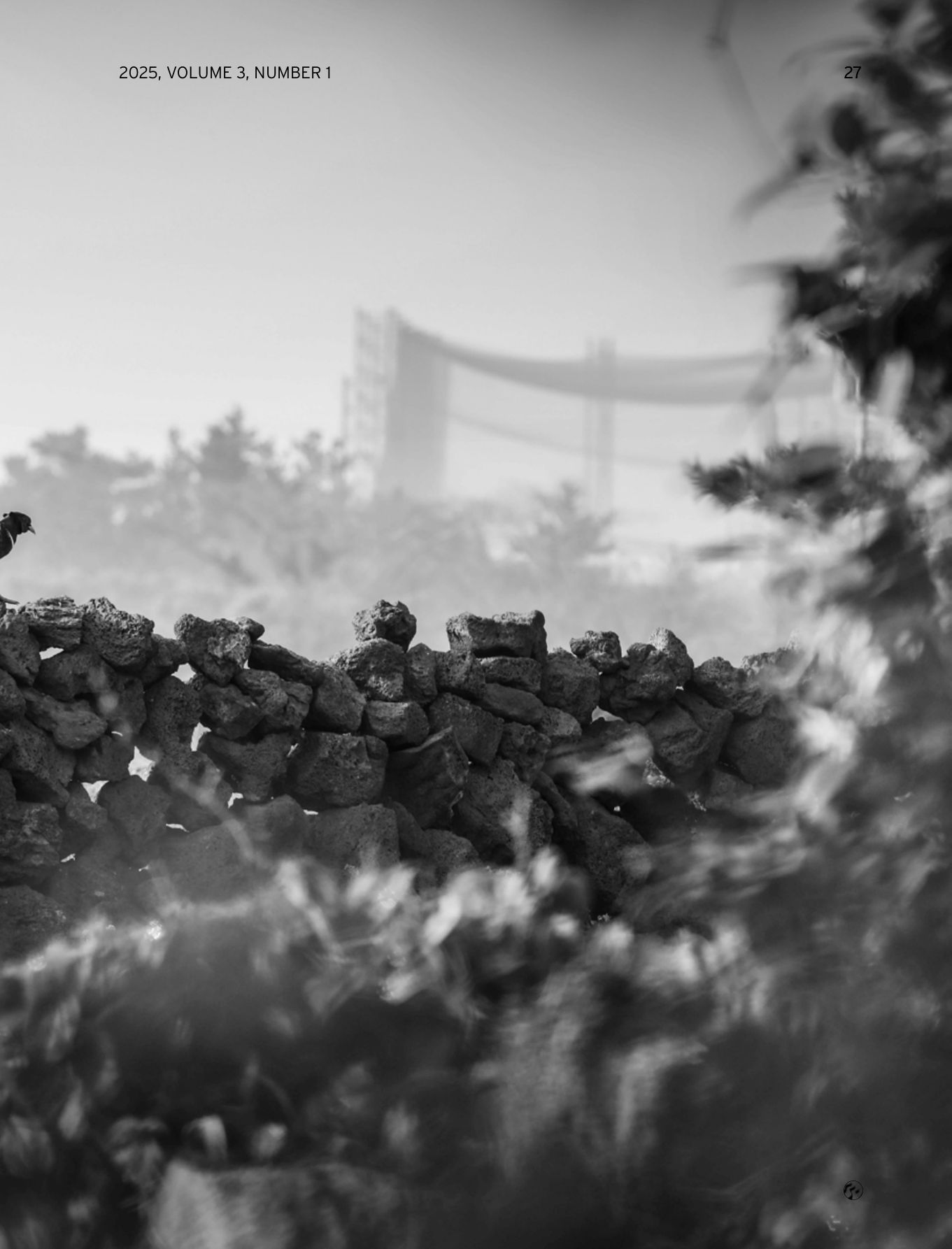
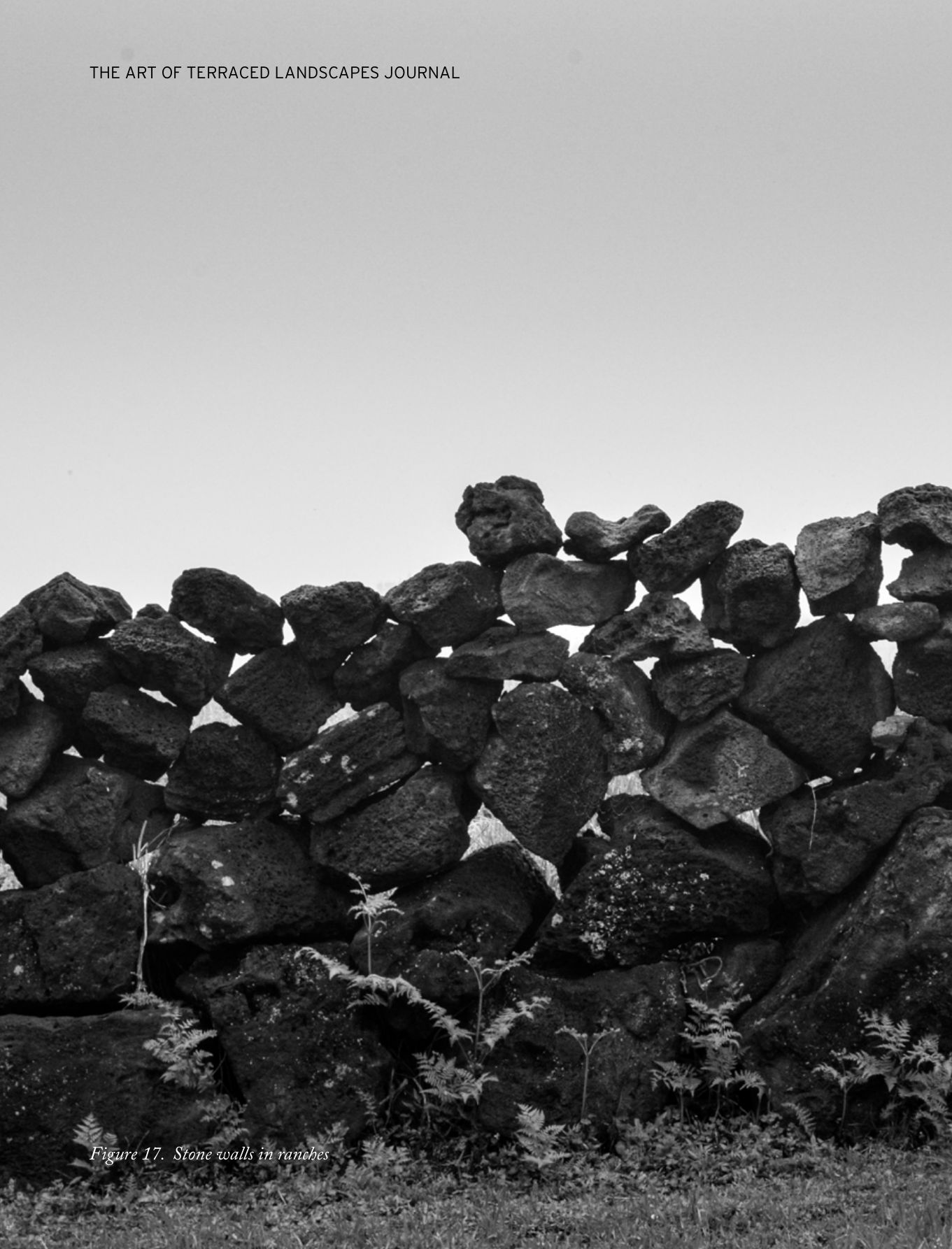
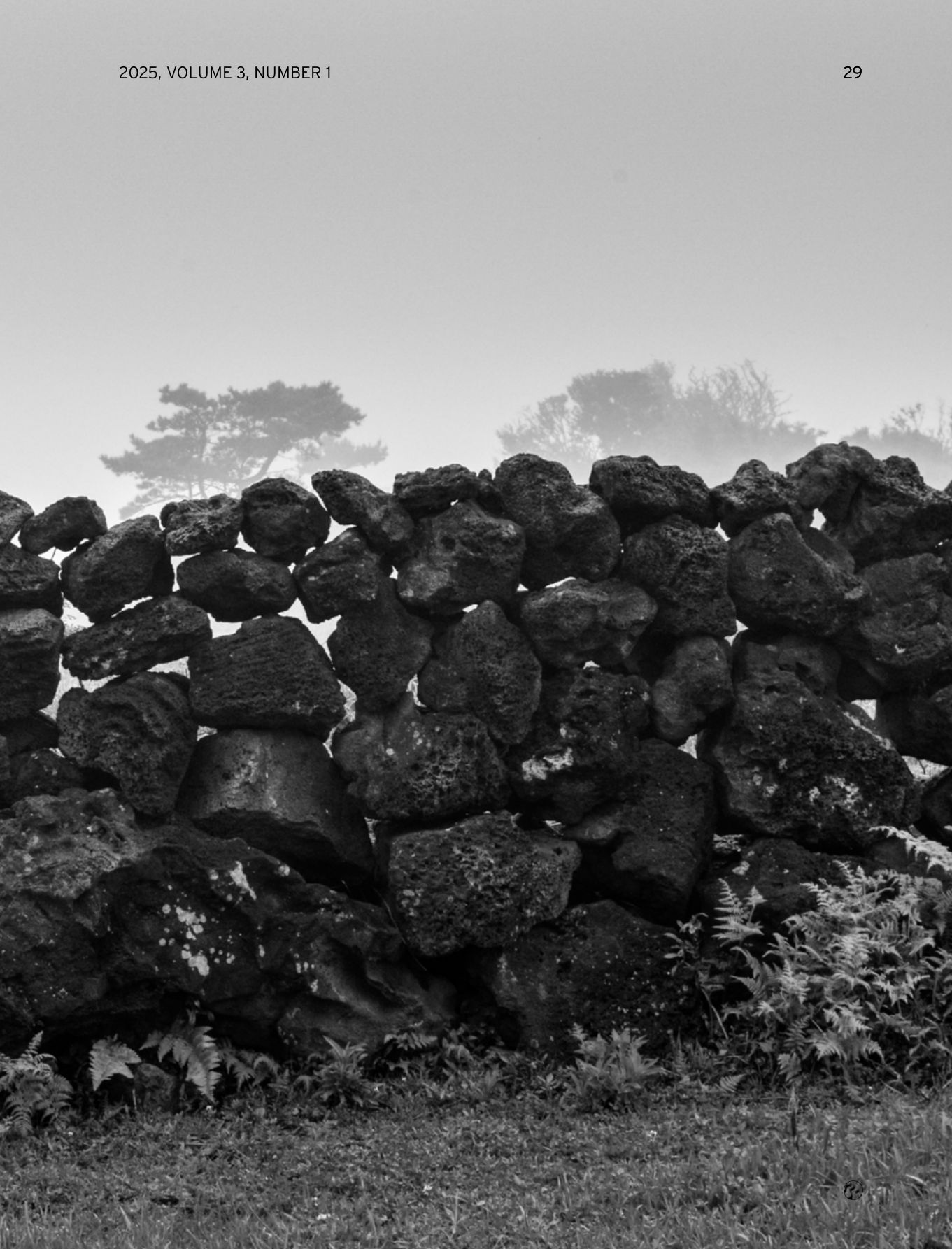
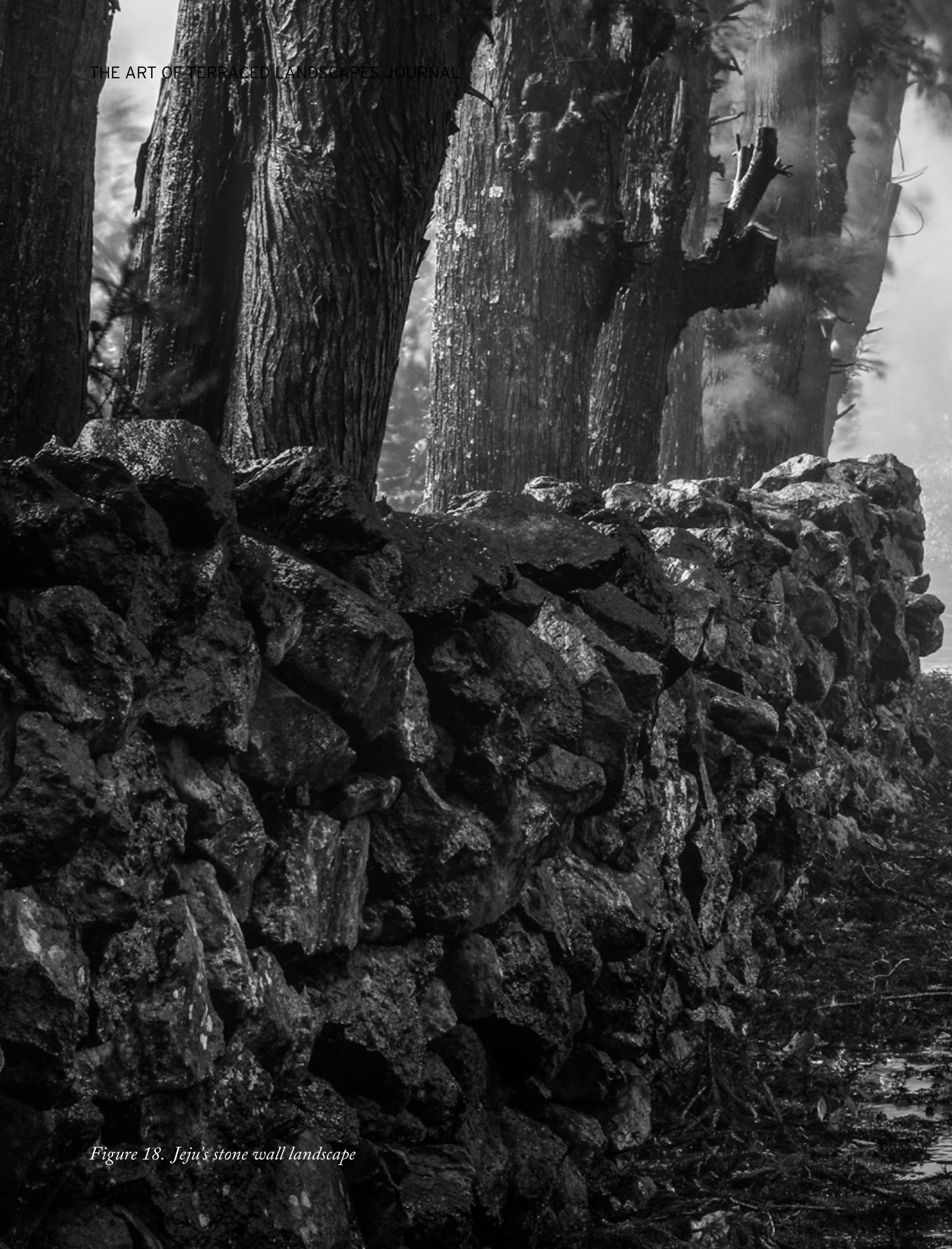
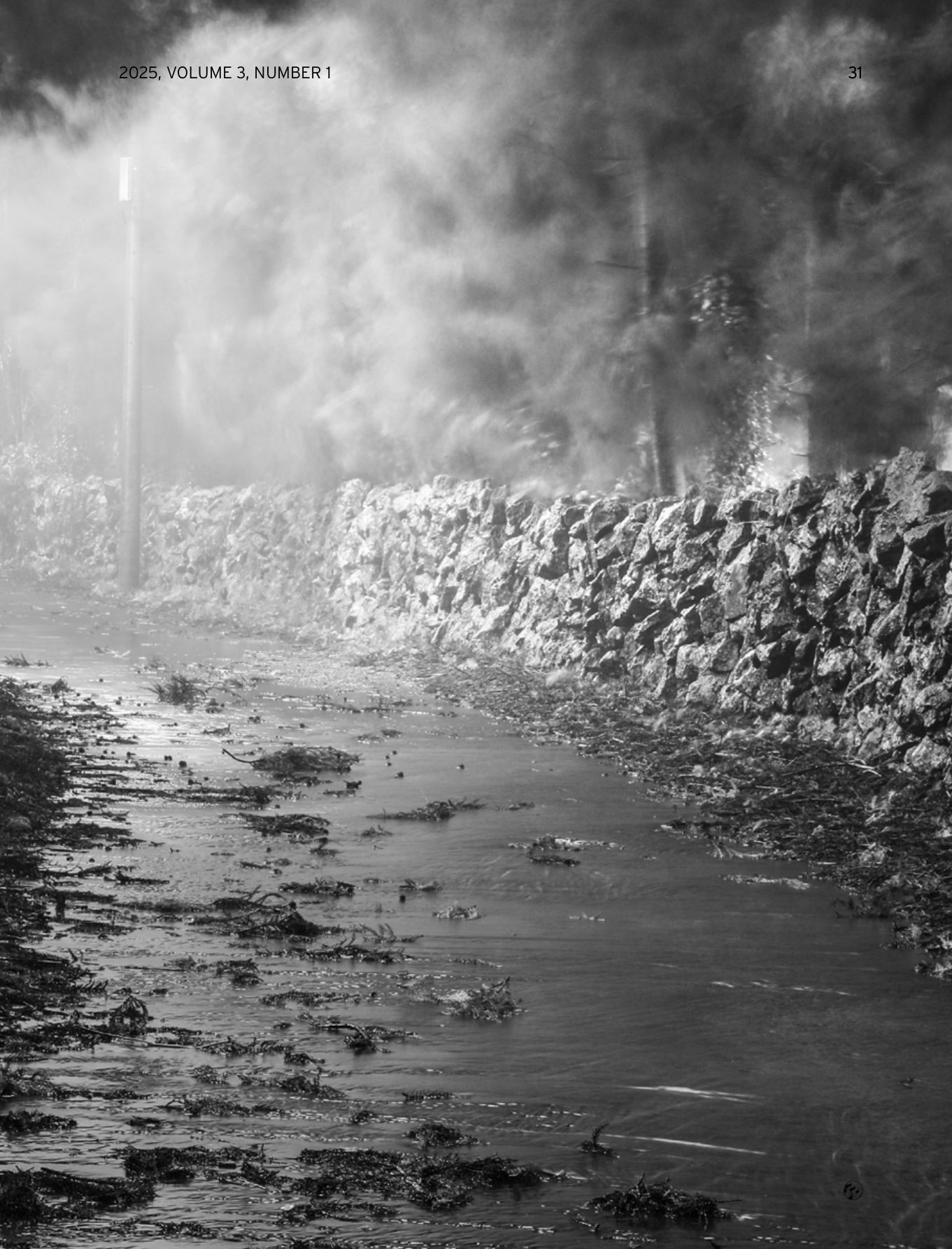
Jeju Island was an ancient independent nation with a unique identity for approximately 1,000 years, from the 3rd century to the early 12th century. Formed by a volcanic eruption, Jeju Island is predominantly covered in basalt. In the harsh environment, characterised by frequent strong winds, the people of Jeju have adeptly utilised stones to manage the wind. Stacking stones is an essential survival skill for the inhabitants of Jeju. The drystone walls of Jeju Island are designed with gaps, allowing the wind to pass through. There are about 300 professional stonemasons on Jeju Island whose job is to construct stone walls.
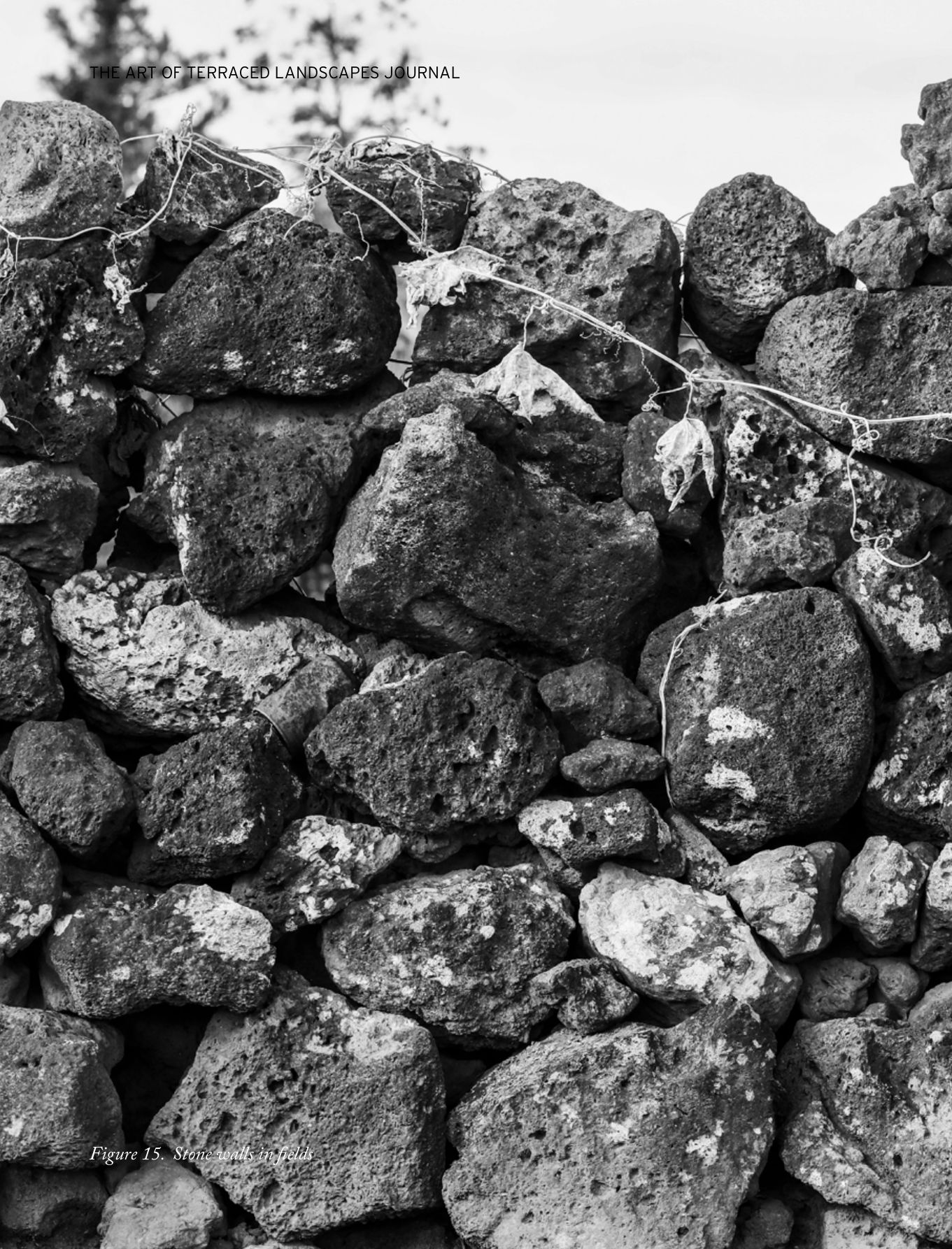
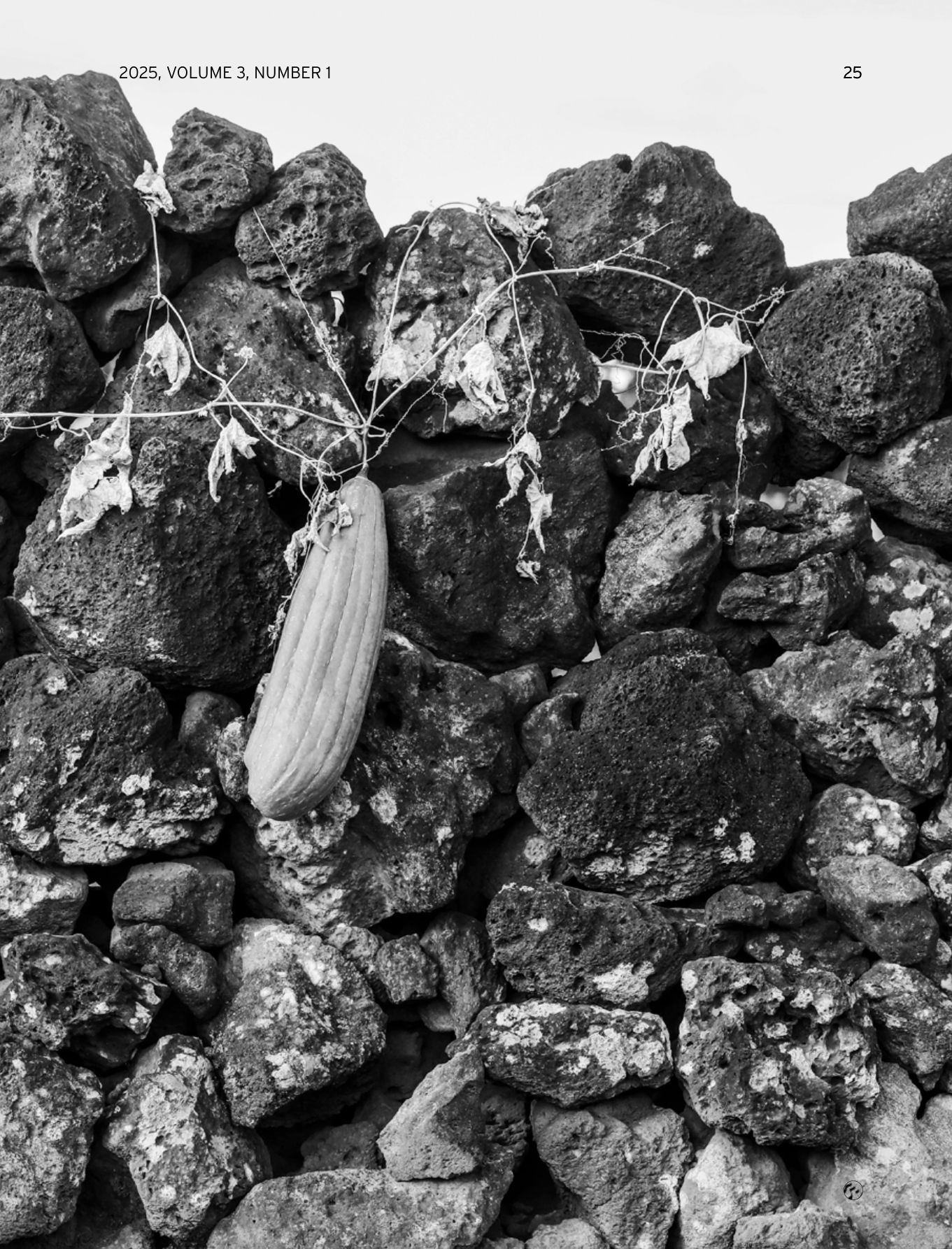
Dolbitna Art School was established in 2015 by five individuals who were passionate about Jeju Island's stone walls. Its purpose is to promote the beauty and value of drystone walls in the region while preserving them long-term by passing on the techniques for building such walls. Depending on their use and location, there are various types of stone walls that serve to demarcate field boundaries, deflect the wind, and protect crops from cattle and horses.
Drystone walls, Art and Tradition: Hwan Jin Jo from Jeju to the World
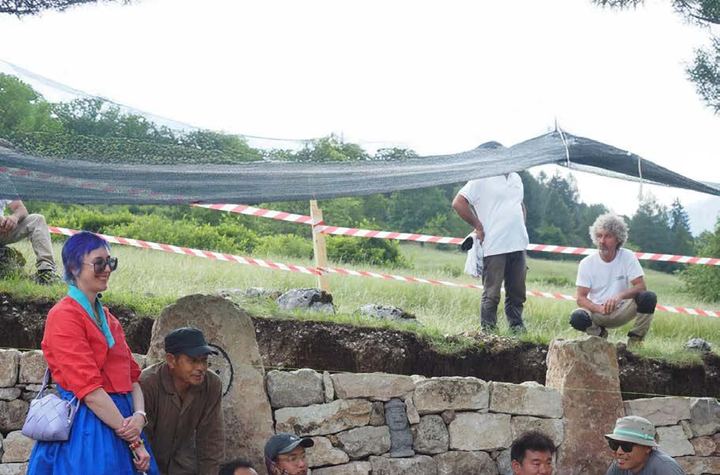
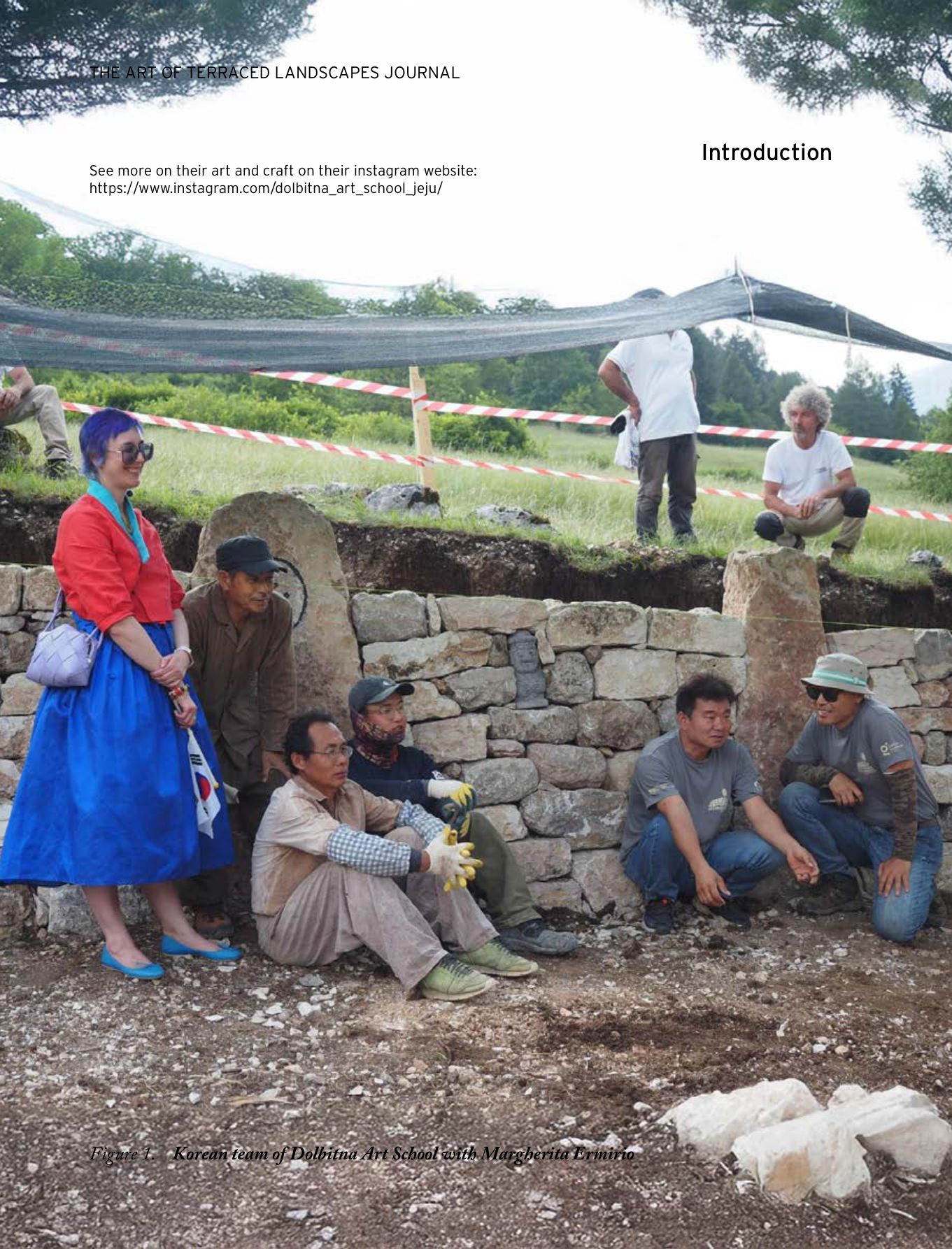
We met the South Korean stone waller from Jeju Island with his team of drystone wall builders in June 2023 in Geroli, Terragnolo Valley, Italy, during the Not Only Rocks Festival organised by Massimo Stoffella and his network. As part of 6 teams they built this wall including a sculpture of the Jeju spirits. The team from Jeju had arrived after attending the Stone and Wine Festival in Austria visiting the Dry Stone Wall Network from Krems, and they were accompanied and guided by Margherita Ermirio from Cinque Terre. From Austria also Rainer Vogler and his stonewaller team participated in the wall constructions. During the Terragnolo festival and competition we became friends with the South Korean teams.
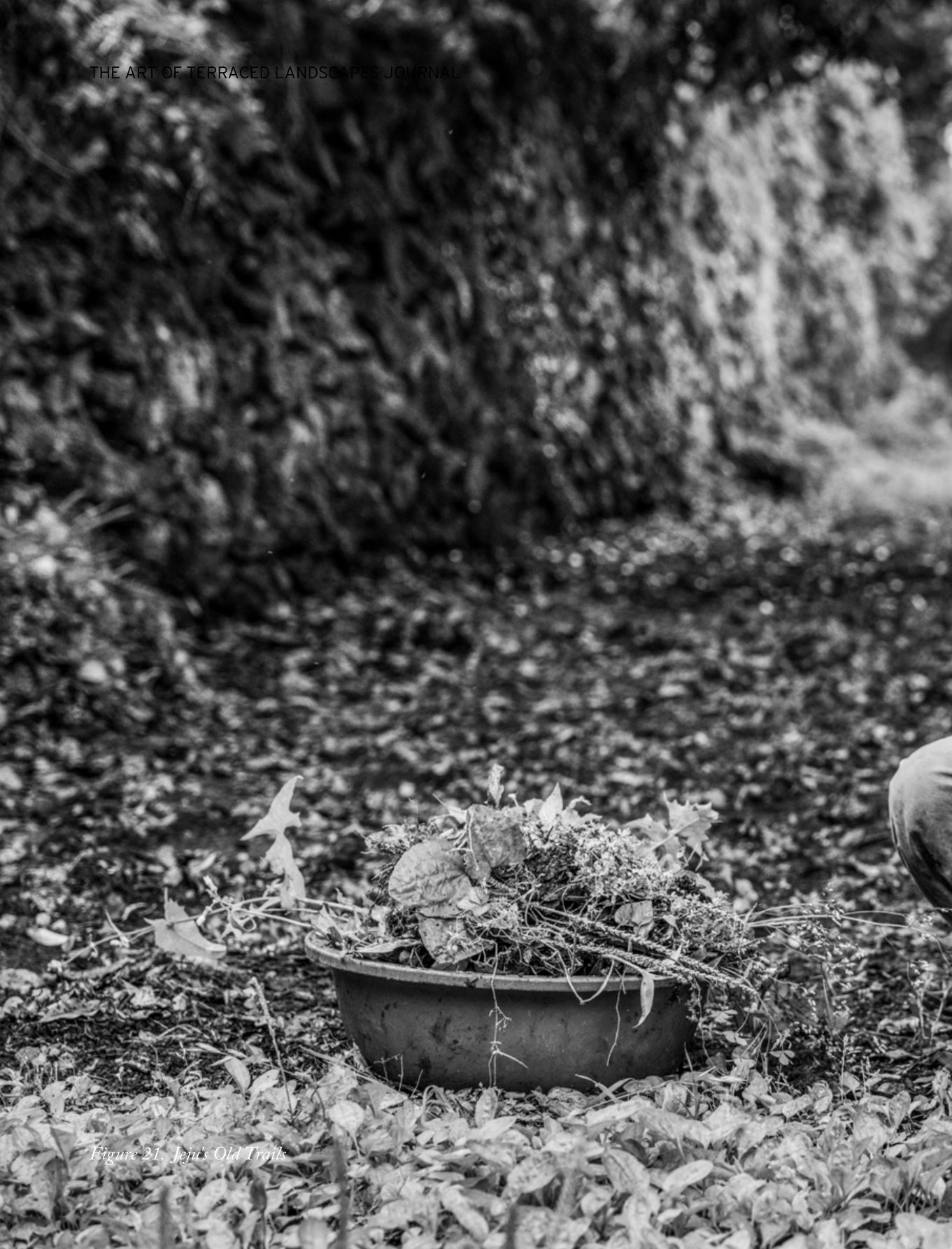
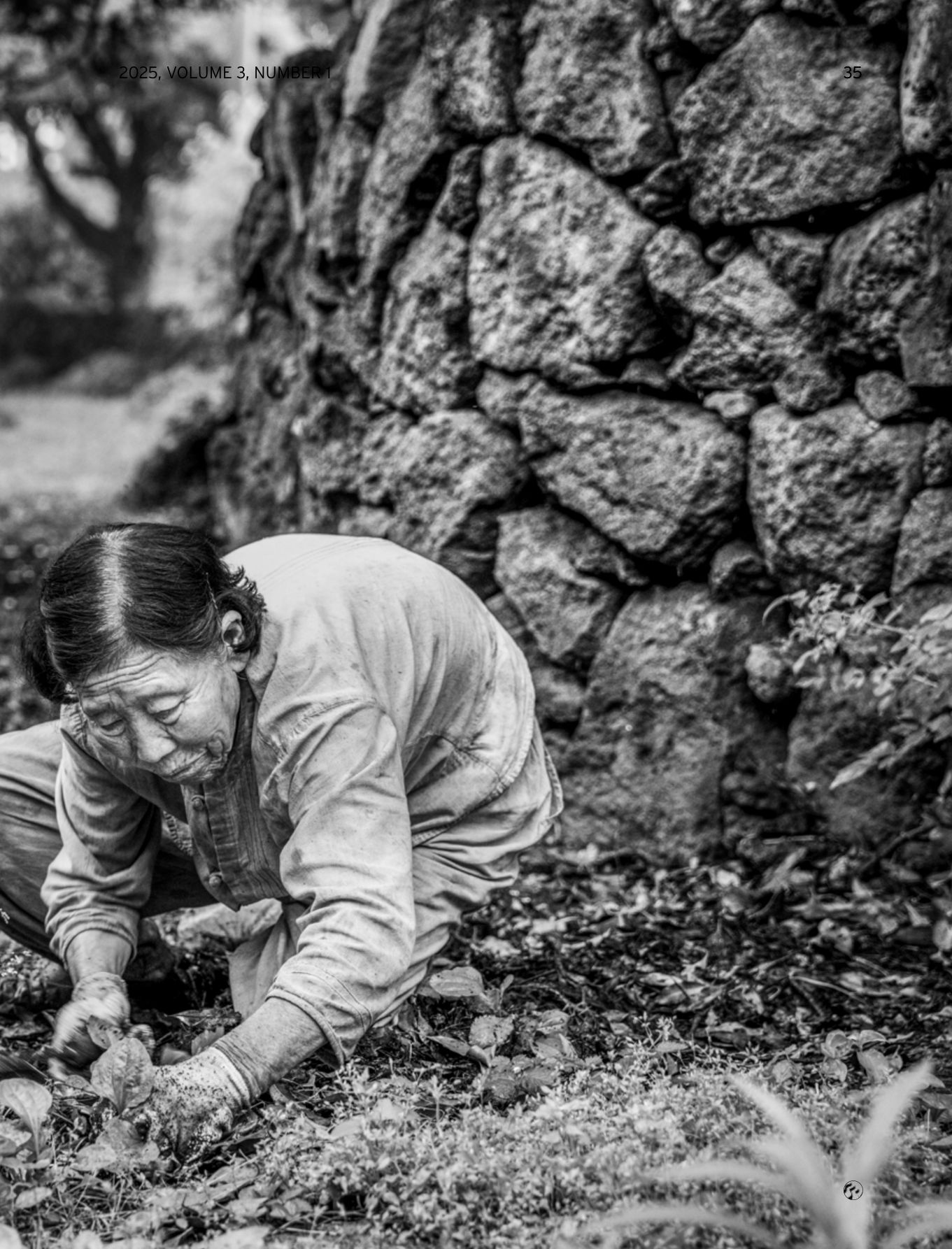
Since then we have been in regular contact with Hwan Jin Jo and the Dolbitna Art School - we follow their activities in Instagram and we discovered the fable of Han Jin Jo for artistic photography. When I saw some photos from his exhibition in Jeju Island I contacted him to agree on publishing this Art Journal with some of his outstanding photos about the stone walls and tombs in Jeju.
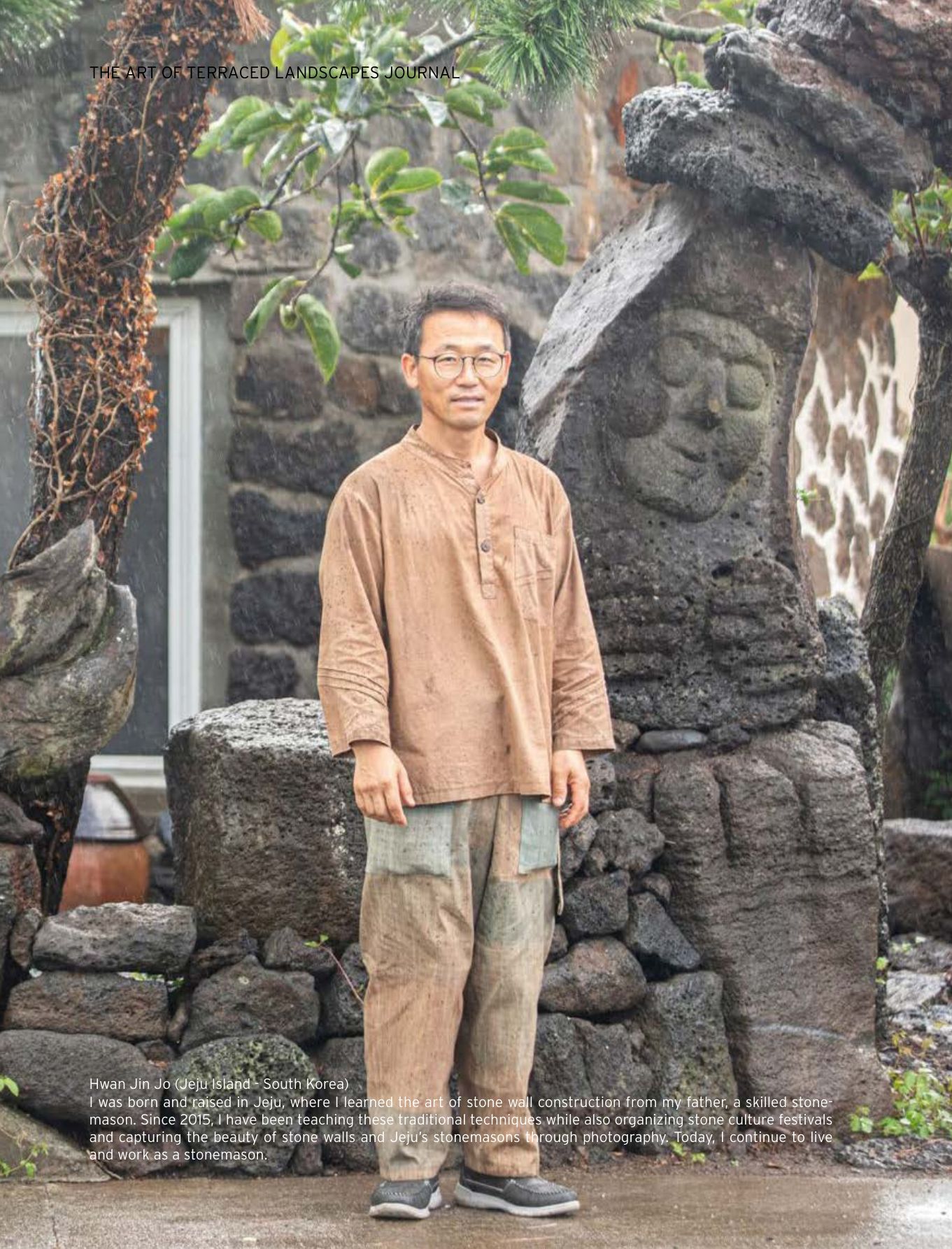
Hwan Jin Jo is stonewaller, photographer and the director of the Dolbitna Art School. Jeju Island is a world heritage site, and Hwan Jin Jo cultivates this traditional knowledge of drystone walling, which he learned from his father; and he is involving his son slowly in the art and craft of stone walling. His profession and his artful photography create a space for the reinforcement of the cultural identity of the island, product of the intimate relationship of humans with the nature the strong winds coming from the seaside.
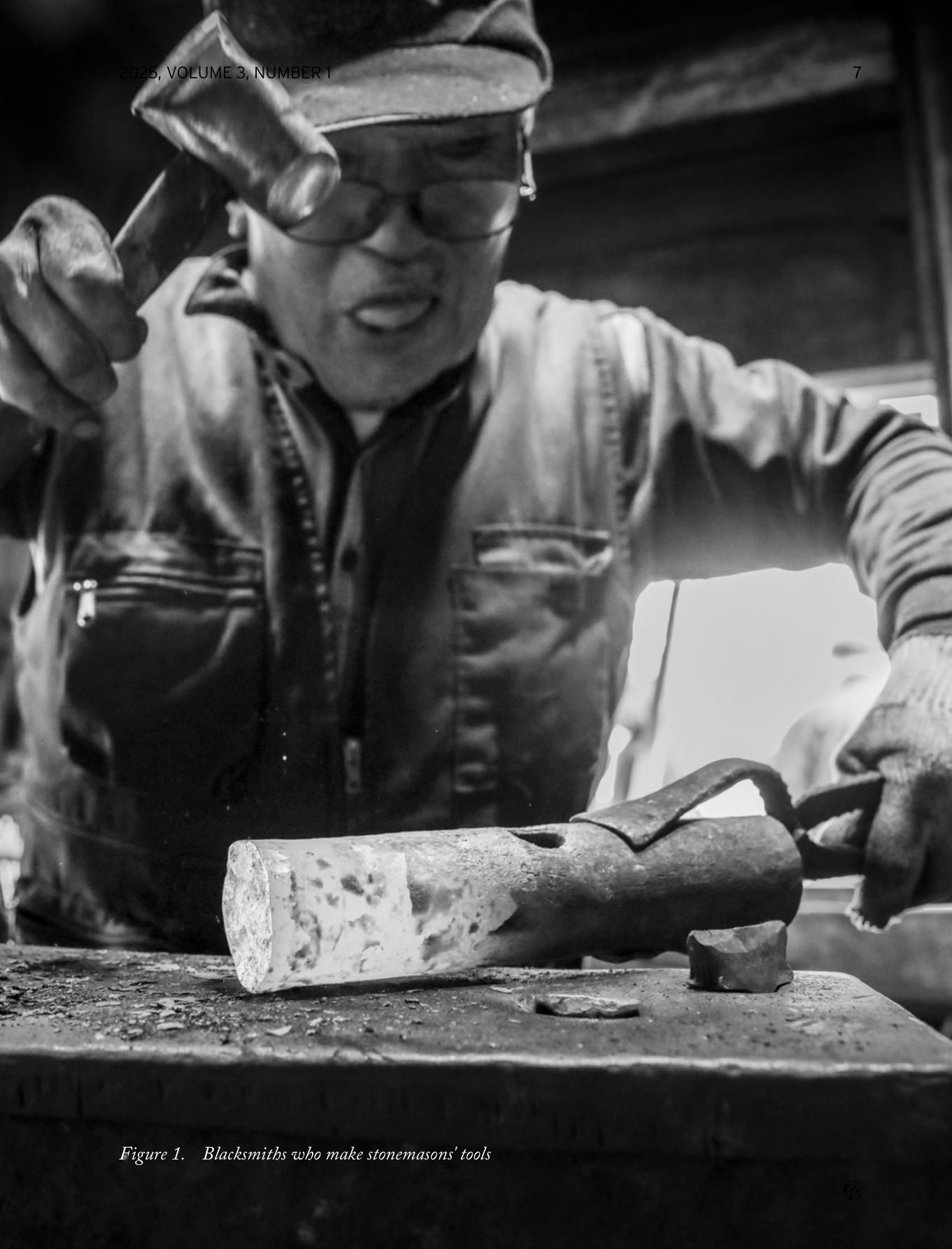
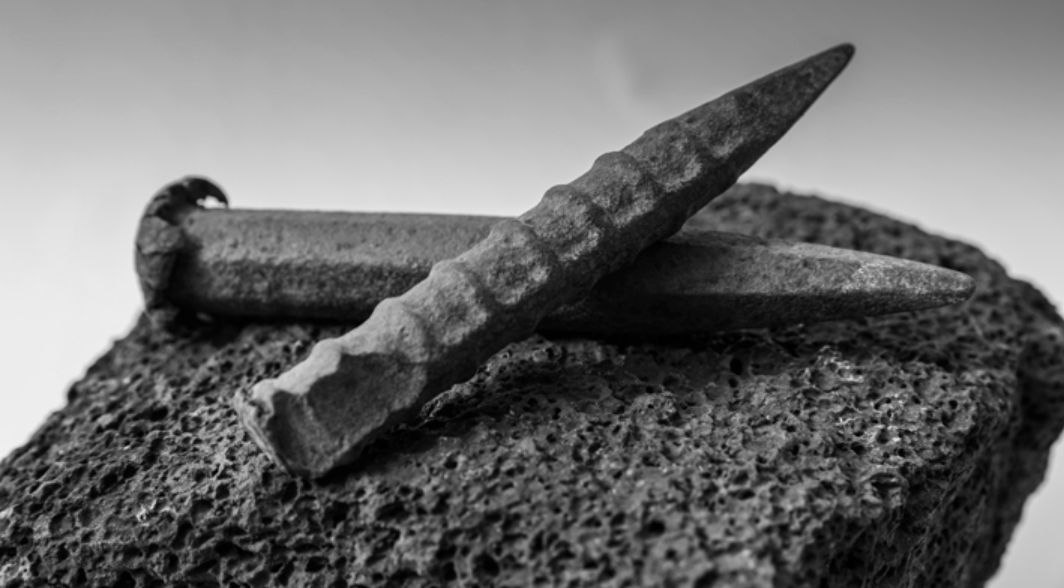
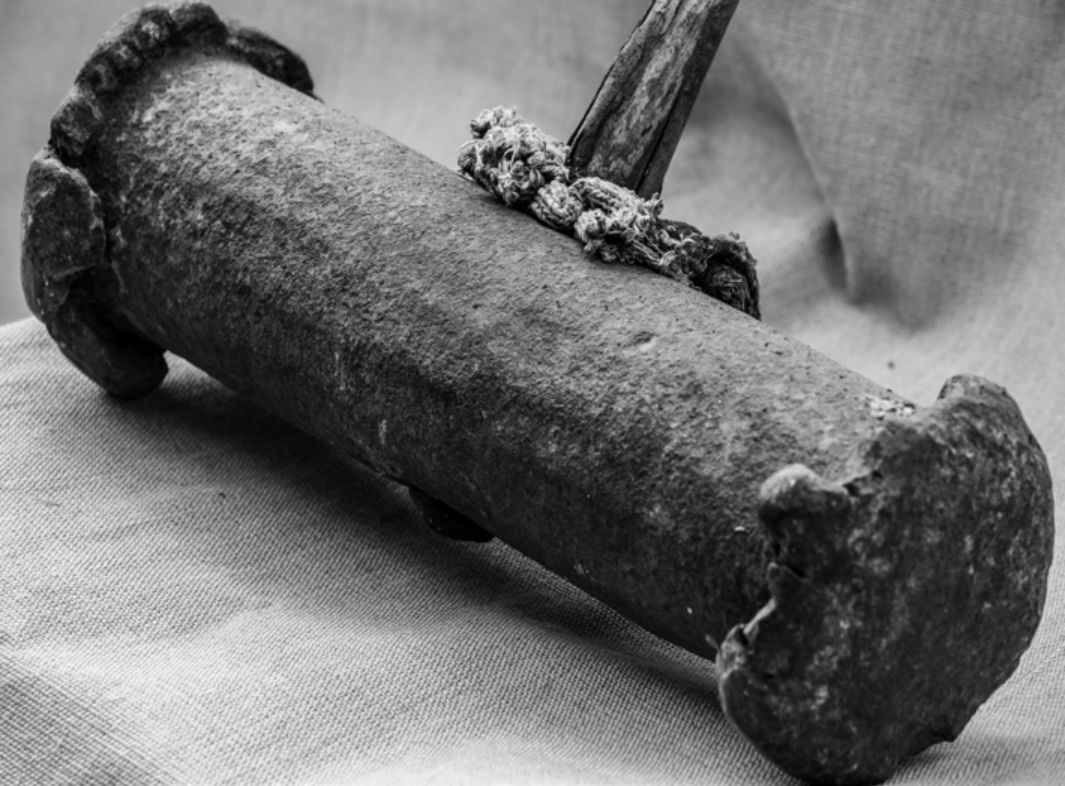
It is extraordinary that the Dolbitna Art School provides training to stonewallers, certifies through exams new craftspersons, constructs drystone walls and buildings in Jeju, organises art festivals on the stone walls and terraces and continues the international contacts between stonewallers.
Dolbitna Art School: The Stonemasons of Jeju Island
Hwan JIN JO
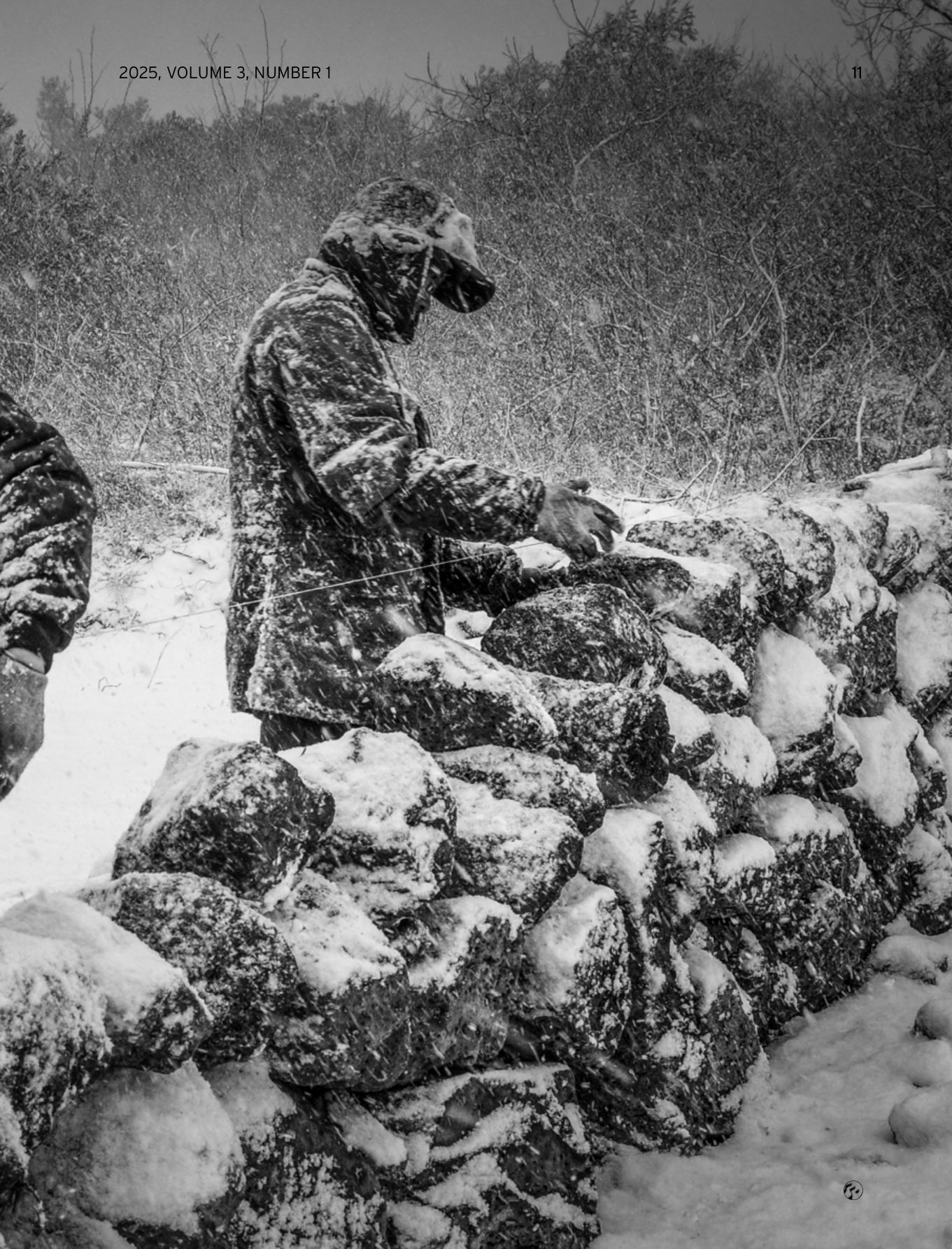
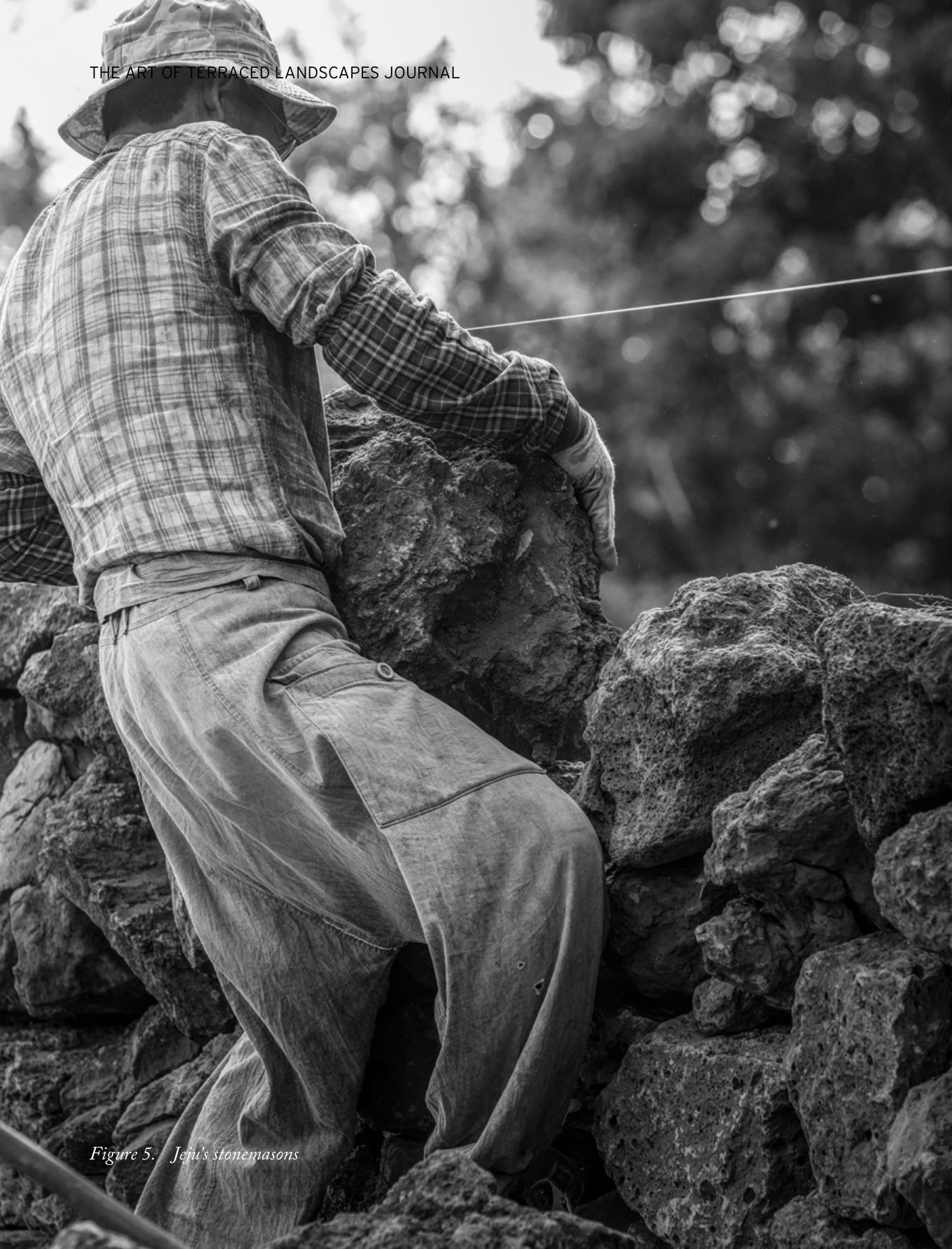
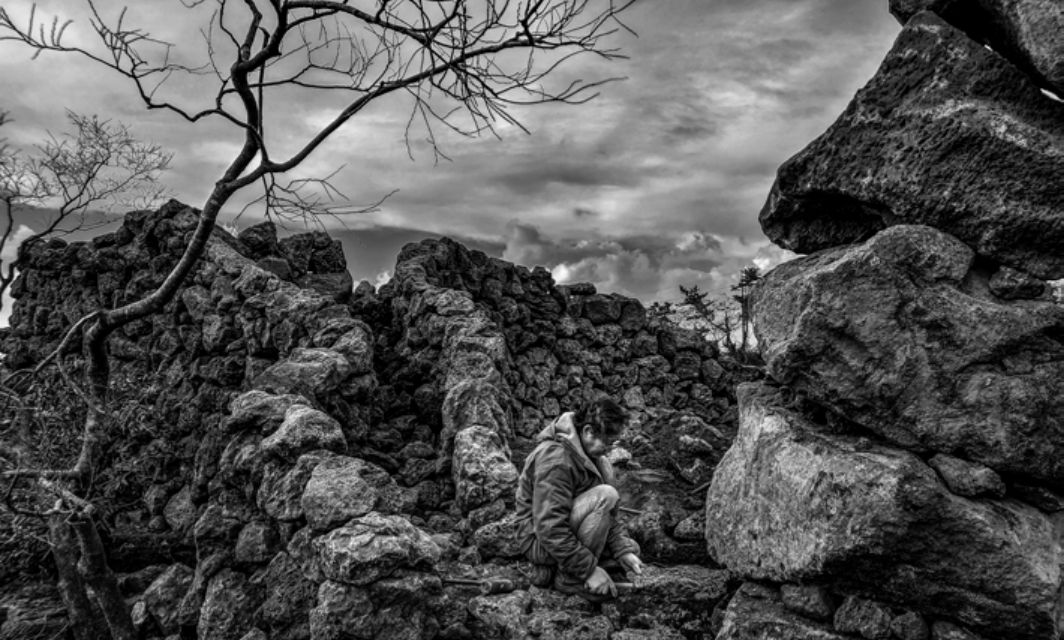
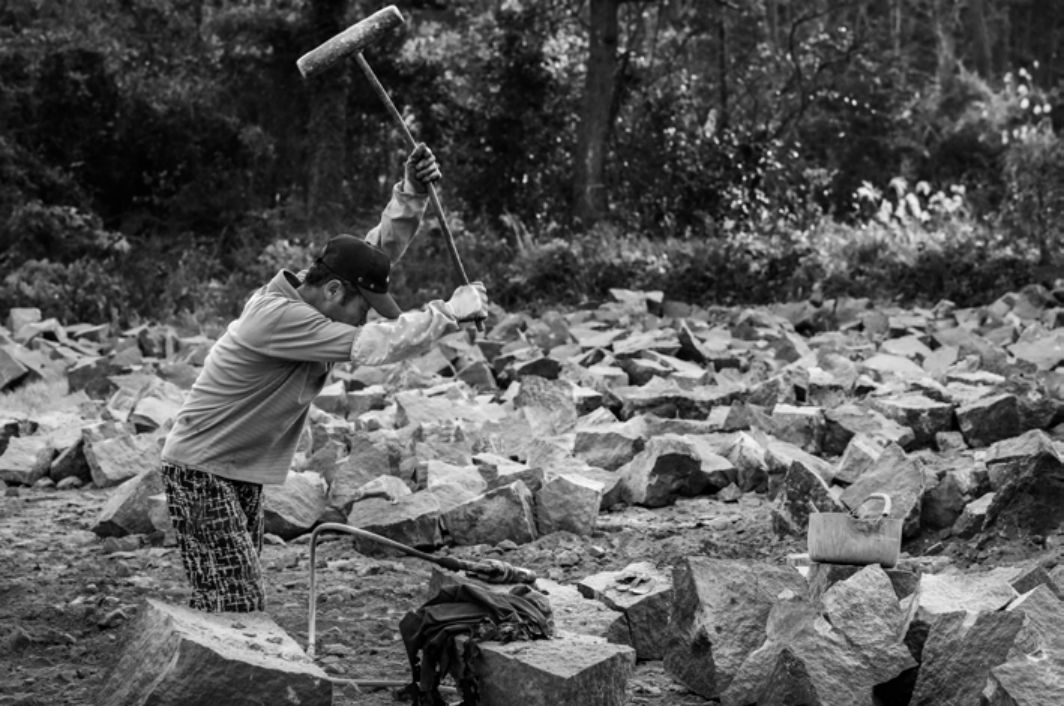
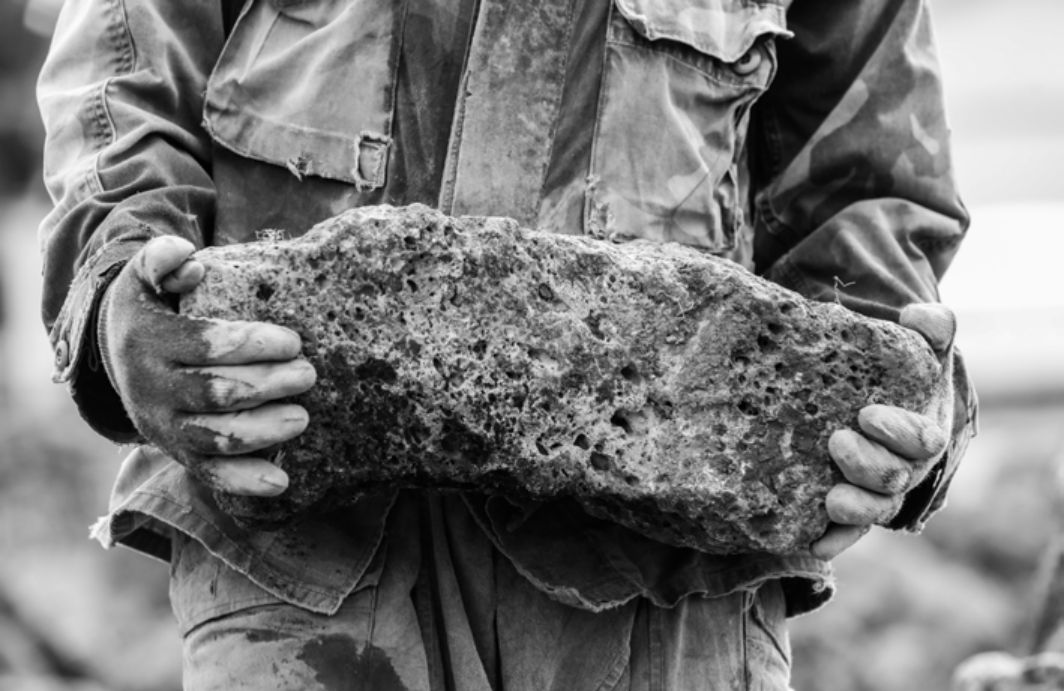
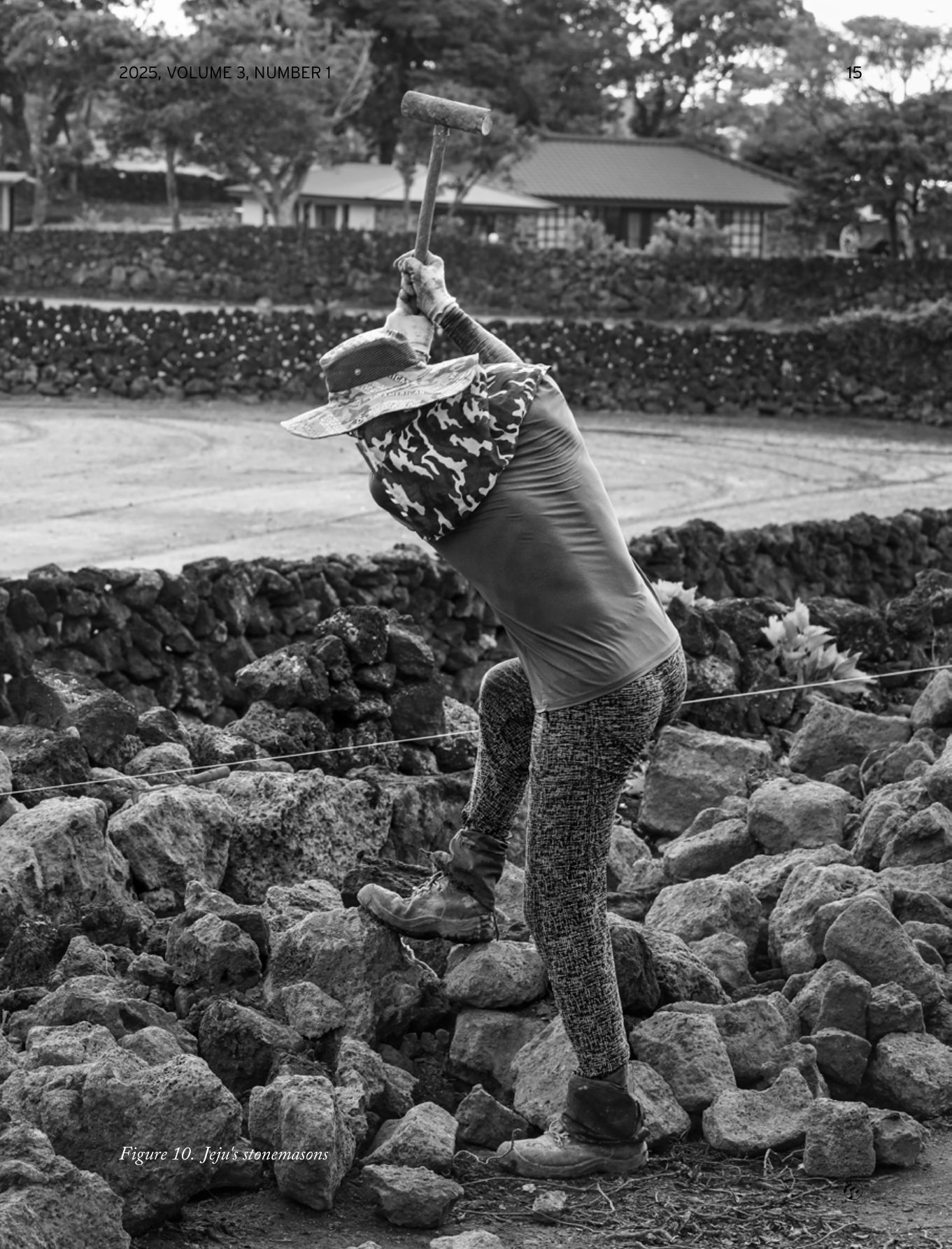
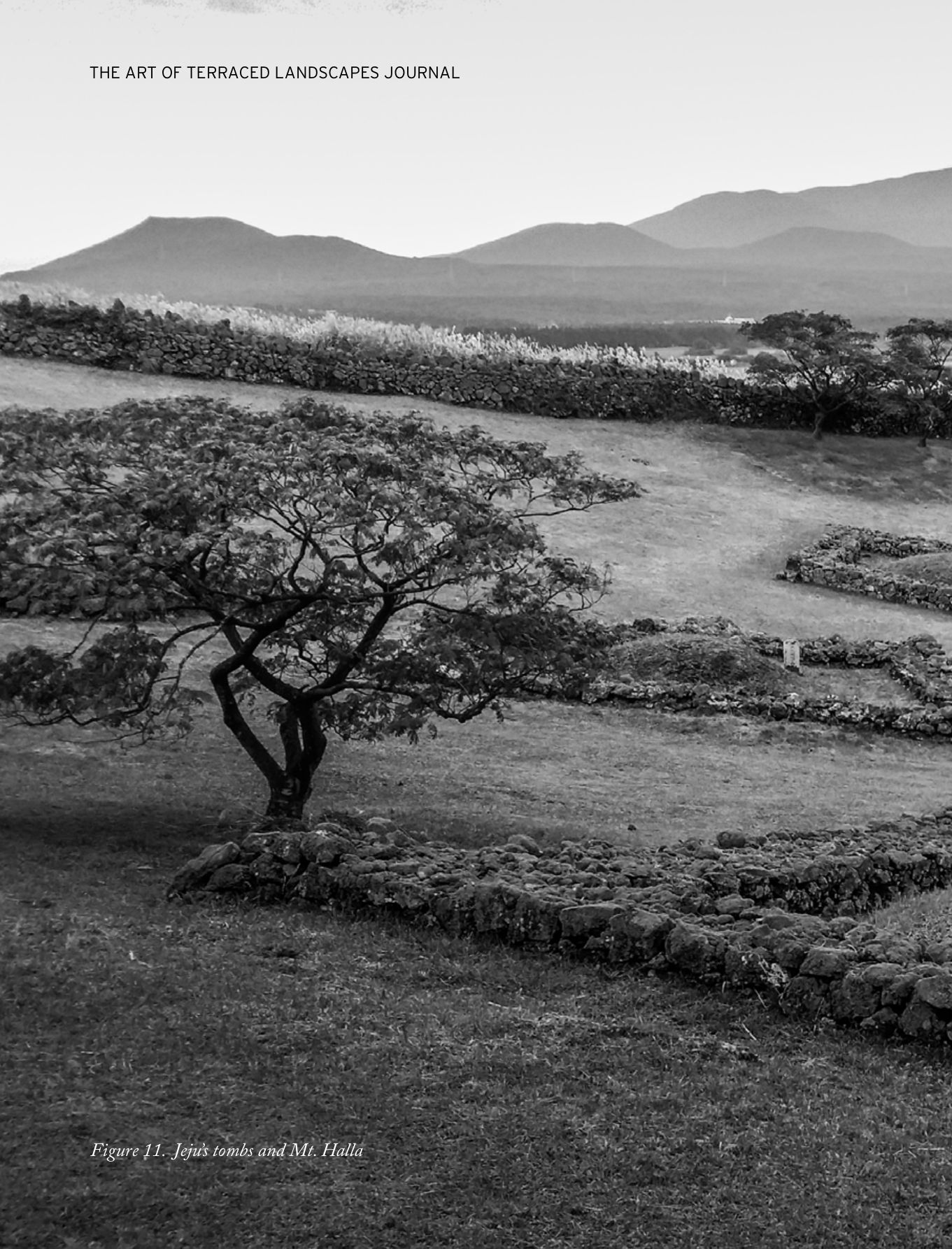
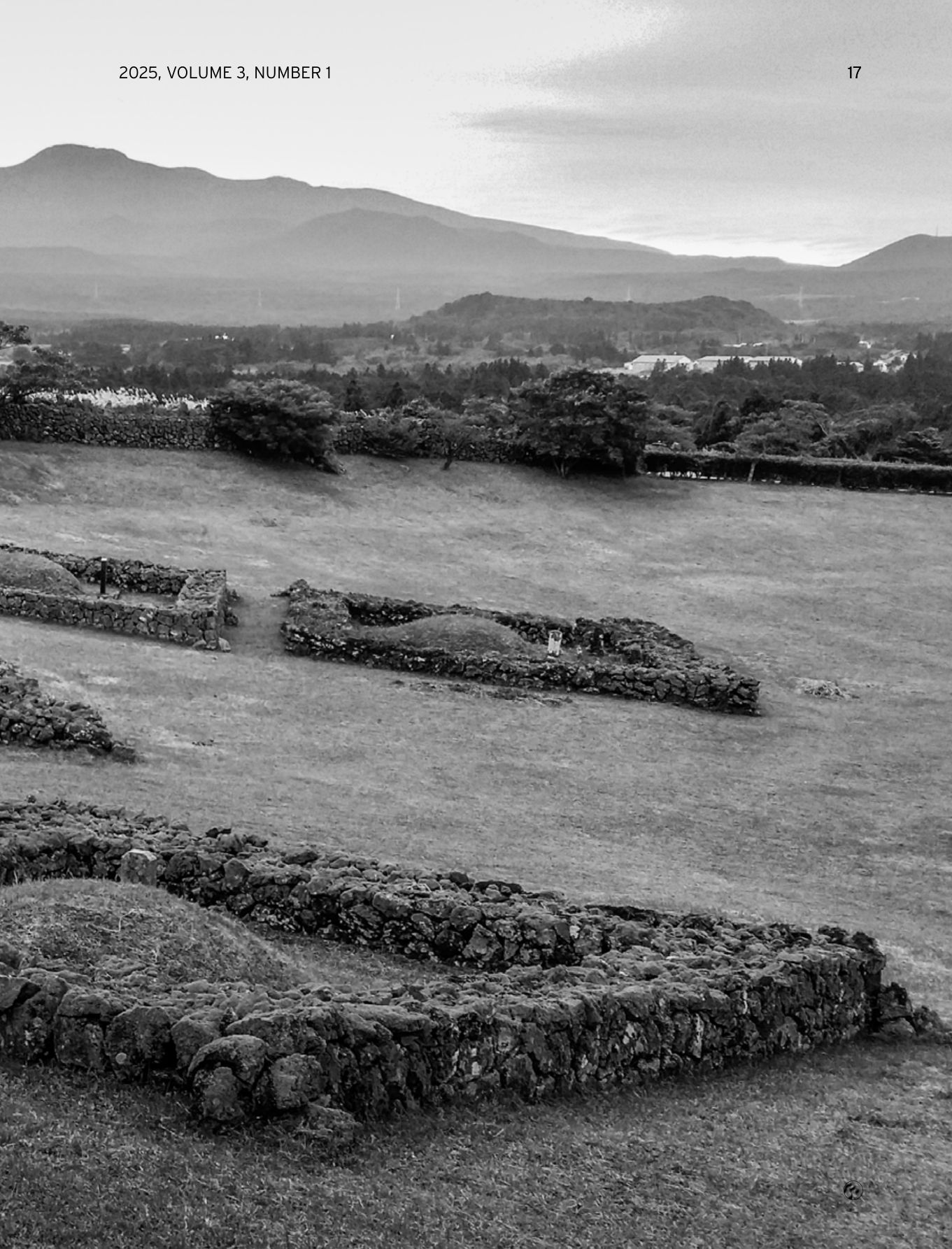
Jeju Island was an ancient independent nation with its own unique identity for about 1,000 years from the 3rd century to the early 12th century. Jeju Island, formed by a volcanic eruption, is mostly covered with basalt. In the harsh environment, where strong winds frequently blow, Jeju people have used stones appropriately to control the wind. Stacking stones is an essential survival skill for Jeju people. Jeju Island’s drystone walls leave gaps to allow the wind to pass through. Currently, there are about 300 professional stonemasons in Jeju Island whose job is to stack stone walls.
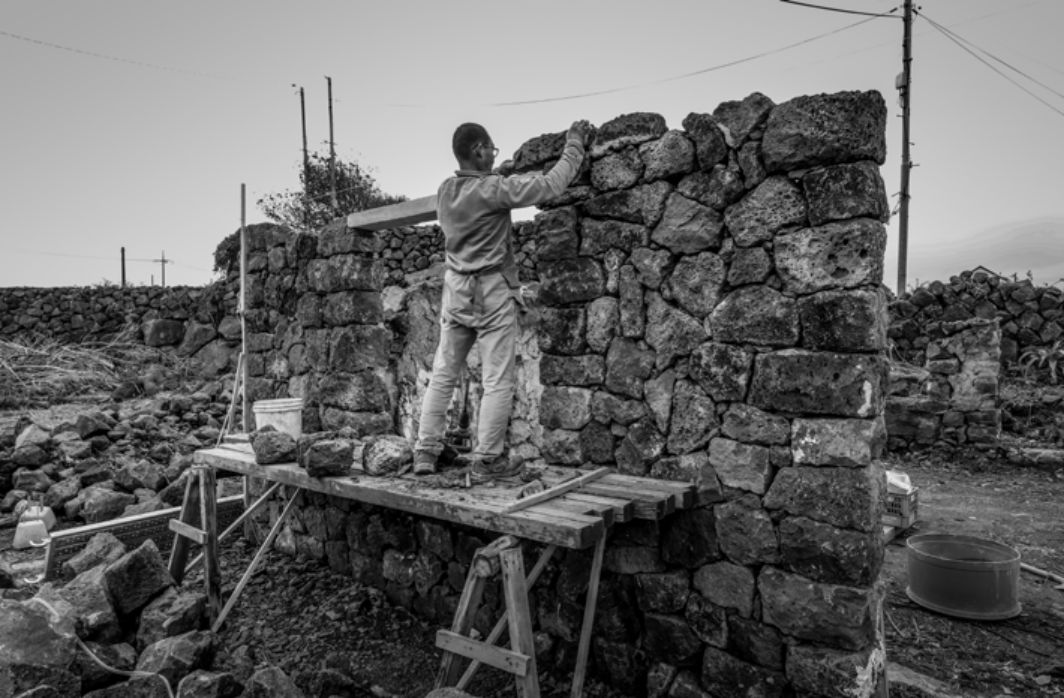
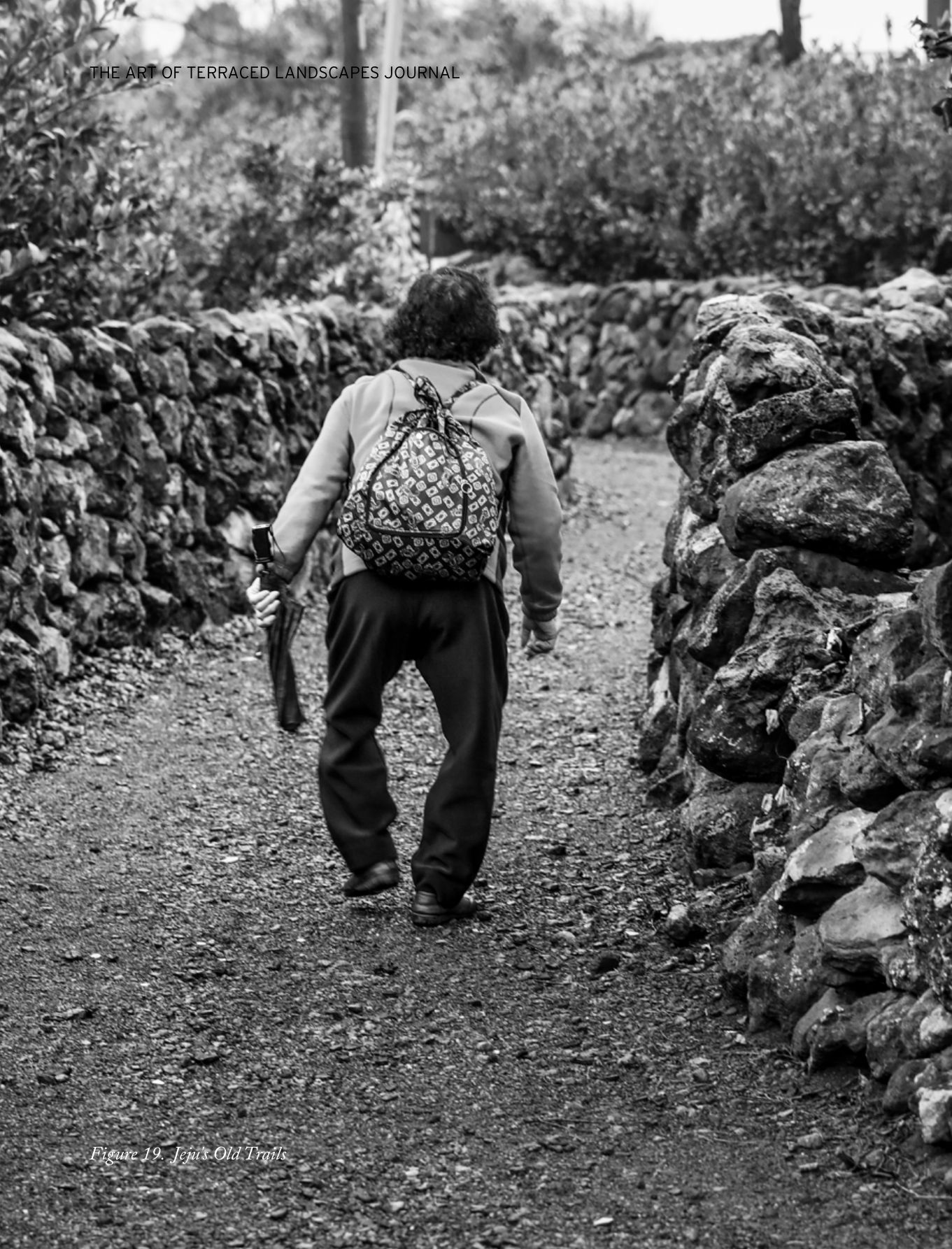
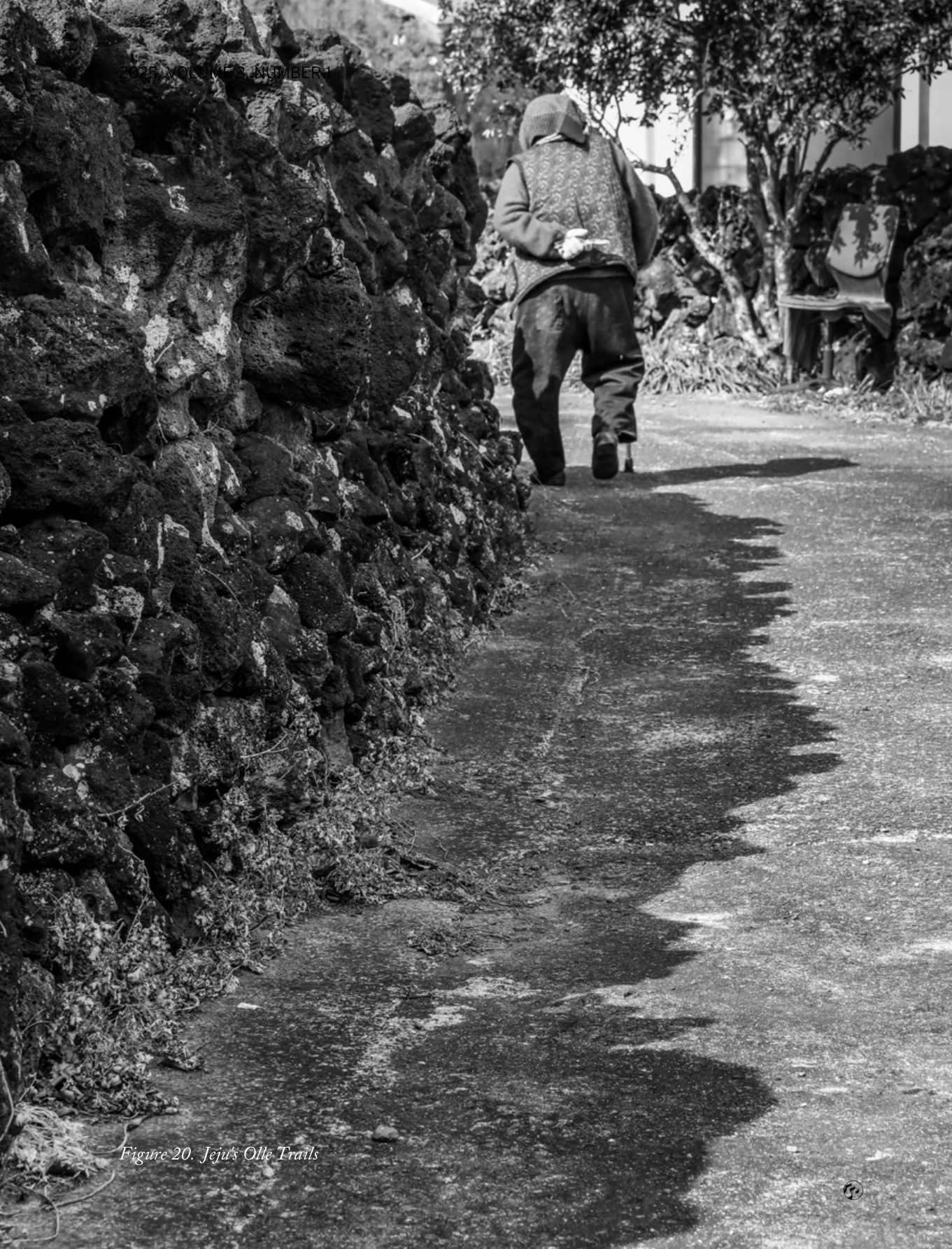
Dolbitna Art School was started in 2015 with 5 people who love stone walls in Jeju Island. The purpose of its establishment was to promote the beauty and value of drystone walls in Jeju Island, and to preserve the drystone walls for a long time by passing on the technology of building stone walls. There are various stone walls depending on the use and location, to distinguish the boundaries of the fields, ward off the wind, and protect crops from cows and horses.
There are more than 300 trainees who have completed the Dolbitna Art School, and we are working with them to preserve the stone walls. Watch some videos about the stonemasons from Dolbitna Art School: https://www.youtube.com/watch?v=Iiu60bpOVFI
Jeju Island was created by a volcanic eruption and is an UNESCO world heritage site. UNESCO: “Jeju Volcanic Island and Lava Tubes together comprise three sites that make up 18,846 ha. It includes Geomunoreum, regarded as the finest lava tube system of caves anywhere, with its multicoloured carbonate roofs and floors, and dark-coloured lava walls; the fortress-like Seongsan Ilchulbong tuff cone, rising out of the ocean, a dramatic landscape; and Mount Halla, the highest in Korea, with its waterfalls, multi-shaped rock formations, and lake-filled crater. The site, of outstanding aesthetic beauty, also bears testimony to the history of the planet, its features and processes.”
Selection from the Interview to Hwan Jin Jo from the journal Mangrove in Korean https://mangrove.city/journals/journal=15908/ from 2023
How I became a stone waller
My father was a stone waller, but I never thought I would inherit one of the three brothers. I studied painting in art, and I was happy when I painted. But I didn’t do it very well. I was a hobby photographer as well. I built with stones, and I was told that I was better than anyone else in drystone walling, which was acknowledged by my father. As you can see, the dry stone wall looks better. It was fun. The stone of Jeju is great in three dimensions unlike in other areas. It’s not just building it up. How can we explain the pleasure of the stone when it is hit hard according to the direction and method of stacking the stone? In addition, a well-built stone wall goes for twenty thousand years. They are building a relationship for continuity.
About the drystone wall school at Dolbitna Art
The regular program is to participate in monthly stone wall repair work with fellow stone wallers, and anyone can join them. I also hold dry stone wall stacking classes commissioned by schools and organizations, and I organise a Jeju stone waller qualification exam. There was a lot of construction boom in Jeju, and there was a lot of mistakes in building a drystone wall. The old way of building the drystone wall is also slowly disappearing. The traditional way of stacking stones is only using stones no mortar. Take the test so you don’t forget it. I held the exam this year and eight people took it, and four of them passed. It’s hard to pass the exam!
To whom I will transfer my skill as a craftsman ?
I’m already teaching my middle school youngest son. A little work only (!), I’m teaching him how to make some extra stone wall on holiday. The memory of the newly wed stone house that I built with my father is so vivid, and the house is so precious. I want to give that experience to my son. To do my job here is to make it my life in Jeju. It is most fun to build stones in Jeju, work with fellow stone wallers, and capture wonderful drystone walls on camera.
Drystone festival
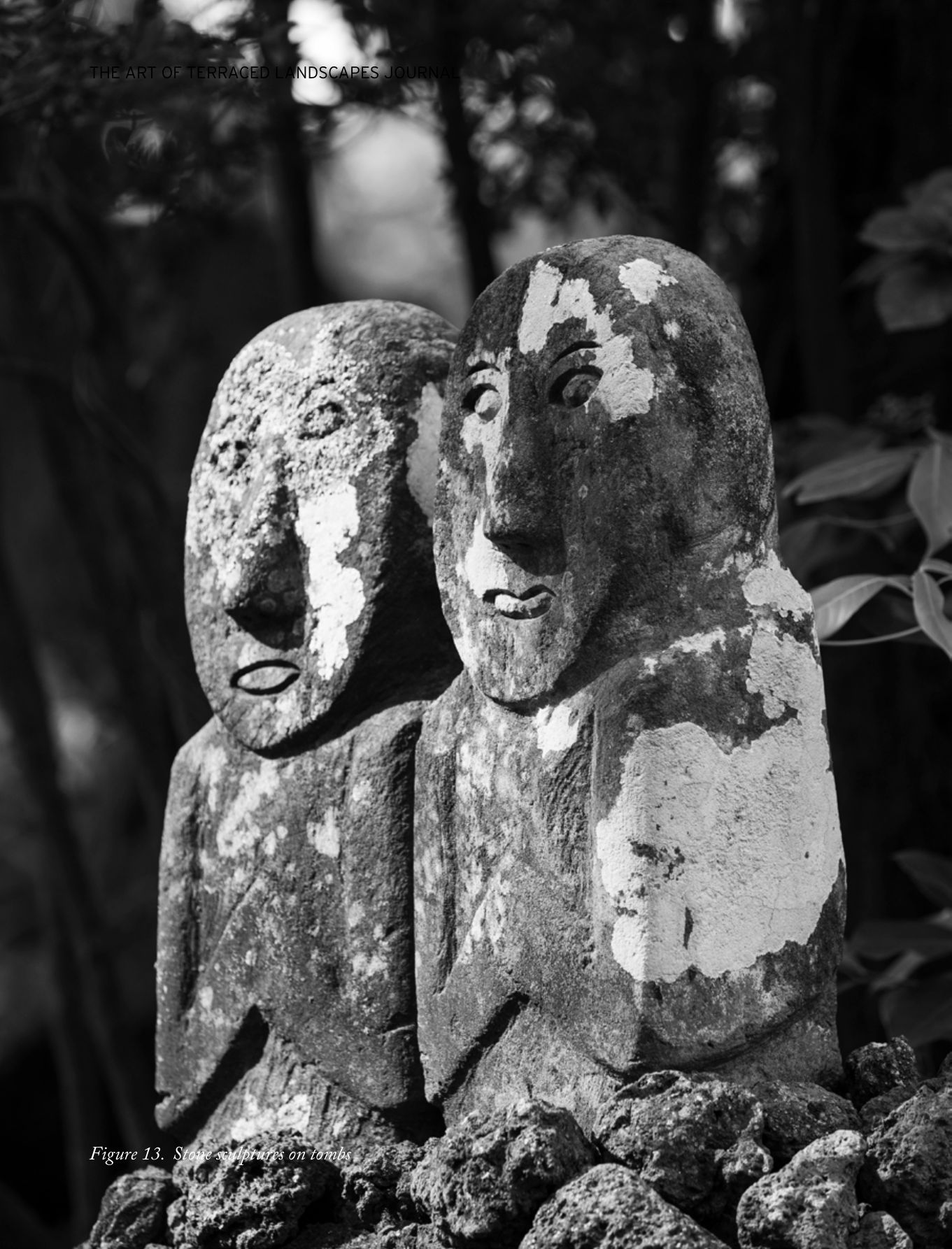
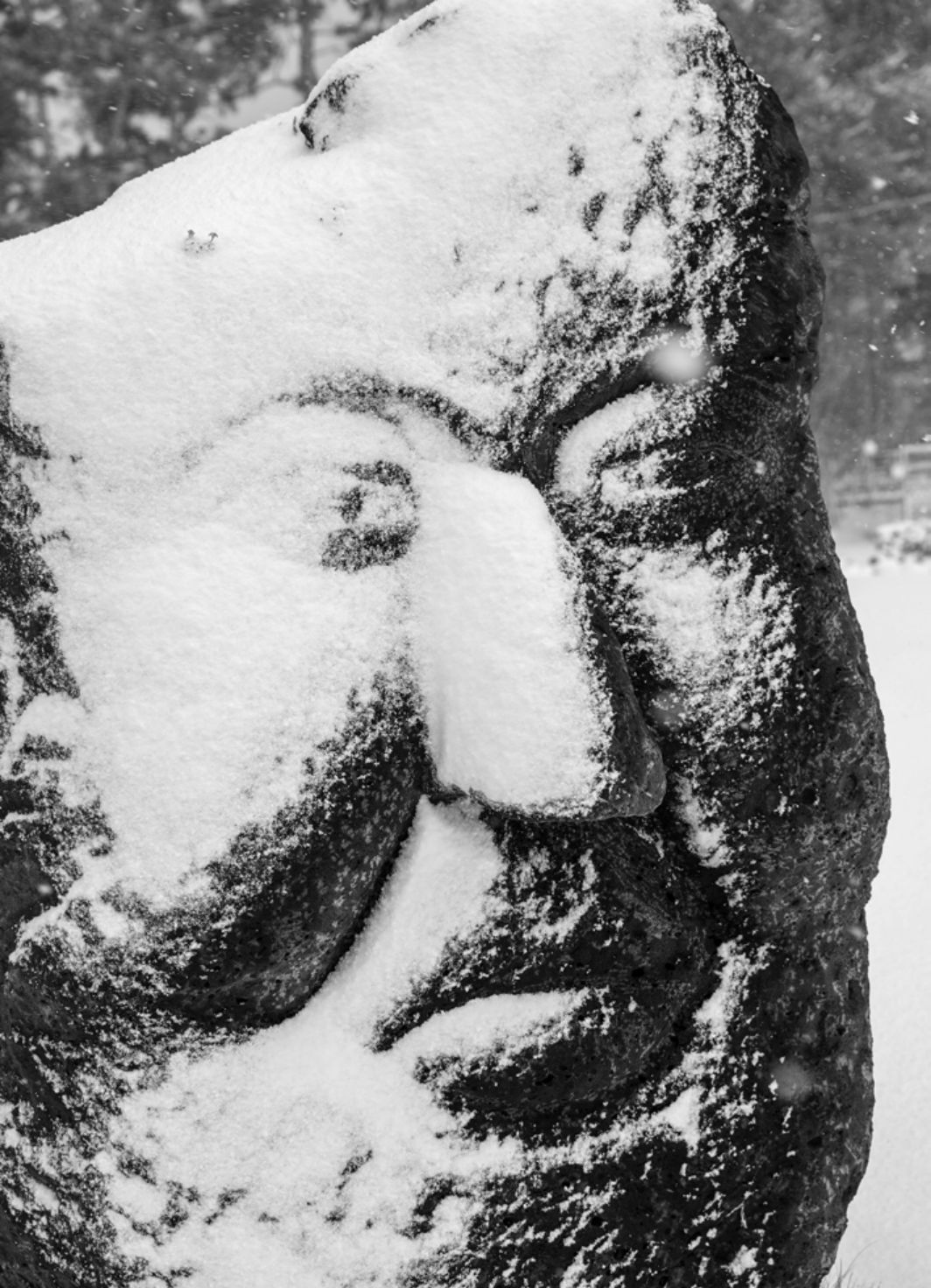
Since 2022, Moonsoo-dong is holding a drystone festival every October. Moonsoo-dong is a small village where thirty households live together, and a hundred years ago the people in the neighborhood had carved and trimmed together the stone structures. There are also some sacred stone sculptures that were used to protect the village. There were seven great stone brigades, two of their sons walking on the stone-clad path, and there was the Stonelight School of Art, the first stone wall school in Jeju. We also have a variety of stone jalipirs (jokes) experience programs to illuminate the stone-clad history of Moonsoodong and make it easy for people to get acquainted with stones. Every year at the time before the festival, we are very busy preparing for the festival.
I recently went to Ireland to build a stone wall.
Ireland, Scotland, Italy, Austria and Japan, close to us, have a clear culture of drystone walls. With the help of the stone culture park, I started interacting with stone experts in each country. We and other international stonewallers went to Ireland, and they came to the Moon Soo-dong Stone Festival. The conversation of those whose life direction is toward the ‘stone’ is really valuable and meaningful. You can also gain insight into how to record and preserve Jeju’s stone culture. When I visited Ireland, I left Dolharbang.

Rights and permissions
Open Access. This article is licensed under a Creative Commons CC BY 4.0 license, which permits use, sharing, adaptation, distribution and reproduction in any medium or format, as long as you give appropriate credit to the original author(s) and the source and indicate if changes were made.
About this article
Cite this article
Jin Jo, H. (2025). Dolbitna Art School: The Stonemasons of Jeju Island. The Art of Terraced Landscapes, 3(1), 1–36. https://doi.org/10.5281/zenodo.14914182
- Published
- February 2025
- Issue
- Volume 3, Number 1
- Journal
- The Art of Terraced Landscapes, ISSN 2754-7620 (Online)
- Archive
- Zenodo record 14914182